
vivo X Note vs OnePlus 11R: A Deep Dive into Snapdragon Performance and Charging
| Phones Images | |||||
|---|---|---|---|---|---|
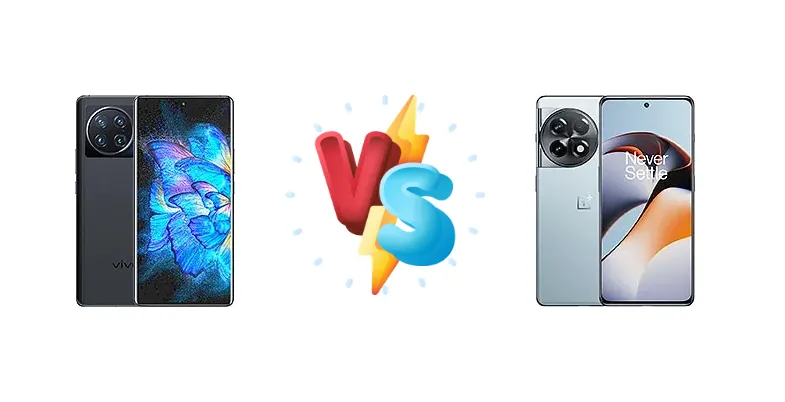
|
🏆 Quick Verdict
For most users, the OnePlus 11R emerges as the stronger value proposition. Its Snapdragon 8+ Gen 1 chipset offers superior thermal efficiency and sustained performance compared to the X Note’s Snapdragon 8 Gen 1, coupled with blazing-fast 100W charging. While the X Note offers wireless charging, the 11R’s performance edge is more impactful for demanding users.
| PHONES | ||
|---|---|---|
| Phone Names | vivo X Note | OnePlus 11R |
| Network | ||
|---|---|---|
| 2G bands | GSM 850 / 900 / 1800 / 1900 | GSM 850 / 900 / 1800 / 1900 |
| 3G bands | HSDPA 800 / 850 / 900 / 1700(AWS) / 1900 / 2100 | HSDPA 850 / 900 / 1700(AWS) / 2100 |
| 4G bands | 1, 2, 3, 4, 5, 7, 8, 12, 17, 18, 19, 20, 25, 26, 28, 32, 34, 38, 39, 40, 41, 42, 48, 66 | 1, 3, 4, 5, 8, 28, 34, 38, 39, 40, 41 |
| 5G bands | 1, 2, 3, 5, 7, 8, 12, 20, 28, 38, 40, 41, 66, 77, 78, 79 SA/NSA | 1, 3, 5, 8, 28, 40, 41, 77, 78 SA/NSA |
| Speed | HSPA, LTE, 5G | HSPA, LTE (3CA), 5G |
| Technology | GSM / CDMA / HSPA / CDMA2000 / LTE / 5G | GSM / CDMA / HSPA / LTE / 5G |
| CDMA2000 1x | CDMA 800 | |
| Launch | ||
|---|---|---|
| Announced | 2022, April 11 | 2023, February 07 |
| Status | Available. Released 2022, April 15 | Available. Released 2023, February 21 |
| Body | ||
|---|---|---|
| Build | - | Glass front, glass back (Gorilla Glass 5), plastic frame |
| Dimensions | 168.8 x 80.3 x 8.4 mm (6.65 x 3.16 x 0.33 in) | 163.4 x 74.3 x 8.7 mm (6.43 x 2.93 x 0.34 in) |
| SIM | Nano-SIM | Nano-SIM + Nano-SIM |
| Weight | 216 / 221 g (7.62 oz) | 204 g (7.20 oz) |
| IP68 dust/water resistant (up to 1.5m for 30 min) | - | |
| Display | ||
|---|---|---|
| Resolution | 1440 x 3080 pixels (~486 ppi density) | 1240 x 2772 pixels, 20:9 ratio (~451 ppi density) |
| Size | 7.0 inches, 121.3 cm2 (~89.5% screen-to-body ratio) | 6.74 inches, 109.2 cm2 (~90.0% screen-to-body ratio) |
| Type | LTPO AMOLED, 120Hz, HDR10+ | Fluid AMOLED, 1B colors, 120Hz, HDR10+, 1450 nits (peak) |
| Platform | ||
|---|---|---|
| CPU | Octa-core (1x3.00 GHz Cortex-X2 & 3x2.50 GHz Cortex-A710 & 4x1.80 GHz Cortex-A510) | Octa-core (1x3.0 GHz Cortex-X2 & 3x2.5 GHz Cortex-A710 & 4x1.80 GHz Cortex-A510) |
| Chipset | Qualcomm SM8450 Snapdragon 8 Gen 1 (4 nm) | Qualcomm SM8475 Snapdragon 8+ Gen 1 (4 nm) |
| GPU | Adreno 730 | Adreno 730 |
| OS | Android 12, OriginOS Ocean | Android 13, upgradable to Android 15, OxygenOS 15 |
| Memory | ||
|---|---|---|
| Card slot | No | No |
| Internal | 256GB 8GB RAM, 256GB 12GB RAM, 512GB 12GB RAM | 128GB 8GB RAM, 256GB 16GB RAM, 512GB 18GB RAM |
| UFS 3.1 | UFS 3.1 | |
| Main Camera | ||
|---|---|---|
| Features | Laser AF, Zeiss optics, Zeiss T* lens coating, Dual-LED flash, panorama | Color spectrum sensor, LED flash, HDR, panorama |
| Quad | 50 MP, f/1.6, (wide), 1/1.31", 1.2µm, PDAF, OIS 8 MP, f/3.4, 125mm (periscope telephoto), PDAF, OIS, 5x optical zoom 12 MP, f/2.0, 47mm (telephoto), 1/2.93", 1.2µm, PDAF, 2x optical zoom 48 MP, f/2.2, 14mm, 114˚ (ultrawide), 1/2.0", 0.8µm | - |
| Single | 16 MP, f/2.5, (wide) | 16 MP, f/2.4, 24mm (wide), 1/3.09", 1.0µm |
| Triple | - | 50 MP, f/1.8, 24mm (wide), 1/1.56", 1.0µm, multi-directional PDAF, OIS 8 MP, f/2.2, 120˚ (ultrawide), 1/4.0", 1.12µm 2 MP (macro) |
| Video | 8K@30fps, 4K@30/60fps, 1080p@30/60fps, gyro-EIS | 4K@30/60fps, 1080p@30/60/240fps, gyro-EIS |
| Selfie camera | ||
|---|---|---|
| Features | HDR | HDR |
| Single | 16 MP, f/2.5, (wide) | 16 MP, f/2.4, 24mm (wide), 1/3.09", 1.0µm |
| Video | 1080p@30fps | 1080p@30fps |
| Sound | ||
|---|---|---|
| 3.5mm jack | No | No |
| 35mm jack | No | No |
| Loudspeaker | Yes, with stereo speakers | Yes, with stereo speakers |
| 24-bit/192kHz audio | 24-bit/192kHz audio | |
| Comms | ||
|---|---|---|
| Bluetooth | 5.2, A2DP, LE, aptX HD, aptX Adaptive, aptX Lossless | 5.3, A2DP, LE, aptX HD |
| Infrared port | Yes | Yes |
| NFC | Yes | Yes |
| Positioning | GPS, GLONASS, BDS, GALILEO, QZSS, NavIC | GPS (L1+L5), GLONASS (G1), BDS (B1I+B1c+B2a), GALILEO (E1+E5a), QZSS (L1+L5) |
| Radio | No | No |
| USB | USB Type-C, OTG | USB Type-C 2.0 |
| WLAN | Wi-Fi 802.11 a/b/g/n/ac/6, dual-band, Wi-Fi Direct | Wi-Fi 802.11 a/b/g/n/ac/6, dual-band |
| Features | ||
|---|---|---|
| Sensors | Fingerprint (under display, optical), accelerometer, gyro, proximity, compass, barometer | Fingerprint (under display, optical), accelerometer, gyro, proximity, compass |
| Battery | ||
|---|---|---|
| Charging | 80W wired, 100% in 32 min 50W wireless 10W reverse wireless | 100W wired |
| Type | 5000 mAh | Li-Po 5000 mAh |
| Misc | ||
|---|---|---|
| Colors | Black, Blue, Gray | Galactic Silver, Sonic Black, Solar Red |
| Models | V2170A | CPH2487 |
| Price | About 870 EUR | About 600 EUR |
| SAR | - | 1.16 W/kg (head) 0.61 W/kg (body) |
vivo X Note
- Wireless charging support offers added convenience.
- Potentially more refined software experience (subjective).
- Reverse wireless charging for accessories.
- Snapdragon 8 Gen 1 is prone to thermal throttling.
- Slower wired charging compared to the 11R.
OnePlus 11R
- Snapdragon 8+ Gen 1 delivers superior performance and efficiency.
- 100W SuperVOOC charging is incredibly fast.
- More aggressive price point for flagship-level performance.
- Lacks wireless charging functionality.
- OxygenOS software may not appeal to all users.
Display Comparison
While both devices likely feature high-quality AMOLED panels (data not provided), the core difference lies elsewhere. The absence of display specifications necessitates a focus on the chipsets. The display quality is likely similar, but the chipset impacts how smoothly animations and games render on the screen.
Camera Comparison
Without detailed camera specifications, a direct comparison is limited. However, the X Note, positioned as a more premium device, likely features a more sophisticated camera system. The 11R, focusing on value, may prioritize a simpler setup. Image processing algorithms will also play a crucial role, with vivo historically favoring vibrant, saturated colors, while OnePlus tends towards a more natural look. The absence of sensor size data prevents a definitive assessment.
Performance
The OnePlus 11R’s Snapdragon 8+ Gen 1 (4nm) represents a significant upgrade over the vivo X Note’s Snapdragon 8 Gen 1 (4nm). The ‘+’ generation chipset benefits from TSMC’s refined 4nm process, resulting in improved thermal efficiency and sustained performance under load. Both CPUs share the same core configuration – 1x3.0 GHz Cortex-X2, 3x2.5 GHz Cortex-A710, and 4x1.80 GHz Cortex-A510 – but the 8+ Gen 1 can maintain peak clock speeds for longer periods without throttling. This translates to smoother gaming experiences and faster processing of demanding tasks on the 11R.
Battery Life
The vivo X Note offers a more versatile charging experience with 80W wired, 50W wireless, and 10W reverse wireless capabilities. However, the OnePlus 11R counters with a blistering 100W wired charging solution, capable of fully charging the battery in a significantly shorter timeframe. While the X Note’s wireless charging is convenient, the 11R’s speed advantage is more impactful for users who frequently need to top up their battery quickly. The actual battery capacity (not provided) will influence real-world endurance, but the 11R’s faster charging mitigates concerns about battery life.
Buying Guide
Buy the vivo X Note if you prioritize wireless charging convenience and a potentially more refined software experience (depending on your preference for vivo’s Funtouch OS). Buy the OnePlus 11R if you prioritize raw performance, especially for gaming, and want the fastest possible wired charging speeds without breaking the bank. The 11R is the clear choice for power users and mobile gamers.