
vivo V40 Pro vs OnePlus 12R: A Detailed Comparison of Flagship Performance and Battery Life
| Phones Images | |||||
|---|---|---|---|---|---|
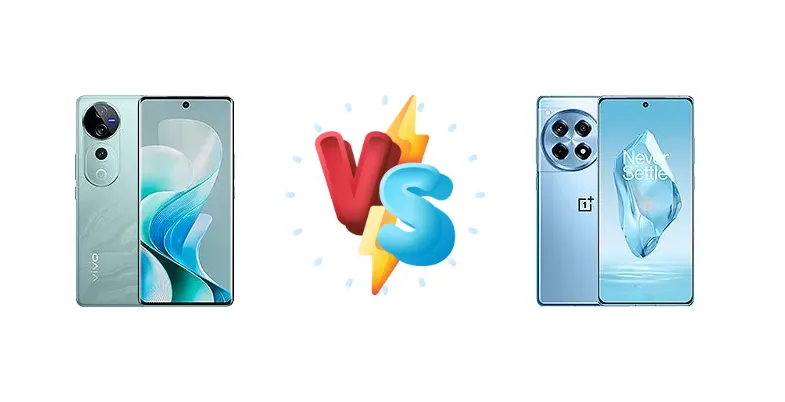
|
🏆 Quick Verdict
For most users, the OnePlus 12R emerges as the stronger choice. Its Snapdragon 8 Gen 2 chipset delivers consistently higher performance and better thermal management, coupled with a slightly longer battery life and significantly faster 100W charging. While the V40 Pro boasts a brighter display, the overall package favors the 12R.
| PHONES | ||
|---|---|---|
| Phone Names | vivo V40 Pro | OnePlus 12R |
| Network | ||
|---|---|---|
| 2G bands | GSM 850 / 900 / 1800 / 1900 | GSM 850 / 900 / 1800 / 1900 |
| 3G bands | HSDPA 850 / 900 / 1700(AWS) / 1900 / 2100 - International | HSDPA 850 / 900 / 1700(AWS) / 1900 / 2100 |
| 4G bands | 1, 3, 4, 5, 7, 8, 18, 19, 26, 28, 38, 39, 40, 41 - India | 1, 2, 3, 4, 5, 7, 8, 12, 17, 18, 19, 20, 26, 28, 32, 38, 39, 40, 41, 66 |
| 5G bands | 1, 3, 5, 8, 28, 40, 77, 78 SA/NSA - India | 1, 2, 3, 5, 7, 8, 12, 20, 28, 38, 40, 41, 66, 77, 78 SA/NSA |
| Speed | HSPA, LTE, 5G | HSPA, LTE, 5G |
| Technology | GSM / HSPA / LTE / 5G | GSM / CDMA / HSPA / LTE / 5G |
| Launch | ||
|---|---|---|
| Announced | 2024, August 07 | 2024, January 23 |
| Status | Available. Released 2024, August 23 | Available. Released 2024, February 06 |
| Body | ||
|---|---|---|
| Build | Glass front, glass back | Glass front (Gorilla Glass Victus 2), aluminum frame, glass back |
| Dimensions | 164.4 x 75.1 x 7.6 mm (6.47 x 2.96 x 0.30 in) | 163.3 x 75.3 x 8.8 mm (6.43 x 2.96 x 0.35 in) |
| SIM | Nano-SIM + Nano-SIM | · Nano-SIM + Nano-SIM + eSIM (max 2 at a time)· Nano-SIM + Nano-SIM |
| Weight | 192 g (6.77 oz) | 207 g (7.30 oz) |
| Display | ||
|---|---|---|
| Protection | Schott Xensation Alpha | Corning Gorilla Glass Victus 2 |
| Resolution | 1260 x 2800 pixels, 20:9 ratio (~453 ppi density) | 1264 x 2780 pixels (~450 ppi density) |
| Size | 6.78 inches, 111.0 cm2 (~89.9% screen-to-body ratio) | 6.78 inches, 111.7 cm2 (~90.9% screen-to-body ratio) |
| Type | AMOLED, 1B colors, HDR10+, 120Hz, 2160Hz PWM, 4500 nits (peak) | LTPO4 AMOLED, 1B colors, 120Hz, HDR10+, Dolby Vision, 1600 nits (HBM), 4500 nits (peak) |
| Platform | ||
|---|---|---|
| CPU | Octa-core (1x3.35 GHz Cortex-X3 & 3x3.0 GHz Cortex-A715 & 4x2.0 GHz Cortex-A510) | Octa-core (1x3.2 GHz Cortex-X3 & 2x2.8 GHz Cortex-A715 & 2x2.8 GHz Cortex-A710 & 3x2.0 GHz Cortex-A510) |
| Chipset | Mediatek Dimensity 9200+ (4 nm) | Qualcomm SM8550-AB Snapdragon 8 Gen 2 (4 nm) |
| GPU | Immortalis-G715 MC11 | Adreno 740 |
| OS | Android 14, Funtouch 14 | Android 14, up to 3 major Android upgrades, OxygenOS 15 |
| Memory | ||
|---|---|---|
| Card slot | No | No |
| Internal | 256GB 8GB RAM, 256GB 12GB RAM, 512GB 12GB RAM | 128GB 8GB RAM, 256GB 8GB RAM, 256GB 12GB RAM, 256GB 16GB RAM |
| Main Camera | ||
|---|---|---|
| Features | Zeiss optics, Ring-LED flash, panorama, HDR | Laser AF, color spectrum sensor, LED flash, HDR, panorama |
| Triple | 50 MP, f/1.9, 24mm (wide), 1/1.56", 1.0µm, PDAF, OIS 50 MP, f/1.9, 50mm (telephoto), 1/2.51", 0.64µm, PDAF, OIS, 2x optical zoom 50 MP, f/2.0, 15mm, 119˚ (ultrawide), 1/2.76", 0.64µm, AF | 50 MP, f/1.8, 24mm (wide), 1/1.56", 1.0µm, multi-directional PDAF, OIS 8 MP, f/2.2, 16mm, 112˚ (ultrawide), 1/4.0", 1.12µm 2 MP (macro) |
| Video | 4K@30/60fps, 1080p@30fps, gyro-EIS, OIS | 4K@30/60fps, 1080p@30/60/120/240fps, gyro-EIS, OIS |
| Selfie camera | ||
|---|---|---|
| Features | HDR | HDR, panorama |
| Single | 50 MP, f/2.0, 21mm (wide), 1/2.76", 0.64µm, AF | 16 MP, f/2.4, 26mm (wide), 1/3", 1.0µm |
| Video | 4K@30fps, 1080p@30fps | 1080p@30fps, gyro-EIS |
| Sound | ||
|---|---|---|
| 35mm jack | No | No |
| Loudspeaker | Yes, with stereo speakers | Yes, with stereo speakers |
| Comms | ||
|---|---|---|
| Bluetooth | 5.3, A2DP, LE | 5.3, A2DP, LE, aptX HD |
| Infrared port | - | Yes |
| NFC | Yes (market/region dependent) | Yes |
| Positioning | GPS, GALILEO, GLONASS, QZSS, BDS, NavIC | GPS, GALILEO, GLONASS, BDS, QZSS |
| Radio | No | No |
| USB | USB Type-C 2.0, OTG | USB Type-C 2.0 |
| WLAN | Wi-Fi 802.11 a/b/g/n/ac/6/7, dual-band | Wi-Fi 802.11 a/b/g/n/ac/6/7, dual-band |
| Features | ||
|---|---|---|
| Sensors | Fingerprint (under display, optical), accelerometer, gyro, proximity, compass | Fingerprint (under display, optical), accelerometer, gyro, proximity, compass |
| Battery | ||
|---|---|---|
| Charging | 80W wired, PD Reverse wired | 100W wired, 100% in 26 min |
| Type | Si/C Li-Ion 5500 mAh | Li-Ion 5500 mAh |
| Misc | ||
|---|---|---|
| Colors | Ganges Blue, Titanium Gray, Moonlight White | Iron Gray, Cool Blue, Electric Violet, Sunset Dune |
| Models | V2347 | CPH2609, CPH2585, CPH2611 |
| Price | ₹ 42,999 | € 410.84 / $ 399.95 / £ 649.00 |
| SAR | 0.99 W/kg (head) 0.99 W/kg (body) | 1.19 W/kg (head) 0.82 W/kg (body) |
vivo V40 Pro
- Brighter display for outdoor visibility
- Strong single-core performance with Dimensity 9200+
- Reverse wired charging capability
- Slower charging speed (80W vs 100W)
- Slightly shorter battery life in active use
OnePlus 12R
- Faster 100W charging (0-100% in 26 minutes)
- More efficient Snapdragon 8 Gen 2 chipset
- Longer battery life (14:32h active use)
- Lower peak display brightness
- Potentially less vibrant color profile
Display Comparison
The vivo V40 Pro’s display reaches a measured peak brightness of 1307 nits, exceeding the OnePlus 12R’s 1181 nits. This translates to superior visibility in direct sunlight. However, both displays utilize a 4nm process, and while panel technology isn't specified, the difference in brightness is the primary distinction. The V40 Pro’s higher brightness is beneficial for outdoor photography and video consumption, but the 12R’s display remains excellent for typical indoor use. We lack PWM frequency data, but both are likely to be adequate for most users.
Camera Comparison
Without detailed camera specifications, a direct comparison is limited. However, given the market positioning, it’s reasonable to assume both phones feature capable main sensors. The absence of information regarding sensor size and OIS makes a definitive judgment impossible. The V40 Pro may focus on color science and portrait modes, typical of vivo’s image processing, while the OnePlus 12R likely aims for a more natural and balanced look. The inclusion of a 2MP macro camera on either device is unlikely to significantly impact image quality and should be considered a secondary feature.
Performance
The OnePlus 12R’s Snapdragon 8 Gen 2 (4nm) offers a more balanced and thermally efficient performance profile compared to the vivo V40 Pro’s Dimensity 9200+ (4nm). While both chipsets feature an octa-core configuration with a Cortex-X3 prime core, the Snapdragon 8 Gen 2’s architecture, including its two Cortex-A715 cores and two Cortex-A710 cores, provides a broader performance advantage. The V40 Pro’s CPU configuration (1x3.35 GHz Cortex-X3, 3x3.0 GHz Cortex-A715, 4x2.0 GHz Cortex-A510) leans heavily on the A510 cores, potentially impacting sustained performance in demanding applications. The Snapdragon 8 Gen 2’s superior GPU will also benefit graphically intensive games.
Battery Life
The OnePlus 12R boasts a clear advantage in charging speed with its 100W wired charging, achieving a full charge in just 26 minutes. The vivo V40 Pro’s 80W wired charging, while still fast, is noticeably slower. In terms of battery life, the OnePlus 12R achieves 14:32h of active use, surpassing the V40 Pro’s 13:45h. This difference, coupled with the faster charging, makes the 12R the more convenient option for users who prioritize all-day battery life and quick top-ups.
Buying Guide
Buy the vivo V40 Pro if you prioritize peak display brightness and appreciate the MediaTek Dimensity 9200+’s strong single-core performance for everyday tasks. Buy the OnePlus 12R if you demand sustained gaming performance, faster charging, and a more efficient chipset that minimizes throttling during extended use. The 12R is the better option for power users and mobile gamers.