
vivo V40 Lite vs Xiaomi Redmi Note 13 Pro+: A Detailed Comparison
| Phones Images | |||||
|---|---|---|---|---|---|
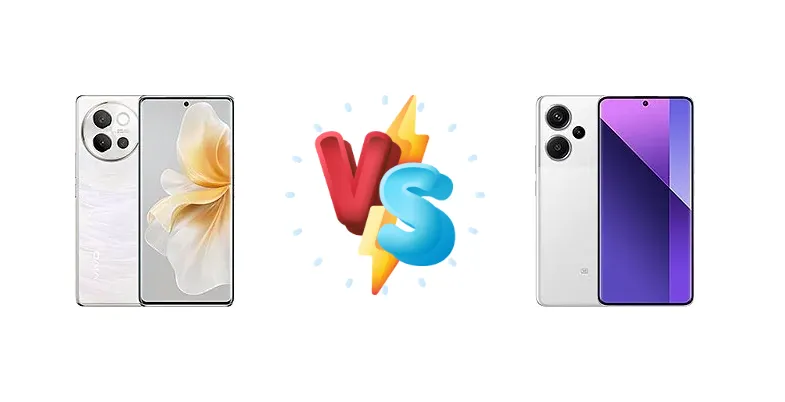
|
🏆 Quick Verdict
For the average user prioritizing speed and convenience, the Xiaomi Redmi Note 13 Pro+ is the clear winner. Its Dimensity 7200 Ultra chipset delivers significantly better performance, and the 120W charging is a game-changer. However, the vivo V40 Lite offers a solid experience for everyday tasks at a potentially lower price point.
| PHONES | ||
|---|---|---|
| Phone Names | vivo V40 Lite | Xiaomi Redmi Note 13 Pro+ |
| Network | ||
|---|---|---|
| 2G bands | GSM 850 / 900 / 1800 / 1900 | GSM 850 / 900 / 1800 / 1900 |
| 3G bands | HSDPA 850 / 900 / 1700(AWS) / 1900 / 2100 | HSDPA 800 / 850 / 900 / 1700(AWS) / 1900 / 2100 - International |
| 4G bands | 1, 2, 3, 4, 5, 7, 8, 12, 13, 17, 18, 19, 20, 26, 28, 32, 38, 39, 40, 41, 66 | 1, 2, 3, 4, 5, 7, 8, 12, 13, 17, 18, 19, 20, 26, 28, 32, 38, 40, 41, 66 - International |
| 5G bands | 1, 2, 3, 5, 7, 8, 20, 26, 28, 66, 75, 38, 40, 41, 77, 78 SA/NSA | 1, 3, 5, 7, 8, 20, 28, 38, 40, 41, 66, 77, 78 SA/NSA- International |
| Speed | HSPA, LTE, 5G | HSPA, LTE, 5G |
| Technology | GSM / HSPA / LTE / 5G | GSM / CDMA / HSPA / EVDO / LTE / 5G |
| Launch | ||
|---|---|---|
| Announced | 2024, July 14 | 2023, September 21 |
| Status | Available. Released 2024, July 14 | Available. Released 2023, September 21 |
| Body | ||
|---|---|---|
| Build | Glass front, plastic frame, glass back or plastic back | Glass front (Gorilla Glass Victus), glass back or silicone polymer back (eco leather) |
| Dimensions | 164.4 x 74.8 x 7.7 mm (6.47 x 2.94 x 0.30 in) | 161.4 x 74.2 x 8.9 mm (6.35 x 2.92 x 0.35 in) |
| SIM | Nano-SIM + Nano-SIM | · Nano-SIM + eSIM· Nano-SIM + Nano-SIM |
| Weight | 179 g or 188 g (6.31 oz) | 199 g or 204.5 g (7.02 oz) |
| Display | ||
|---|---|---|
| Protection | - | Corning Gorilla Glass Victus |
| Resolution | 1080 x 2400 pixels, 20:9 ratio (~388 ppi density) | 1220 x 2712 pixels, 20:9 ratio (~446 ppi density) |
| Size | 6.78 inches, 111.0 cm2 (~90.3% screen-to-body ratio) | 6.67 inches, 107.4 cm2 (~89.7% screen-to-body ratio) |
| Type | AMOLED, 1B colors, 120Hz, 1300 nits (peak) | AMOLED, 68B colors, 120Hz, 1920Hz PWM, Dolby Vision, HDR10+, 1800 nits (peak) |
| Platform | ||
|---|---|---|
| CPU | Octa-core (4x2.2 GHz Cortex-A78 & 4x1.8 GHz Cortex-A55) | Octa-core (2x2.8 GHz Cortex-A715 & 6x2.0 GHz Cortex-A510) |
| Chipset | Qualcomm SM6450 Snapdragon 6 Gen 1 (4 nm) | Mediatek Dimensity 7200 Ultra (4 nm) |
| GPU | Adreno 710 | Mali-G610 MC4 |
| OS | Android 14, Funtouch 14 | Android 13, up to 3 major Android upgrades, HyperOS |
| Memory | ||
|---|---|---|
| Card slot | microSDXC (uses shared SIM slot) | No |
| Internal | 256GB 8GB RAM | 256GB 8GB RAM, 256GB 12GB RAM, 512GB 8GB RAM, 512GB 12GB RAM, 512GB 16GB RAM |
| Main Camera | ||
|---|---|---|
| Features | Ring-LED flash, panorama, HDR | Dual-LED dual-tone flash, HDR, panorama |
| Triple | 50 MP, f/1.8, 26mm (wide), 1/1.95", 0.8µm, PDAF 8 MP, f/2.2, 120˚ (ultrawide), 1/4.0", 1.12µm 2 MP (macro) | 200 MP, f/1.7, 23mm (wide), 1/1.4", 0.56µm, multi-directional PDAF, OIS 8 MP, f/2.2, 16mm, 120˚ (ultrawide), 1/4.0", 1.12µm 2 MP (macro) |
| Video | 4K@30fps, 1080p@30fps | 4K@24/30fps, 1080p@30/60/120fps, gyro-EIS |
| Selfie camera | ||
|---|---|---|
| Features | - | HDR, panorama |
| Single | 32 MP, f/2.0, 24mm (wide) | 16 MP, f/2.4, (wide) |
| Video | 1080p@30fps | 1080p@30/60fps |
| Sound | ||
|---|---|---|
| 35mm jack | No | No |
| Loudspeaker | Yes | Yes, with stereo speakers |
| Comms | ||
|---|---|---|
| Bluetooth | 5.1, A2DP, LE | 5.3, A2DP, LE |
| Infrared port | - | Yes |
| NFC | Yes (market/region dependent) | Yes (market/region dependent) |
| Positioning | GPS, GLONASS, GALILEO, BDS, QZSS | GPS, GLONASS, BDS, GALILEO, QZSS |
| Radio | No | No |
| USB | USB Type-C 2.0, OTG | USB Type-C 2.0, OTG |
| WLAN | Wi-Fi 802.11 a/b/g/n/ac, dual-band | Wi-Fi 802.11 a/b/g/n/ac/6, dual-band, Wi-Fi Direct |
| Features | ||
|---|---|---|
| Sensors | Fingerprint (under display, optical), accelerometer, gyro, proximity, compass | Fingerprint (under display, optical), accelerometer, gyro, proximity, compass |
| Battery | ||
|---|---|---|
| Charging | 44W wired, PD Reverse wired | 120W wired, PD3.0, 100% in 19 min |
| Type | Li-Ion 5500 mAh | Li-Po 5000 mAh |
| Misc | ||
|---|---|---|
| Colors | Classy Brown, Dreamy White | Midnight Black (Fushion Black), Moonlight White (Fushion White), Aurora Purple, Fushion Purple, Camo Green |
| Models | - | 23090RA98C, 23090RA98G, 23090RA98I |
| Price | $ 127.08 | $ 299.98 / £ 299.00 / € 208.98 / ₹ 24,999 |
| SAR | - | 1.09 W/kg (head) 0.85 W/kg (body) |
| SAR EU | 0.99 W/kg (head) 1.18 W/kg (body) | 0.98 W/kg (head) 1.00 W/kg (body) |
vivo V40 Lite
- Potentially lower price point
- Efficient Snapdragon 6 Gen 1 chipset
- Reverse wired charging capability
- Significantly slower charging speed
- Likely less powerful processor
- Display likely lacks the brightness and features of the Redmi Note 13 Pro+
Xiaomi Redmi Note 13 Pro+
- Blazing-fast 120W charging
- Powerful Mediatek Dimensity 7200 Ultra chipset
- Bright and vibrant display (1283 nits)
- Potentially higher price
- May run hotter under sustained load
- Larger size and weight compared to the V40 Lite (assumed)
Display Comparison
The Redmi Note 13 Pro+ immediately stands out with its measured peak brightness of 1283 nits, offering excellent visibility even in direct sunlight. While the V40 Lite’s display specifications are not provided, it’s likely to be significantly dimmer. The Redmi Note 13 Pro+’s panel technology is also likely to be superior, potentially including features like higher refresh rates and color gamut coverage. The brighter display on the Redmi Note 13 Pro+ will be particularly beneficial for users who consume a lot of media outdoors or in brightly lit environments.
Camera Comparison
Without detailed camera specifications for the vivo V40 Lite, a direct comparison is difficult. However, the Redmi Note 13 Pro+ is expected to feature a more advanced camera system, potentially including a larger main sensor and more sophisticated image processing algorithms. The Redmi Note 13 Pro+’s image processing will likely prioritize detail and dynamic range, while the V40 Lite may focus on a more balanced, everyday look. The absence of information regarding OIS on the V40 Lite suggests the Redmi Note 13 Pro+ will offer superior low-light performance and video stabilization.
Performance
The core difference lies in the chipsets. The Xiaomi Redmi Note 13 Pro+’s Mediatek Dimensity 7200 Ultra, with its 2x2.8 GHz Cortex-A715 cores, offers a substantial performance advantage over the vivo V40 Lite’s Qualcomm Snapdragon 6 Gen 1 (4x2.2 GHz Cortex-A78 & 4x1.8 GHz Cortex-A55). Both are built on a 4nm process, ensuring good efficiency, but the Dimensity 7200 Ultra’s newer architecture and higher clock speeds translate to faster app loading, smoother multitasking, and improved gaming performance. The Redmi Note 13 Pro+ is likely to handle graphically intensive games with higher frame rates and fewer stutters.
Battery Life
The Redmi Note 13 Pro+’s 120W wired charging is a standout feature, capable of charging the device from 0 to 100% in just 19 minutes. This is a massive advantage over the vivo V40 Lite’s 44W charging, which will take considerably longer. While the Redmi Note 13 Pro+ boasts an active use score of 10:38h, the faster charging speed mitigates any potential concerns about battery capacity. The V40 Lite’s 44W charging, while still respectable, won’t offer the same level of convenience for users who need to quickly top up their battery.
Buying Guide
Buy the vivo V40 Lite if you need a reliable smartphone for basic tasks like browsing, social media, and light gaming, and prioritize a potentially lower price. Buy the Xiaomi Redmi Note 13 Pro+ if you demand faster performance for demanding apps and games, value incredibly fast charging, and appreciate a brighter, more vibrant display.