
Xiaomi Civi 4 Pro vs vivo S18e: A Deep Dive into Mid-Range Power
| Phones Images | |||||
|---|---|---|---|---|---|
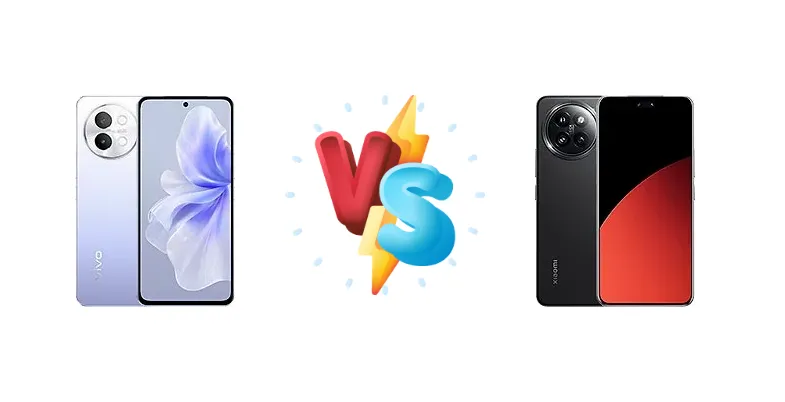
|
🏆 Quick Verdict
For the average user prioritizing performance and future-proofing, the Xiaomi Civi 4 Pro is the stronger choice. Its Snapdragon 8s Gen 3 chipset provides a noticeable performance uplift over the Dimensity 7200 in the vivo S18e, particularly in demanding tasks like gaming. However, the S18e offers a competitive package, especially for those valuing a balanced experience and potentially a more refined software experience.
| PHONES | ||
|---|---|---|
| Phone Names | vivo S18e | Xiaomi Civi 4 Pro |
| Network | ||
|---|---|---|
| 2G bands | GSM 850 / 900 / 1800 / 1900 | GSM 850 / 900 / 1800 / 1900 |
| 3G bands | HSDPA 850 / 900 / 1700(AWS) / 1900 / 2100 | HSDPA 800 / 850 / 900 / 1700(AWS) / 1900 / 2100 |
| 4G bands | 1, 3, 5, 8, 28, 34, 38, 39, 40, 41 | 1, 3, 4, 5, 8, 18, 19, 26, 28, 34, 38, 39, 40, 41, 42, 48, 66 |
| 5G bands | 1, 3, 5, 8, 28, 38, 40, 41, 77, 78 SA/NSA | 1, 3, 5, 8, 28, 38, 40, 41, 48, 66, 77, 78 SA/NSA |
| Speed | HSPA, LTE, 5G | HSPA, LTE, 5G |
| Technology | GSM / CDMA / HSPA / CDMA2000 / LTE / 5G | GSM / CDMA / HSPA / CDMA2000 / LTE / 5G |
| Launch | ||
|---|---|---|
| Announced | 2023, December 14 | 2024, March 21 |
| Status | Available. Released 2023, January 13 | Available. Released 2024, March 21 |
| Body | ||
|---|---|---|
| Build | Glass front, plastic frame | Glass front (Gorilla Glass Victus 2), glass back or silicone polymer back (eco leather), aluminum frame |
| Dimensions | 162.4 x 74.9 x 7.7 mm (6.39 x 2.95 x 0.30 in) | 157.2 x 72.8 x 7.5 mm or 7.8 mm |
| SIM | Nano-SIM + Nano-SIM | Nano-SIM + Nano-SIM |
| Weight | 193 g (6.81 oz) | 177.6 or 179.3 g or 180.9 g (6.28 oz) |
| Display | ||
|---|---|---|
| Protection | - | Corning Gorilla Glass Victus 2 |
| Resolution | 1080 x 2400 pixels, 20:9 ratio (~395 ppi density) | 1236 x 2750 pixels, 20:9 ratio (~460 ppi density) |
| Size | 6.67 inches, 107.4 cm2 (~88.3% screen-to-body ratio) | 6.55 inches, 103.5 cm2 (~90.4% screen-to-body ratio) |
| Type | AMOLED, 120Hz, 1800 nits (peak) | AMOLED, 68B colors, 120Hz, Dolby Vision, HDR10+, 3000 nits (peak) |
| Platform | ||
|---|---|---|
| CPU | Octa-core (2x2.8 GHz Cortex-A715 & 6x Cortex-A510) | Octa-core (1x3.0 GHz Cortex-X4 & 4x2.8 GHz Cortex-A720 & 3x2.0 GHz Cortex-A520) |
| Chipset | Mediatek Dimensity 7200 (4 nm) | Qualcomm SM8635 Snapdragon 8s Gen 3 (4 nm) |
| GPU | Mali-G610 MC4 | Adreno 735 |
| OS | Android 14, OriginOS 4 | Android 14, HyperOS |
| Memory | ||
|---|---|---|
| Card slot | No | No |
| Internal | 256GB 8GB RAM, 256GB 12GB RAM, 512GB 12GB RAM | 256GB 12GB RAM, 512GB 12GB RAM, 512GB 16GB RAM |
| Main Camera | ||
|---|---|---|
| Dual | 50 MP, f/1.8, (wide), 1/1.95", 0.65µm, PDAF, OIS Auxiliary lens | - |
| Features | Ring-LED flash, panorama, HDR | Color spectrum sensor, Dual-LED flash, HDR, panorama, Leica lenses |
| Triple | - | 50 MP, f/1.6, 25mm (wide), 1/1.55", 1.0µm, PDAF, OIS 50 MP, f/2.0, 50mm (telephoto), 0.64µm, PDAF, 2x optical zoom 12 MP, f/2.2, 15mm, 120˚ (ultrawide), 1.12µm |
| Video | 4K@30fps, 1080p@30fps | 4K@24/30/60fps, 1080p@30/60/120/240/960fps, 720p@1920fps, HDR10+, BT.2020, 10-bit video, gyro-EIS |
| Selfie camera | ||
|---|---|---|
| Dual | - | 32 MP, f/2.0, 26mm (wide), 1/2.8", 0.8µm, AF 32 MP, f/2.4, 100˚ (ultrawide), 1/2.8", 0.8µm |
| Features | - | HDR, panorama |
| Single | 16 MP, f/2.0, (wide) | - |
| Video | 1080p@30fps | 4K@30fps, 1080p@30/60fps; gyro-EIS |
| Sound | ||
|---|---|---|
| 35mm jack | No | No |
| Loudspeaker | Yes | Yes, with stereo speakers |
| Comms | ||
|---|---|---|
| Bluetooth | 5.3, A2DP, LE, aptX HD | 5.4, A2DP, LE, LHDC |
| Infrared port | - | Yes |
| NFC | Yes | Yes |
| Positioning | GPS, GALILEO, GLONASS, QZSS, BDS | GPS (L1), GLONASS (G1), BDS (B1I+B1c), GALILEO (E1), QZSS (L1) |
| Radio | No | No |
| USB | USB Type-C 2.0, OTG | USB Type-C 2.0, OTG |
| WLAN | Wi-Fi 802.11 a/b/g/n/ac/6, dual-band, Wi-Fi Direct | Wi-Fi 802.11 a/b/g/n/ac/6, dual-band, Wi-Fi Direct |
| Features | ||
|---|---|---|
| Sensors | Fingerprint (under display, optical), accelerometer, gyro, proximity, compass | Fingerprint (under display, optical), accelerometer, gyro, proximity, compass |
| Battery | ||
|---|---|---|
| Charging | 80W wired, PD Reverse wired | 67W wired, PD3.0, 100% in 40 minutes |
| Type | 4800 mAh | Li-Po 4700 mAh |
| Misc | ||
|---|---|---|
| Colors | Black, Purple, Silver | Black, Pink, Blue, Green |
| Models | V2334A | 24053PY09C |
| Price | About 270 EUR | About 380 EUR |
vivo S18e
- Faster Snapdragon 8s Gen 3 processor
- Potentially better camera image processing
- Likely higher peak display performance
- Potentially lower battery life due to more powerful chipset
- Xiaomi’s MIUI software can be polarizing
Xiaomi Civi 4 Pro
- Faster 80W charging
- Potentially better battery life due to efficient chipset
- Vivo’s Funtouch OS is generally considered cleaner
- Less powerful Dimensity 7200 processor
- May lag behind in demanding gaming scenarios
Display Comparison
Neither device’s display specifications are provided, so a direct comparison is limited. However, given the Civi 4 Pro’s positioning, it likely features an AMOLED panel with a high refresh rate (potentially 120Hz) and a focus on color accuracy. The S18e, typical of vivo’s S-series, will also likely utilize an AMOLED panel, but may prioritize power efficiency over peak brightness. Bezels are expected to be minimal on both, reflecting current design trends. Without specific nit ratings, it’s difficult to declare a clear winner, but the Civi 4 Pro’s higher tier chipset suggests a potentially more advanced display controller.
Camera Comparison
Without detailed camera specifications, analysis is limited. However, Xiaomi’s Civi series often emphasizes selfie capabilities, suggesting the Civi 4 Pro will feature a high-resolution front-facing camera with advanced features. The Snapdragon’s ISP (Image Signal Processor) is also generally more capable than MediaTek’s equivalent, potentially leading to better image processing, especially in low-light conditions. The S18e, while likely offering a competent camera system, may prioritize a more balanced approach. The absence of sensor size or aperture information prevents a definitive camera comparison, but the Civi 4 Pro’s chipset advantage suggests a potential edge in image quality and processing speed.
Performance
The core difference lies in the chipsets. The Xiaomi Civi 4 Pro’s Snapdragon 8s Gen 3 (4nm) boasts a 1x3.0 GHz Cortex-X4 prime core, 4x2.8 GHz Cortex-A720 performance cores, and 3x2.0 GHz Cortex-A520 efficiency cores. This configuration, built on a 4nm process, delivers significantly higher peak performance than the vivo S18e’s MediaTek Dimensity 7200 (4nm) with its 2x2.8 GHz Cortex-A715 and 6x Cortex-A510 cores. The Snapdragon’s Cortex-X4 core provides a substantial advantage in single-core tasks, while the A720 cores offer improved multi-core performance. This translates to faster app loading times, smoother multitasking, and a more responsive gaming experience on the Civi 4 Pro. The 4nm fabrication process on both chips ensures reasonable thermal efficiency, but the Snapdragon’s more advanced architecture will likely result in better sustained performance under load.
Battery Life
The Xiaomi Civi 4 Pro offers 67W wired charging, claiming a full charge in 40 minutes. The vivo S18e boasts 80W wired charging, potentially offering a slightly faster charge time, though real-world differences may be minimal. Both support PD (Power Delivery). Battery capacity is not specified, but the Snapdragon 8s Gen 3 is generally more power-hungry than the Dimensity 7200. Therefore, the S18e might achieve slightly better battery life despite potentially having a similar capacity. The faster charging of the S18e could offset any capacity disadvantage, providing more convenient top-ups throughout the day.
Buying Guide
Buy the vivo S18e if you need a well-rounded smartphone with a focus on efficient power consumption and a potentially more polished software experience. It’s ideal for everyday tasks, social media, and casual gaming. Buy the Xiaomi Civi 4 Pro if you prioritize raw performance, demanding mobile gaming, and want a device that will likely remain capable for longer. It’s the better choice for power users and those who frequently multitask.