
vivo S15 vs Xiaomi 12T Pro: A Deep Dive into Performance, Charging, and Value
| Phones Images | |||||
|---|---|---|---|---|---|
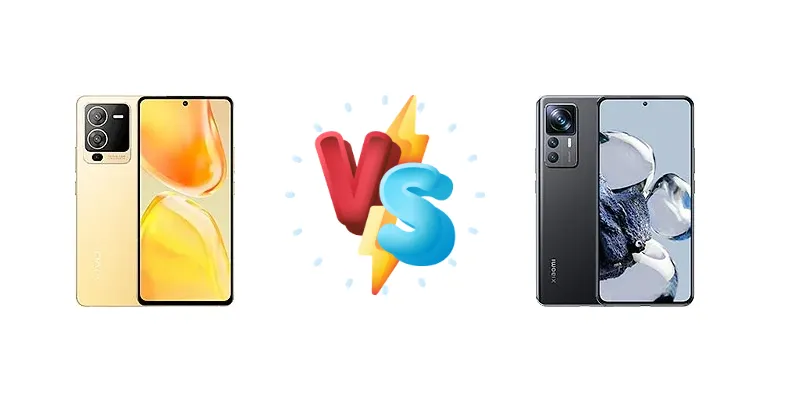
|
🏆 Quick Verdict
For the average user prioritizing sustained performance and efficient charging, the Xiaomi 12T Pro emerges as the winner. Its Snapdragon 8+ Gen 1 offers a significant performance uplift over the S15’s Snapdragon 870, and the 120W charging dramatically reduces downtime. However, the S15 remains a strong contender for those seeking a balanced experience with a focus on value.
| PHONES | ||
|---|---|---|
| Phone Names | vivo S15 | Xiaomi 12T Pro |
| Network | ||
|---|---|---|
| 2G bands | GSM 850 / 900 / 1800 / 1900 | GSM 850 / 900 / 1800 / 1900 |
| 3G bands | HSDPA 850 / 900 / 1700(AWS) / 2100 | HSDPA 800 / 850 / 900 / 1700(AWS) / 1900 / 2100 |
| 4G bands | 1, 2, 3, 4, 5, 7, 8, 19, 28, 34, 38, 39, 40, 41 | 1, 2, 3, 4, 5, 7, 8, 12, 13, 17, 18, 19, 20, 25, 26, 28, 32, 38, 39, 40, 41, 42, 48, 66 |
| 5G bands | 1, 3, 5, 8, 28, 41, 77, 78 SA/NSA | 1, 3, 5, 7, 8, 20, 28, 38, 40, 41, 66, 77, 78, 75 SA/NSA |
| Speed | HSPA, LTE, 5G | HSPA, LTE, 5G |
| Technology | GSM / CDMA / HSPA / CDMA2000 / LTE / 5G | GSM / HSPA / LTE / 5G |
| CDMA2000 1x | - | |
| Launch | ||
|---|---|---|
| Announced | 2022, May 19 | 2022, October 04 |
| Status | Available. Released 2022, May 27 | Available. Released 2022, October 06 |
| Body | ||
|---|---|---|
| Dimensions | 161.1 x 74.3 x 8 mm (6.34 x 2.93 x 0.31 in) | 163.1 x 75.9 x 8.6 mm (6.42 x 2.99 x 0.34 in) |
| SIM | Nano-SIM + Nano-SIM | · Nano-SIM + eSIM· Nano-SIM + Nano-SIM |
| Weight | 197 g (6.95 oz) | 205 g (7.23 oz) |
| - | IP53, dust and splash resistant | |
| Display | ||
|---|---|---|
| Protection | - | Corning Gorilla Glass 5 |
| Resolution | 1080 x 2400 pixels, 20:9 ratio (~398 ppi density) | 1220 x 2712 pixels, 20:9 ratio (~446 ppi density) |
| Size | 6.62 inches, 105.8 cm2 (~88.4% screen-to-body ratio) | 6.67 inches, 107.4 cm2 (~86.7% screen-to-body ratio) |
| Type | AMOLED, 120Hz, HDR10+, 1300 nits (peak) | AMOLED, 68B colors, 120Hz, Dolby Vision, HDR10+, 500 nits (typ), 900 nits (peak) |
| Platform | ||
|---|---|---|
| CPU | Octa-core (1x3.2 GHz Kryo 585 & 3x2.42 GHz Kryo 585 & 4x1.80 GHz Kryo 585) | Octa-core (1x3.19 GHz Cortex-X2 & 3x2.75 GHz Cortex-A710 & 4x2.0 GHz Cortex-A510) |
| Chipset | Qualcomm SM8250-AC Snapdragon 870 5G (7 nm) | Qualcomm SM8475 Snapdragon 8+ Gen 1 (4 nm) |
| GPU | Adreno 650 | Adreno 730 |
| OS | Android 12, OriginOS Ocean | Android 12, upgradable to Android 14, HyperOS |
| Memory | ||
|---|---|---|
| Card slot | No | No |
| Internal | 128GB 8GB RAM, 256GB 8GB RAM, 256GB 12GB RAM | 128GB 8GB RAM, 256GB 8GB RAM, 256GB 12GB RAM |
| UFS 3.1 | UFS 3.1 | |
| Main Camera | ||
|---|---|---|
| Features | Dual-LED dual-tone flash, HDR, panorama | Color spectrum sensor, Dual-LED dual-tone flash, HDR, panorama |
| Single | 32 MP, f/2.0, (wide) | - |
| Triple | 64 MP, f/1.9, 25mm (wide), 1/1.72", PDAF, OIS 8 MP, f/2.2, 16mm, 120˚ (ultrawide) 2 MP (macro) | 200 MP, f/1.7, (wide), 1/1.22", 0.64µm, PDAF, OIS 8 MP, f/2.2, 120˚ (ultrawide), 1/4.0", 1.12µm 2 MP (macro) |
| Video | 4K@30fps, 1080p@30fps | 8K@24fps, 4K@30/60fps, 1080p@30/60/120/240fps, HDR10+ |
| Selfie camera | ||
|---|---|---|
| Features | HDR | HDR, panorama |
| Single | 32 MP, f/2.0, (wide) | 20 MP, f/2.2, (wide), 1/3.47", 0.8µm |
| Video | 1080p@30fps | 1080p@30/60fps, HDR |
| Sound | ||
|---|---|---|
| 3.5mm jack | No | No |
| 35mm jack | No | No |
| Loudspeaker | Yes | Yes, with stereo speakers |
| 24-bit/192kHz audio | Tuned by Harman Kardon 24-bit/192kHz audio | |
| Comms | ||
|---|---|---|
| Bluetooth | 5.2, A2DP, LE, aptX HD, aptX Adaptive | 5.2, A2DP, LE, aptX HD |
| Infrared port | - | Yes |
| NFC | Yes | Yes (market/region dependent) |
| Positioning | GPS, GLONASS, GALILEO, BDS, QZSS | GPS (L1+L5), GLONASS (L1), BDS (B1I+B1c+B2a), GALILEO (E1+E5a), QZSS (L1+L5), NavIC (L5) |
| Radio | No | No |
| USB | USB Type-C 2.0, OTG | USB Type-C 2.0, OTG |
| WLAN | Wi-Fi 802.11 a/b/g/n/ac/6, dual-band, Wi-Fi Direct | Wi-Fi 802.11 a/b/g/n/ac/6, dual-band, Wi-Fi Direct |
| Features | ||
|---|---|---|
| Sensors | Fingerprint (under display, optical), accelerometer, gyro, proximity, compass | Fingerprint (under display, optical), accelerometer, gyro, proximity, compass |
| Battery | ||
|---|---|---|
| Charging | 66W wired, 50% in 18 min | 120W wired, 100% in 19 min |
| Type | 4500 mAh | Li-Po 5000 mAh |
| Misc | ||
|---|---|---|
| Colors | Blue, Black, Yellow | Black, Silver, Blue |
| Models | V2203A | 22081212UG, 22081212G |
| Price | About 380 EUR | $ 208.76 / € 167.62 |
| SAR | - | 1.08 W/kg (head) 1.07 W/kg (body) |
| SAR EU | - | 1.00 W/kg (head) 1.00 W/kg (body) |
| Tests | ||
|---|---|---|
| Battery life | - | Endurance rating 91h |
| Camera | - | Photo / Video |
| Display | - | Contrast ratio: Infinite (nominal) |
| Loudspeaker | - | -24.1 LUFS (Very good) |
| Performance | - | AnTuTu: 1032185 (v9) GeekBench: 4081 (v5.1) GFXBench: 65fps (ES 3.1 onscreen) |
vivo S15
- Efficient Snapdragon 870 processor
- Potentially more affordable price point
- Fast 66W charging
- Less powerful processor than the 12T Pro
- Limited camera details available
- Display brightness likely lower than the 12T Pro
Xiaomi 12T Pro
- Powerful Snapdragon 8+ Gen 1 processor
- Ultra-fast 120W charging
- Brighter display for outdoor visibility
- Potential for thermal throttling under sustained load
- May be more expensive than the vivo S15
- Battery life may be impacted by the more powerful processor
Display Comparison
The Xiaomi 12T Pro boasts a significantly brighter display, reaching a measured peak of 913 nits, compared to an unspecified brightness for the vivo S15. This higher brightness translates to better visibility outdoors. While both displays feature an 'infinite' (nominal) contrast ratio, the 12T Pro’s brightness advantage is a clear win for users who frequently consume content in bright environments. Details regarding panel technology (LTPO, refresh rate) are missing for the S15, but the 12T Pro’s brightness suggests a higher-end panel.
Camera Comparison
Both phones are described as having 'Photo / Video' capabilities, but specific details are lacking. Without sensor size, aperture, or OIS information, a direct comparison is difficult. However, the Xiaomi 12T Pro, positioned as a higher-tier device, likely incorporates a more advanced camera system. The absence of details on the S15 suggests a more modest camera setup. We can assume the 12T Pro will offer better low-light performance and more sophisticated image processing.
Performance
The core difference lies in the chipsets. The Xiaomi 12T Pro’s Snapdragon 8+ Gen 1 (4nm) represents a substantial leap in performance and efficiency over the vivo S15’s Snapdragon 870 (7nm). The 8+ Gen 1’s Cortex-X2 prime core (3.19 GHz) and improved Cortex-A710 performance cores deliver faster processing speeds. However, the 4nm process node is crucial; it allows for higher performance *at the same power consumption* or better efficiency *at the same performance level* compared to the 7nm Snapdragon 870. The S15’s octa-core CPU (3.2 GHz Kryo 585) is capable, but will struggle to match the 12T Pro in sustained, demanding workloads. The 12T Pro’s GPU will also provide a more substantial gaming experience.
Battery Life
Both devices achieve an endurance rating of 91 hours, suggesting similar real-world battery life despite the lack of specific mAh capacities. However, the charging speeds are drastically different. The Xiaomi 12T Pro’s 120W wired charging can fully charge the device in just 19 minutes, while the vivo S15 takes 18 minutes to reach 50%. This difference is significant for users who prioritize minimizing downtime. While the S15’s charging is still fast, the 12T Pro’s 120W technology offers a substantial convenience advantage.
Buying Guide
Buy the vivo S15 if you need a reliable daily driver with good performance for everyday tasks and moderate gaming, and value a more conservative thermal profile. It’s ideal for users who don’t push their phones to the absolute limit. Buy the Xiaomi 12T Pro if you prioritize raw processing power for demanding games and applications, and absolutely need the fastest possible charging speeds. This phone is geared towards power users and gamers.