
vivo S12 vs Samsung Galaxy S10: A Detailed Showdown
| Phones Images | |||||
|---|---|---|---|---|---|
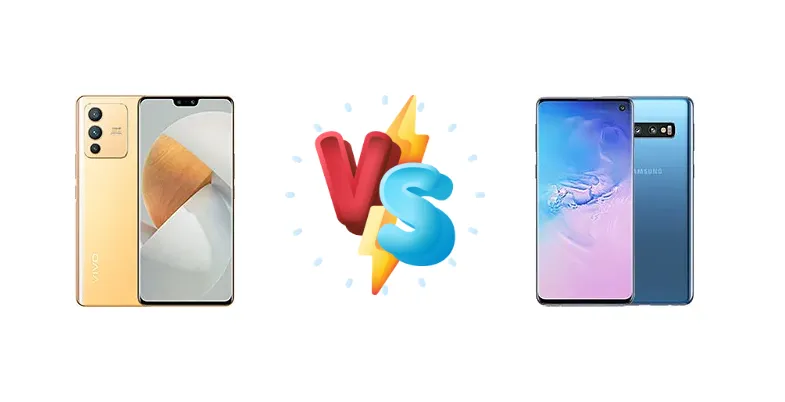
|
🏆 Quick Verdict
The Samsung Galaxy S10, despite its age, offers a more polished and well-rounded experience thanks to its superior display, established software support, and generally better camera performance. The vivo S12 shines with faster charging and a more modern chipset, but falls short in overall refinement.
| PHONES | ||
|---|---|---|
| Phone Names | vivo S12 | Samsung Galaxy S10 |
| Network | ||
|---|---|---|
| 2G bands | GSM 850 / 900 / 1800 / 1900 | GSM 850 / 900 / 1800 / 1900 |
| 3G bands | HSDPA 850 / 900 / 1700(AWS) / 2100 | HSDPA 850 / 900 / 1700(AWS) / 1900 / 2100 - Global, USA |
| 4G bands | 1, 3, 4, 5, 8, 28, 34, 38, 39, 40, 41 | 1, 2, 3, 4, 5, 7, 8, 12, 13, 17, 18, 19, 20, 25, 26, 28, 32, 38, 39, 40, 41, 66 - Global |
| 5G bands | 1, 3, 5, 8, 28, 41, 77, 78 SA/NSA | - |
| Speed | HSPA, LTE, 5G | HSPA 42.2/5.76 Mbps, LTE (7CA) Cat20 2000/150 Mbps |
| Technology | GSM / CDMA / HSPA / CDMA2000 / LTE / 5G | GSM / CDMA / HSPA / EVDO / LTE |
| CDMA2000 1x | 1, 2, 3, 4, 5, 7, 8, 12, 13, 14, 17, 18, 19, 20, 25, 26, 28, 29, 30, 38, 39, 40, 41, 46, 66, 71 - USA | |
| Launch | ||
|---|---|---|
| Announced | 2021, December 22 | 2019, February 20. Released 2019, March 08 |
| Status | Available. Released 2021, December 30 | Discontinued |
| Body | ||
|---|---|---|
| Build | - | Glass front (Gorilla Glass 6), glass back (Gorilla Glass 5), aluminum frame |
| Dimensions | 157.2 x 72.4 x 7.4 or 7.6 mm | 149.9 x 70.4 x 7.8 mm (5.90 x 2.77 x 0.31 in) |
| SIM | Nano-SIM + Nano-SIM | · Nano-SIM· Nano-SIM + Nano-SIM |
| Weight | 179 g or 181 g (6.31 oz) | 157 g (5.54 oz) |
| - | IP68 dust/water resistant (up to 1.5m for 30 min) | |
| Display | ||
|---|---|---|
| Protection | - | Corning Gorilla Glass 6 |
| Resolution | 1080 x 2400 pixels, 20:9 ratio (~409 ppi density) | 1440 x 3040 pixels, 19:9 ratio (~550 ppi density) |
| Size | 6.44 inches, 100.1 cm2 (~88.0% screen-to-body ratio) | 6.1 inches, 93.2 cm2 (~88.3% screen-to-body ratio) |
| Type | AMOLED, 90Hz, HDR10+ | Dynamic AMOLED, HDR10+ |
| - | Always-on display | |
| Platform | ||
|---|---|---|
| CPU | Octa-core (4x2.6 GHz Cortex-A78 & 4x2.0 GHz Cortex-A55) | Octa-core (2x2.73 GHz Mongoose M4 & 2x2.31 GHz Cortex-A75 & 4x1.95 GHz Cortex-A55) - EMEA/LATAMOcta-core (1x2.84 GHz Kryo 485 & 3x2.42 GHz Kryo 485 & 4x1.78 GHz Kryo 485) - USA/China |
| Chipset | Mediatek Dimensity 1100 (6 nm) | Exynos 9820 (8 nm) - EMEA/LATAMQualcomm SM8150 Snapdragon 855 (7 nm) - USA/China |
| GPU | Mali-G77 MC9 | Mali-G76 MP12 - EMEA/LATAMAdreno 640 - USA/China |
| OS | Android 11, OriginOS Ocean | Android 9.0 (Pie), upgradable to Android 12, One UI 4.1 |
| Memory | ||
|---|---|---|
| Card slot | No | microSDXC (uses shared SIM slot) - dual SIM model only |
| Internal | 128GB 8GB RAM, 256GB 8GB RAM, 256GB 12GB RAM | 128GB 6GB RAM, 128GB 8GB RAM, 512GB 8GB RAM |
| UFS 3.1 | UFS 2.1 | |
| Main Camera | ||
|---|---|---|
| Dual | 44 MP, f/2.0, (wide), AF 8 MP, f/2.3, 105˚ (ultrawide) | - |
| Features | Dual-LED flash, HDR, panorama | LED flash, auto-HDR, panorama |
| Triple | 108 MP, f/1.9, 26mm (wide), 1/1.52", PDAF 8 MP, f/2.2, 120˚, 16mm (ultrawide), 1/4.0", 1.12µm 2 MP (macro) | 12 MP, f/1.5-2.4, 26mm (wide), 1/2.55", 1.4µm, dual pixel PDAF, OIS 12 MP, f/2.4, 52mm (telephoto), 1/3.6", 1.0µm, AF, OIS, 2x optical zoom 16 MP, f/2.2, 12mm (ultrawide), 1/3.1", 1.0µm, Super Steady video |
| Video | 4K@30fps, 1080p@30fps, gyro-EIS | 4K@60fps (no EIS), 4K@30fps, 1080p@30/60/240fps, 720p@960fps, HDR10+, stereo sound rec., gyro-EIS & OIS |
| Selfie camera | ||
|---|---|---|
| Dual | 44 MP, f/2.0, (wide), AF 8 MP, f/2.3, 105˚ (ultrawide) | - |
| Features | Dual-LED flash, HDR | HDR |
| Single | - | 10 MP, f/1.9, 26mm (wide), 1/3", 1.22µm, dual pixel PDAF |
| Video | 4K@30fps, 1080p@30fps | 4K@30/60fps, 1080p@30fps |
| Sound | ||
|---|---|---|
| 3.5mm jack | No | Yes |
| 35mm jack | No | Yes |
| Loudspeaker | Yes | Yes, with stereo speakers |
| 24-bit/192kHz audio | 32-bit/384kHz audio Tuned by AKG | |
| Comms | ||
|---|---|---|
| Bluetooth | 5.2, A2DP, LE, aptX HD | 5.0, A2DP, LE, aptX |
| NFC | Yes | Yes |
| Positioning | GPS, GLONASS, GALILEO, BDS, QZSS | GPS, GLONASS, BDS, GALILEO |
| Radio | No | FM radio (USA & Canada only) |
| USB | USB Type-C, OTG | USB Type-C 3.1, OTG, DisplayPort |
| WLAN | Wi-Fi 802.11 a/b/g/n/ac, dual-band, Wi-Fi Direct | Wi-Fi 802.11 a/b/g/n/ac/6, dual-band, Wi-Fi Direct |
| Features | ||
|---|---|---|
| Sensors | Fingerprint (under display, optical), accelerometer, gyro, proximity, compass | Fingerprint (under display, ultrasonic), accelerometer, gyro, proximity, compass, barometer, heart rate, SpO2 |
| - | ANT+ Bixby natural language commands and dictation Samsung DeX (desktop experience support) Samsung Pay (Visa, MasterCard certified) | |
| Battery | ||
|---|---|---|
| Charging | 44W wired | 15W wired, PD2.0 15W wireless (Qi) 4.5W reverse wireless |
| Type | 4200 mAh | Li-Ion 3400 mAh, non-removable |
| Misc | ||
|---|---|---|
| Colors | Black, Blue, Yellow | Prism White, Prism Black, Prism Green, Prism Blue, Canary Yellow, Flamingo Pink, Cardinal Red, Smoke Blue |
| Models | V2162A | SM-G973F, SM-G973U, SM-G973W, SM-G973U1, SM-G9730, SM-G973N, SM-G973X, SCV41, SM-G973C |
| Price | About 390 EUR | About 150 EUR |
| SAR | - | 0.93 W/kg (head) 0.79 W/kg (body) |
| SAR EU | - | 0.48 W/kg (head) 1.59 W/kg (body) |
| Tests | ||
|---|---|---|
| Audio quality | - | Noise -92.2dB / Crosstalk -92.7dB |
| Battery life | - | Endurance rating 79h |
| Camera | - | Photo / Video |
| Display | - | Contrast ratio: Infinite (nominal), 4.498 (sunlight) |
| Loudspeaker | - | Voice 82dB / Noise 74dB / Ring 85dB |
| Performance | - | AnTuTu: 328366 (v7) GeekBench: 10174 (v4.4) GFXBench: 23fps (ES 3.1 onscreen) |
vivo S12
- Faster Charging (44W)
- Modern Chipset (Dimensity 1100)
- Excellent Selfie Camera
- Stylish Design
- Older Software Support
- Less Refined Display
- Camera Not as Consistent as S10
Samsung Galaxy S10
- Superior Display (Dynamic AMOLED)
- Excellent Battery Life (79h Endurance)
- Established Software Support
- Wireless Charging
- Slower Charging (15W)
- Older Chipset (Exynos/Snapdragon 855)
- Less Competitive Selfie Camera
Display Comparison
The Samsung Galaxy S10 boasts a stunning Dynamic AMOLED display with an incredibly high contrast ratio (effectively infinite nominal, 4.498 in sunlight). While the vivo S12 has a good quality AMOLED display, it doesn't quite match the S10's vibrancy and color accuracy. The S10's display is noticeably brighter and more enjoyable for media consumption.
Camera Comparison
Both phones offer capable camera systems. The vivo S12 excels in selfie photography with its high-resolution front-facing camera and dedicated features. The Galaxy S10, however, generally produces more consistent and detailed photos across all lenses, especially in challenging lighting conditions. Video recording quality is also slightly better on the S10.
Performance
The vivo S12's Mediatek Dimensity 1100 offers a significant performance advantage over the Galaxy S10's Exynos 9820/Snapdragon 855, particularly in graphics-intensive tasks. While the S10 was flagship-level at its release, the S12's newer chipset provides smoother multitasking and better gaming performance. However, software optimization on the S10 can still make it feel responsive for everyday use.
Battery Life
The Galaxy S10's endurance rating of 79h is exceptionally high, suggesting excellent battery life. The vivo S12, while having a decent battery, doesn't match the S10's longevity. The S12's 44W charging is significantly faster than the S10's 15W wired charging, but the S10 offers wireless and reverse wireless charging capabilities.
Buying Guide
The vivo S12 is ideal for users prioritizing fast charging, a modern chipset for gaming, and excellent selfie camera capabilities. The Samsung Galaxy S10 is a better choice for those seeking a premium display, a more mature software experience, and a reliable all-around performer, especially if budget is a concern.