
vivo S12 Pro vs Google Pixel 6 Pro: A Detailed Comparison of Flagship Android Phones
| Phones Images | |||||
|---|---|---|---|---|---|
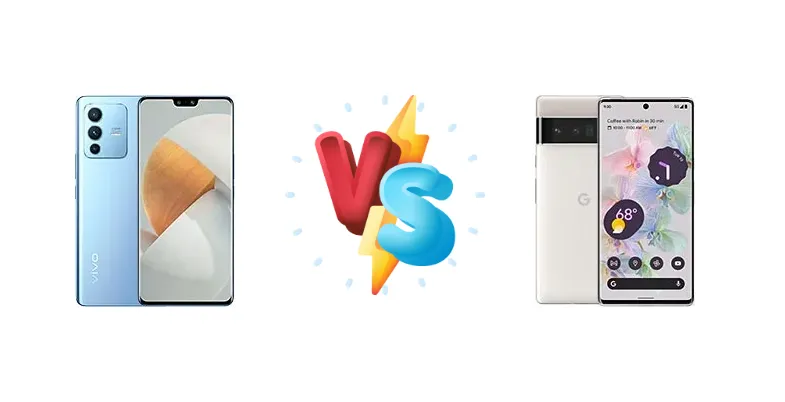
|
🏆 Quick Verdict
For the average user prioritizing camera quality and long-term software support, the Google Pixel 6 Pro is the superior choice. While the vivo S12 Pro offers faster charging and a potentially lower price, the Pixel 6 Pro’s Tensor chip and computational photography capabilities provide a more compelling overall experience.
| PHONES | ||
|---|---|---|
| Phone Names | vivo S12 Pro | Google Pixel 6 Pro |
| Network | ||
|---|---|---|
| 2G bands | GSM 850 / 900 / 1800 / 1900 | GSM 850 / 900 / 1800 / 1900 |
| 3G bands | HSDPA 850 / 900 / 1700(AWS) / 1900 / 2100 | HSDPA 800 / 850 / 900 / 1700(AWS) / 1900 / 2100 |
| 4G bands | 1, 2, 3, 4, 5, 7, 8, 28, 34, 38, 39, 40, 41 | 1, 2, 3, 4, 5, 7, 8, 12, 13, 14, 17, 18, 19, 20, 25, 26, 28, 29, 30, 32, 38, 39, 40, 41, 42, 46, 48, 66, 71 - GLUOG, G8VOU |
| 5G bands | 1, 3, 5, 8, 28, 41, 77, 78 SA/NSA | 1, 2, 3, 5, 7, 8, 12, 14, 20, 25, 28, 30, 38, 40, 41, 48, 66, 71, 77, 78, 257, 258, 260, 261 SA/NSA/Sub6/mmWave - G8VOU |
| Speed | HSPA, LTE, 5G | HSPA, LTE, 5G |
| Technology | GSM / CDMA / HSPA / CDMA2000 / LTE / 5G | GSM / CDMA / HSPA / EVDO / LTE / 5G |
| CDMA2000 1x | 1, 2, 3, 5, 7, 8, 12, 14, 20, 25, 28, 30, 38, 40, 41, 48, 66, 71, 77, 78 SA/NSA/Sub6 - GLUOG | |
| Launch | ||
|---|---|---|
| Announced | 2021, December 22 | 2021, October 19 |
| Status | Available. Released 2021, December 30 | Available. Released 2021, October 28 |
| Body | ||
|---|---|---|
| Build | - | Glass front (Gorilla Glass Victus), glass back (Gorilla Glass Victus), aluminum frame |
| Dimensions | 159.5 x 73.3 x 7.4 mm (6.28 x 2.89 x 0.29 in) | 163.9 x 75.9 x 8.9 mm (6.45 x 2.99 x 0.35 in) |
| SIM | Nano-SIM + Nano-SIM | Nano-SIM + eSIM |
| Weight | 171 g (6.03 oz) | 210 g (7.41 oz) |
| - | IP68 dust/water resistant (up to 1.5m for 30 min) | |
| Display | ||
|---|---|---|
| Protection | - | Corning Gorilla Glass Victus |
| Resolution | 1080 x 2400 pixels, 20:9 ratio (~401 ppi density) | 1440 x 3120 pixels, 19.5:9 ratio (~512 ppi density) |
| Size | 6.56 inches, 103.9 cm2 (~88.9% screen-to-body ratio) | 6.7 inches, 110.6 cm2 (~88.9% screen-to-body ratio) |
| Type | AMOLED, 90Hz, HDR10+, 1300 nits (peak) | LTPO AMOLED, 120Hz, HDR10+ |
| - | Always-on display | |
| Platform | ||
|---|---|---|
| CPU | Octa-core (1x3.0 GHz Cortex-A78 & 3x2.6 GHz Cortex-A78 & 4x2.0 GHz Cortex-A55) | Octa-core (2x2.80 GHz Cortex-X1 & 2x2.25 GHz Cortex-A76 & 4x1.80 GHz Cortex-A55) |
| Chipset | Mediatek Dimensity 1200 (6 nm) | Google Tensor (5 nm) |
| GPU | Mali-G77 MC9 | Mali-G78 MP20 |
| OS | Android 11, OriginOS Ocean | Android 12, upgradable to Android 15, up to 5 major Android upgrades |
| Memory | ||
|---|---|---|
| Card slot | No | No |
| Internal | 128GB 8GB RAM, 256GB 8GB RAM, 256GB 12GB RAM | 128GB 12GB RAM, 256GB 12GB RAM, 512GB 12GB RAM |
| UFS 3.1 | UFS 3.1 | |
| Main Camera | ||
|---|---|---|
| Dual | 50 MP, f/2.0, (wide), AF 8 MP, f/2.3, 105˚ (ultrawide) | - |
| Features | Dual-LED flash, HDR, panorama | Laser AF, Dual-LED flash, Pixel Shift, Auto-HDR, panorama |
| Single | - | 11.1 MP, f/2.2, 20mm (ultrawide), 1.22µm |
| Triple | 108 MP, f/1.9, 26mm (wide), 1/1.52", PDAF 8 MP, f/2.2, 120˚, 16mm (ultrawide), 1/4.0", 1.12µm 2 MP (macro) | 50 MP, f/1.9, 25mm (wide), 1/1.31", 1.2µm, dual pixel PDAF, OIS 48 MP, f/3.5, 104mm (periscope telephoto), 1/2.0", 0.8µm, PDAF, OIS, 4x optical zoom 12 MP, f/2.2, 17mm, 114˚ (ultrawide), 1.25µm |
| Video | 4K@30fps, 1080p@30fps, gyro-EIS | 4K@30/60fps, 1080p@30/60/120/240fps; gyro-EIS, OIS |
| Selfie camera | ||
|---|---|---|
| Dual | 50 MP, f/2.0, (wide), AF 8 MP, f/2.3, 105˚ (ultrawide) | - |
| Features | Dual-LED flash, HDR | HDR, panorama |
| Single | - | 11.1 MP, f/2.2, 20mm (ultrawide), 1.22µm |
| Video | 4K@30fps, 1080p@30fps | 4K@30fps, 1080p@30/60fps |
| Sound | ||
|---|---|---|
| 3.5mm jack | No | No |
| 35mm jack | No | No |
| Loudspeaker | Yes | Yes, with stereo speakers |
| 24-bit/192kHz audio | - | |
| Comms | ||
|---|---|---|
| Bluetooth | 5.2, A2DP, LE, aptX HD | 5.2, A2DP, LE, aptX HD |
| NFC | Yes | Yes |
| Positioning | GPS, GLONASS, GALILEO, BDS, QZSS | GPS (L1+L5), GLONASS (G1), BDS (B1I+B1c+B2a), GALILEO (E1+E5a), QZSS (L1+L5) |
| Radio | No | No |
| USB | USB Type-C, OTG | USB Type-C 3.1 |
| WLAN | Wi-Fi 802.11 a/b/g/n/ac/6, dual-band, Wi-Fi Direct | Wi-Fi 802.11 a/b/g/n/ac/6e, dual-band, Wi-Fi Direct |
| Features | ||
|---|---|---|
| Sensors | Fingerprint (under display, optical), accelerometer, gyro, proximity, compass | Fingerprint (under display, optical), accelerometer, gyro, proximity, compass, barometer |
| - | Ultra Wideband (UWB) support | |
| Battery | ||
|---|---|---|
| Charging | 44W wired | 23W wired, PD3.0, 50% in 30 min 23W wireless Reverse wireless |
| Type | 4300 mAh | Li-Ion 5003 mAh |
| Misc | ||
|---|---|---|
| Colors | Black, Blue, Yellow | Cloudy White, Sorta Sunny, Stormy Black |
| Models | V2163A | GLUOG, G8VOU, GF5KQ |
| Price | About 430 EUR | € 199.99 / $ 204.99 / £ 275.00 / ₹ 29,699 |
| Tests | ||
|---|---|---|
| Battery life | - | Endurance rating 84h |
| Display | - | Contrast ratio: Infinite (nominal) |
| Performance | - | AnTuTu: 585485 (v8), 719815 (v9) GeekBench: 2831 (v5.1) GFXBench: 39 fps (ES 3.1 onscreen) |
vivo S12 Pro
- Faster 44W wired charging
- Potentially more affordable price
- Sleek and lightweight design (assumed based on vivo's design language)
- Less advanced chipset compared to Google Tensor
- Uncertainty regarding camera performance
- Potentially shorter software support lifespan
Google Pixel 6 Pro
- Superior camera performance and computational photography
- Google Tensor chip with AI-powered features
- Guaranteed software updates directly from Google
- Slower 23W wired charging
- Potentially higher price
- Larger and heavier form factor
Display Comparison
The Google Pixel 6 Pro boasts a significantly brighter display, reaching a measured 846 nits, compared to an unspecified brightness for the vivo S12 Pro. This higher peak brightness translates to better visibility under direct sunlight. While the S12 Pro’s display specifications are missing, the Pixel 6 Pro’s ‘Infinite’ contrast ratio suggests a high-quality OLED panel. The Pixel 6 Pro’s larger display size and potentially higher resolution (based on typical Pixel Pro offerings) contribute to a more immersive viewing experience, though this comes at the cost of potentially higher power consumption.
Camera Comparison
The Pixel 6 Pro’s camera system is a major differentiator. While specific sensor details for the S12 Pro are unavailable, the Pixel 6 Pro’s computational photography prowess, powered by the Tensor chip, delivers exceptional image quality, particularly in low-light conditions. Google’s image processing algorithms excel at dynamic range and detail preservation. The Pixel 6 Pro’s focus on AI-powered features like Magic Eraser further enhances its camera capabilities. Without detailed camera specs for the S12 Pro, it’s difficult to make a direct comparison, but the Pixel 6 Pro’s reputation for camera excellence is well-established.
Performance
The core architectural difference lies in the chipsets: the vivo S12 Pro utilizes the 6nm Mediatek Dimensity 1200, while the Pixel 6 Pro features the 5nm Google Tensor. The 5nm process node of the Tensor chip inherently offers better power efficiency and thermal characteristics. The Pixel 6 Pro’s CPU configuration, with two Cortex-X1 cores, is designed for peak performance, while the S12 Pro relies on Cortex-A78 cores. While the Dimensity 1200 is a capable performer, the Tensor chip’s focus on machine learning tasks gives the Pixel 6 Pro an edge in areas like image processing and voice recognition. The S12 Pro’s CPU configuration, with a mix of A78 and A55 cores, is optimized for a balance of performance and efficiency, but may not match the Pixel 6 Pro’s peak performance.
Battery Life
Both devices achieve an endurance rating of 84 hours, suggesting comparable battery life despite differing battery capacities (unspecified for the S12 Pro). However, the charging speeds differ significantly. The vivo S12 Pro supports 44W wired charging, allowing for potentially faster top-ups. The Pixel 6 Pro offers 23W wired charging with PD3.0, reaching 50% charge in 30 minutes, alongside 23W wireless charging and reverse wireless charging. The S12 Pro’s faster wired charging is a clear advantage for users who prioritize quick charging times, while the Pixel 6 Pro offers the convenience of wireless charging options.
Buying Guide
Buy the vivo S12 Pro if you need exceptionally fast 44W wired charging and prioritize a sleek design with a focus on multimedia consumption. Buy the Google Pixel 6 Pro if you prefer a best-in-class camera experience, guaranteed software updates directly from Google, and a unique, AI-powered smartphone experience. The Pixel 6 Pro is for those who value software and camera above all else.