
iQOO Z10 Turbo Pro vs Xiaomi Civi 4 Pro: A Deep Dive into Snapdragon 8s Gen 4 vs Gen 3
| Phones Images | |||||
|---|---|---|---|---|---|
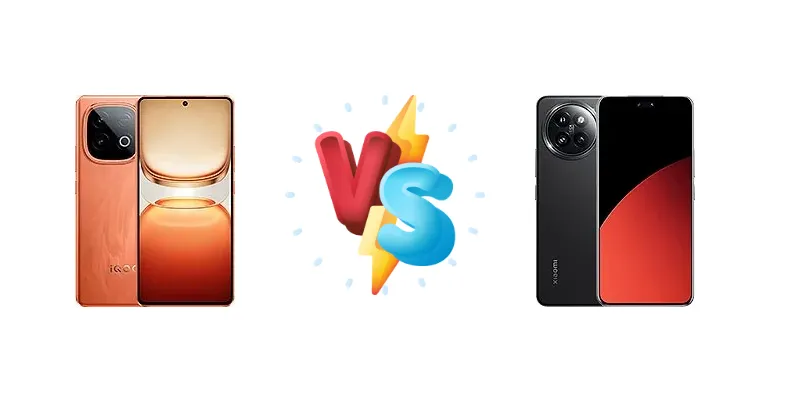
|
🏆 Quick Verdict
For users prioritizing raw performance and blazing-fast charging, the iQOO Z10 Turbo Pro is the clear winner. Its Snapdragon 8s Gen 4 and 120W charging significantly outperform the Civi 4 Pro. However, the Civi 4 Pro offers a more polished design and potentially better software experience for those valuing aesthetics and refinement.
| PHONES | ||
|---|---|---|
| Phone Names | vivo iQOO Z10 Turbo Pro | Xiaomi Civi 4 Pro |
| Network | ||
|---|---|---|
| 2G bands | GSM 850 / 900 / 1800 / 1900 | GSM 850 / 900 / 1800 / 1900 |
| 3G bands | HSDPA 800 / 850 / 900 / 2100 | HSDPA 800 / 850 / 900 / 1700(AWS) / 1900 / 2100 |
| 4G bands | 1, 3, 5, 8, 18, 19, 26, 28, 34, 38, 39, 40, 41, 42, 48 | 1, 3, 4, 5, 8, 18, 19, 26, 28, 34, 38, 39, 40, 41, 42, 48, 66 |
| 5G bands | 1, 3, 5, 8, 18, 26, 28, 38, 40, 41, 48, 77, 78 SA/NSA | 1, 3, 5, 8, 28, 38, 40, 41, 48, 66, 77, 78 SA/NSA |
| Speed | HSPA, LTE, 5G | HSPA, LTE, 5G |
| Technology | GSM / HSPA / LTE / 5G | GSM / CDMA / HSPA / CDMA2000 / LTE / 5G |
| Launch | ||
|---|---|---|
| Announced | 2025, April 28 | 2024, March 21 |
| Status | Available. Released 2025, April 28 | Available. Released 2024, March 21 |
| Body | ||
|---|---|---|
| Build | Glass front, plastic back, plastic frame | Glass front (Gorilla Glass Victus 2), glass back or silicone polymer back (eco leather), aluminum frame |
| Dimensions | 163.7 x 75.9 x 8.1 mm (6.44 x 2.99 x 0.32 in) | 157.2 x 72.8 x 7.5 mm or 7.8 mm |
| SIM | Nano-SIM + Nano-SIM | Nano-SIM + Nano-SIM |
| Weight | 206 g (7.27 oz) | 177.6 or 179.3 g or 180.9 g (6.28 oz) |
| Display | ||
|---|---|---|
| Protection | - | Corning Gorilla Glass Victus 2 |
| Resolution | 1260 x 2800 pixels, 20:9 ratio (~453 ppi density) | 1236 x 2750 pixels, 20:9 ratio (~460 ppi density) |
| Size | 6.78 inches, 111.0 cm2 (~89.3% screen-to-body ratio) | 6.55 inches, 103.5 cm2 (~90.4% screen-to-body ratio) |
| Type | AMOLED, 1B colors, 144Hz, 4320Hz PWM, HDR, 2000 nits (HBM), 4400 nits (peak) | AMOLED, 68B colors, 120Hz, Dolby Vision, HDR10+, 3000 nits (peak) |
| Platform | ||
|---|---|---|
| CPU | Octa-core (1x3.21 GHz Cortex-X4 & 3x3.0 GHz Cortex-A720 & 2x2.8 GHz Cortex-A720 & 2x2.0 GHz Cortex-A720) | Octa-core (1x3.0 GHz Cortex-X4 & 4x2.8 GHz Cortex-A720 & 3x2.0 GHz Cortex-A520) |
| Chipset | Qualcomm SM8735 Snapdragon 8s Gen 4 (4 nm) | Qualcomm SM8635 Snapdragon 8s Gen 3 (4 nm) |
| GPU | Adreno 825 | Adreno 735 |
| OS | Android 15, OriginOS 5 | Android 14, HyperOS |
| Memory | ||
|---|---|---|
| Card slot | No | No |
| Internal | 256GB 12GB RAM, 256GB 16GB RAM, 512GB 12GB RAM, 512GB 16GB RAM | 256GB 12GB RAM, 512GB 12GB RAM, 512GB 16GB RAM |
| Main Camera | ||
|---|---|---|
| Dual | 50 MP, f/1.8, (wide), 1/1.95", 0.8µm, PDAF, OIS 8 MP, f/2.2, (ultrawide) | - |
| Features | Color spectrum sensor, LED flash, HDR, panorama | Color spectrum sensor, Dual-LED flash, HDR, panorama, Leica lenses |
| Triple | - | 50 MP, f/1.6, 25mm (wide), 1/1.55", 1.0µm, PDAF, OIS 50 MP, f/2.0, 50mm (telephoto), 0.64µm, PDAF, 2x optical zoom 12 MP, f/2.2, 15mm, 120˚ (ultrawide), 1.12µm |
| Video | 4K@30/60fps, 1080p, gyro-EIS, OIS | 4K@24/30/60fps, 1080p@30/60/120/240/960fps, 720p@1920fps, HDR10+, BT.2020, 10-bit video, gyro-EIS |
| Selfie camera | ||
|---|---|---|
| Dual | - | 32 MP, f/2.0, 26mm (wide), 1/2.8", 0.8µm, AF 32 MP, f/2.4, 100˚ (ultrawide), 1/2.8", 0.8µm |
| Features | - | HDR, panorama |
| Single | 16 MP, f/2.5, (wide), 1/3.0", 1.0µm | - |
| Video | 1080p@30fps, gyro-EIS | 4K@30fps, 1080p@30/60fps; gyro-EIS |
| Sound | ||
|---|---|---|
| 35mm jack | No | No |
| Loudspeaker | Yes, with stereo speakers | Yes, with stereo speakers |
| Comms | ||
|---|---|---|
| Bluetooth | 6.0, A2DP, LE, aptX HD, aptX Adaptive, aptX Lossless, LHDC 5 | 5.4, A2DP, LE, LHDC |
| Infrared port | Yes | Yes |
| NFC | Yes | Yes |
| Positioning | GPS (L1+L5), BDS (B1I+B1C+B2a), GALILEO (E1+E5a), QZSS (L1+L5), GLONASS | GPS (L1), GLONASS (G1), BDS (B1I+B1c), GALILEO (E1), QZSS (L1) |
| Radio | No | No |
| USB | USB Type-C 2.0, OTG | USB Type-C 2.0, OTG |
| WLAN | Wi-Fi 802.11 a/b/g/n/ac/6/7, dual-band | Wi-Fi 802.11 a/b/g/n/ac/6, dual-band, Wi-Fi Direct |
| Features | ||
|---|---|---|
| Sensors | Fingerprint (under display, optical), accelerometer, gyro, proximity, compass | Fingerprint (under display, optical), accelerometer, gyro, proximity, compass |
| Battery | ||
|---|---|---|
| Charging | 120W wired, 100W PD, 100W PPS, 50% in 15 min, 100% in 33 min Reverse wired | 67W wired, PD3.0, 100% in 40 minutes |
| Type | Si/C Li-Ion 7000 mAh | Li-Po 4700 mAh |
| Misc | ||
|---|---|---|
| Colors | White, Black, Orange, Gold | Black, Pink, Blue, Green |
| Models | V2453A | 24053PY09C |
| Price | About 240 EUR | About 380 EUR |
vivo iQOO Z10 Turbo Pro
- Significantly faster 120W charging
- More powerful Snapdragon 8s Gen 4 chipset
- Superior CPU performance for demanding tasks
- Potentially less refined design
- Software experience may not be as polished as Xiaomi
Xiaomi Civi 4 Pro
- Potentially more stylish and refined design
- Smoother software experience (typical of Xiaomi)
- Likely better camera features and image processing
- Slower 67W charging
- Less powerful Snapdragon 8s Gen 3 chipset
- Lower CPU performance compared to iQOO
Display Comparison
While both devices likely employ high-quality AMOLED panels (data not provided), the core difference lies in their processing power. The iQOO Z10 Turbo Pro, powered by the Snapdragon 8s Gen 4, benefits from a more advanced CPU architecture. The Snapdragon 8s Gen 4’s Cortex-X4 prime core clocked at 3.21 GHz offers a performance advantage over the Civi 4 Pro’s 3.0 GHz Cortex-X4. This translates to snappier app launches and smoother multitasking. The Civi 4 Pro may compensate with software optimizations, but the iQOO has a hardware edge.
Camera Comparison
Without detailed camera specifications, a direct comparison is limited. However, the market positioning suggests the Civi 4 Pro likely prioritizes camera quality and features more heavily than the iQOO Z10 Turbo Pro. Xiaomi’s Civi series is known for its selfie capabilities and image processing. The iQOO, while capable, likely focuses on delivering a solid camera experience without being a primary selling point. Sensor size and OIS (Optical Image Stabilization) will be key differentiators, but data is unavailable to determine which device has the advantage.
Performance
The iQOO Z10 Turbo Pro’s Snapdragon 8s Gen 4 (4nm) is a generational leap over the Xiaomi Civi 4 Pro’s Snapdragon 8s Gen 3 (4nm). The iQOO’s CPU configuration – 1x3.21 GHz Cortex-X4, 3x3.0 GHz Cortex-A720, 2x2.8 GHz Cortex-A720, and 2x2.0 GHz Cortex-A720 – provides a more robust multi-core performance profile compared to the Civi 4 Pro’s 1x3.0 GHz Cortex-X4, 4x2.8 GHz Cortex-A720, and 3x2.0 GHz Cortex-A520. The iQOO’s additional A720 cores and higher clock speeds will be noticeable in sustained workloads and gaming. While both use the same 4nm process, the architectural improvements in the Gen 4 chipset contribute to better efficiency and potentially lower thermal throttling during extended gaming sessions.
Battery Life
The iQOO Z10 Turbo Pro’s 120W wired charging is a game-changer, achieving 50% charge in just 15 minutes and 100% in 33 minutes. This drastically reduces downtime compared to the Xiaomi Civi 4 Pro’s 67W charging, which takes 40 minutes for a full charge. While battery capacity isn’t specified, the iQOO’s faster charging mitigates any potential disadvantage from a smaller battery. The iQOO also supports 100W PD and PPS, offering wider compatibility with chargers and accessories. The Civi 4 Pro supports PD3.0, but the slower charging speed is a significant trade-off.
Buying Guide
Buy the vivo iQOO Z10 Turbo Pro if you need uncompromising performance for gaming and demanding tasks, and if minimizing charging times is a priority. Buy the Xiaomi Civi 4 Pro if you prefer a more stylish and refined device with a focus on everyday usability and a potentially smoother software experience, even if it means sacrificing some raw power and charging speed.