
iQOO Neo9S Pro vs ZTE nubia Z60 Ultra: A Deep Dive into Flagship Performance
| Phones Images | |||||
|---|---|---|---|---|---|
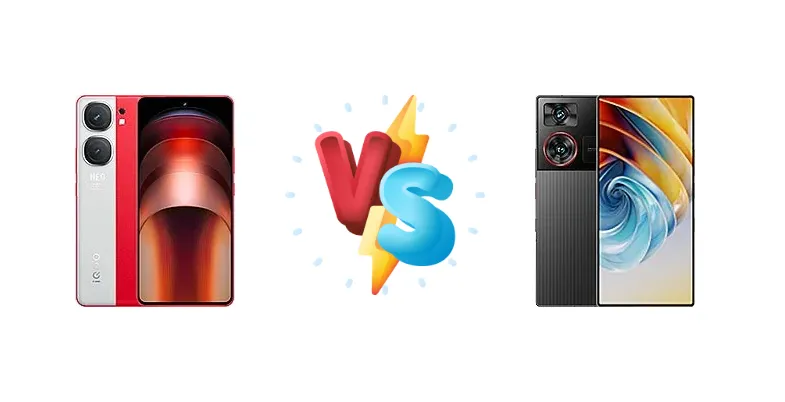
|
🏆 Quick Verdict
For users prioritizing raw speed and the fastest possible charging, the iQOO Neo9S Pro is the clear winner. However, the ZTE nubia Z60 Ultra Leading offers a more balanced experience with exceptional battery life and a proven Snapdragon 8 Gen 3 platform, making it ideal for power users who value longevity.
| PHONES | ||
|---|---|---|
| Phone Names | vivo iQOO Neo9S Pro | ZTE nubia Z60 Ultra Leading |
| Network | ||
|---|---|---|
| 2G bands | GSM 850 / 900 / 1800 / 1900 | GSM 850 / 900 / 1800 / 1900 |
| 3G bands | HSDPA 850 / 900 / 1700(AWS) / 1900 / 2100 | HSDPA 850 / 900 / 1700(AWS) / 1900 / 2100 |
| 4G bands | 1, 3, 4, 5, 7, 8, 19, 28, 34, 38, 39, 40, 41 | 1, 2, 3, 4, 5, 7, 8, 12, 17, 18, 19, 20, 26, 28, 34, 38, 39, 40, 41, 66 - International |
| 5G bands | 1, 3, 5, 8, 28, 38, 40, 41, 77, 78 SA/NSA | 1, 2, 3, 5, 7, 8, 28, 38, 40, 41, 66, 77, 78 SA/NSA - International |
| Speed | HSPA, LTE, 5G | HSPA, LTE, 5G |
| Technology | GSM / CDMA / HSPA / CDMA2000 / LTE / 5G | GSM / CDMA / HSPA / CDMA2000 / LTE / 5G |
| Launch | ||
|---|---|---|
| Announced | 2024, May 20 | 2024, July 23 |
| Status | Available. Released 2024, May 20 | Available. Released 2024, August 12 |
| Body | ||
|---|---|---|
| Build | - | Glass front, aluminum frame, glass back |
| Dimensions | 163.5 x 75.7 x 8 mm or 8.3 mm | 164 x 76.4 x 8.8 mm (6.46 x 3.01 x 0.35 in) |
| SIM | Nano-SIM + Nano-SIM | Nano-SIM + Nano-SIM |
| Weight | 190 g or 196 g (6.70 oz) | 246 g (8.68 oz) |
| Display | ||
|---|---|---|
| Resolution | 1260 x 2800 pixels, 20:9 ratio (~453 ppi density) | 1116 x 2480 pixels, 20:9 ratio (~400 ppi density) |
| Size | 6.78 inches, 111.0 cm2 (~89.7% screen-to-body ratio) | 6.8 inches, 111.6 cm2 (~89.1% screen-to-body ratio) |
| Type | LTPO AMOLED, 1B colors, 144Hz, HDR10+, 1400 nits (HBM) | AMOLED, 1B colors, 120Hz, HDR10, 1500 nits (peak) |
| Platform | ||
|---|---|---|
| CPU | Octa-core (1x3.4 GHz Cortex-X4 & 3x2.85 GHz Cortex-X4 & 4x2.0 GHz Cortex-A720) | Octa-core (1x3.4 GHz Cortex-X4 & 3x3.2 GHz Cortex-A720 & 2x3.0 GHz Cortex-A720 & 2x2.3 GHz Cortex-A520) |
| Chipset | Mediatek Dimensity 9300+ (4 nm) | Qualcomm SM8650-AC Snapdragon 8 Gen 3 (4 nm) |
| GPU | Immortalis-G720 MC12 | Adreno 750 (1 GHz) |
| OS | Android 14, OriginOS 4 | Android 14, MyOS 14 (International), MyOS 14.5 (China) |
| Memory | ||
|---|---|---|
| Card slot | No | No |
| Internal | 256GB 12GB RAM, 512GB 12GB RAM, 512GB 16GB RAM, 1TB 16GB RAM | 256GB 8GB RAM, 256GB 12GB RAM, 512GB 16GB RAM, 1TB 16GB RAM, 1TB 24GB RAM |
| Main Camera | ||
|---|---|---|
| Dual | 50 MP, f/1.9, (wide), 1/1.49", PDAF, OIS 50 MP, f/2.0, 119˚ (ultrawide), 1/2.76", 0.64µm, AF | - |
| Features | LED flash, panorama, HDR | Laser AF, color spectrum sensor, Ring-LED, dual-tone flash, panorama, HDR |
| Triple | - | 50 MP, f/1.6, 35mm (standard), 1/1.56", 1.0µm, PDAF, OIS 64 MP, f/3.3, 85mm (periscope telephoto), 1/2.0", PDAF, OIS, 3.3x optical zoom (vs. 26mm cam) 50 MP, f/1.8, 18mm, 100˚ (ultrawide), 1/1.55", 1.0µm, PDAF, OIS |
| Video | 8K, 4K, 1080p, gyro-EIS | 8K@30fps, 4K@30/60/120fps, 1080p@30/60fps, gyro-EIS, HDR10, 10‑bit video |
| Selfie camera | ||
|---|---|---|
| Features | - | HDR |
| Single | 16 MP, f/2.5, (wide) | 12 MP, under display |
| Video | 1080p@30fps | 1080p@30fps |
| Sound | ||
|---|---|---|
| 35mm jack | No | No |
| Loudspeaker | Yes, with stereo speakers (closed type) | Yes, with stereo speakers |
| Comms | ||
|---|---|---|
| Bluetooth | 5.4, A2DP, LE, aptX HD, aptX Adaptive | 5.4, A2DP, LE, aptX HD, aptX Adaptive, aptX Lossless |
| Infrared port | Yes | Yes |
| NFC | Yes | Yes (market/region dependent) |
| Positioning | GPS (L1+L5), GLONASS, BDS (B1I+B1c+B2a+B2b), GALILEO (E1+E5a+E5b), QZSS (L1+L5), NavIC (L5) | GPS (L1+L2+L5), GLONASS (G1+G5), BDS (B1I+B1C+B2a+B2b), GALILEO (E1+E5a), QZSS (L1+L5) |
| Radio | No | No |
| USB | USB Type-C 2.0, OTG | USB Type-C 3.1, OTG |
| WLAN | Wi-Fi 802.11 a/b/g/n/ac/6/7, dual-band | Wi-Fi 802.11 a/b/g/n/ac/6e/7, dual-band, Wi-Fi Direct |
| Features | ||
|---|---|---|
| Sensors | Fingerprint (under display, optical), accelerometer, gyro, proximity, compass | Fingerprint (under display, optical), accelerometer, gyro, proximity, compass |
| Battery | ||
|---|---|---|
| Charging | 120W wired, 40% in 9 min Reverse wired | 80W wired, PD3.0, QC4 |
| Type | 5160 mAh | Li-Po 6000 mAh |
| Misc | ||
|---|---|---|
| Colors | Black, White, Red | Black, Silver |
| Models | V2339FA | - |
| Price | About 340 EUR | About 730 EUR |
vivo iQOO Neo9S Pro
- Blazing-fast 120W charging
- Potentially higher peak CPU performance with Dimensity 9300+
- Reverse wired charging capability
- Potential for thermal throttling under sustained load
- Limited battery life information
ZTE nubia Z60 Ultra Leading
- Exceptional 14:04h battery life
- Thermally efficient Snapdragon 8 Gen 3
- Balanced CPU configuration for sustained performance
- Slower 80W charging compared to iQOO
- Lacks reverse wireless charging
Display Comparison
While display specs are missing for the iQOO Neo9S Pro, the nubia Z60 Ultra Leading is known for its high-quality display. Both devices utilize a 4nm process, suggesting similar power efficiency in display operation. The absence of detailed display information for the iQOO makes a direct comparison difficult, but the nubia’s focus on visual fidelity is a known strength. Expect both to offer vibrant colors and sharp details, but the nubia likely has an edge in peak brightness and color accuracy.
Camera Comparison
Camera details are limited for both devices. However, the focus should be on the main sensors and image processing. Without specific sensor sizes or aperture information, it’s difficult to make a definitive judgment. The nubia Z60 Ultra Leading, given ZTE’s history, likely prioritizes image quality and computational photography. The iQOO Neo9S Pro may lean towards a more vibrant, social media-friendly aesthetic. The absence of details on OIS and video capabilities makes a comprehensive comparison impossible.
Performance
The core battle lies in the chipsets: Mediatek’s Dimensity 9300+ in the iQOO Neo9S Pro versus Qualcomm’s Snapdragon 8 Gen 3 in the nubia Z60 Ultra Leading. Both utilize a 4nm process, but the CPU configurations differ. The iQOO features a unique octa-core setup with a 1x3.4 GHz Cortex-X4, 3x2.85 GHz Cortex-X4, and 4x2.0 GHz Cortex-A720, potentially offering peak performance advantages in specific workloads. The nubia’s Snapdragon 8 Gen 3 has a 1x3.4 GHz Cortex-X4, 3x3.2 GHz Cortex-A720, 2x3.0 GHz Cortex-A720, and 2x2.3 GHz Cortex-A520, which is more balanced. The nubia’s Snapdragon 8 Gen 3 is known for its sustained performance and thermal efficiency, while the iQOO’s Dimensity 9300+ may exhibit higher peak performance but potentially more thermal throttling under prolonged load. The nubia’s chipset benefits from Qualcomm’s advanced AI engine.
Battery Life
The ZTE nubia Z60 Ultra Leading boasts a significant advantage in battery life, achieving an active use score of 14:04h. This contrasts with the iQOO Neo9S Pro’s focus on charging speed. The iQOO’s 120W wired charging is incredibly fast, reaching 40% charge in just 9 minutes, while the nubia’s 80W charging, though still fast, is slower. The trade-off is clear: the iQOO prioritizes quick top-ups, while the nubia offers all-day battery life. The iQOO also offers reverse wired charging, a feature absent in the nubia.
Buying Guide
Buy the vivo iQOO Neo9S Pro if you need the absolute fastest charging available and want to experience the latest Mediatek Dimensity 9300+ chipset for demanding tasks. Buy the ZTE nubia Z60 Ultra Leading if you prefer a phone that can comfortably last a full day of heavy use and offers a more refined, thermally managed Snapdragon 8 Gen 3 experience.