
iQOO Neo9 vs iQOO 12 Pro: A Deep Dive into Vivo's Gaming Powerhouses
| Phones Images | |||||
|---|---|---|---|---|---|
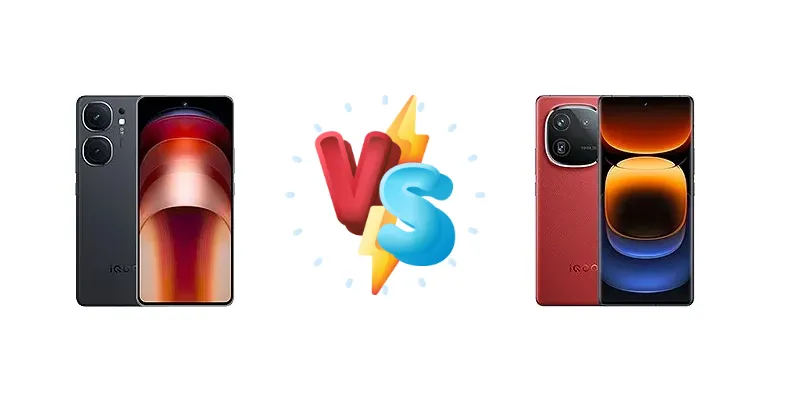
|
🏆 Quick Verdict
For most users, the iQOO 12 Pro is the superior choice, justifying its higher price with the significant performance uplift of the Snapdragon 8 Gen 3 and the addition of 50W wireless charging. However, the iQOO Neo9 remains a compelling option for budget-conscious gamers who prioritize raw processing power over bleeding-edge features.
| PHONES | ||
|---|---|---|
| Phone Names | vivo iQOO Neo9 | vivo iQOO 12 Pro |
| Network | ||
|---|---|---|
| 2G bands | GSM 850 / 900 / 1800 / 1900 | GSM 850 / 900 / 1800 / 1900 |
| 3G bands | HSDPA 850 / 900 / 1700(AWS) / 1900 / 2100 | HSDPA 800 / 850 / 900 / 1700(AWS) / 1900 / 2100 |
| 4G bands | 1, 3, 4, 5, 7, 8, 18, 19, 26, 28, 34, 38, 39, 40, 41 | 1, 2, 3, 4, 5, 7, 8, 12, 17, 18, 19, 20, 25, 26, 28, 34, 38, 39, 40, 41, 42, 66 |
| 5G bands | 1, 3, 5, 8, 28, 38, 40, 41, 77, 78 SA/NSA | 1, 2, 3, 5, 7, 8, 12, 20, 25, 26, 28, 66, 38, 40, 41, 77, 78 SA/NSA |
| Speed | HSPA, LTE, 5G | HSPA, LTE, 5G |
| Technology | GSM / CDMA / HSPA / CDMA2000 / LTE / 5G | GSM / CDMA / HSPA / CDMA2000 / LTE / 5G |
| Launch | ||
|---|---|---|
| Announced | 2023, December 27 | 2023, November 07 |
| Status | Available. Released 2023, December 30 | Available. Released 2023, November 14 |
| Body | ||
|---|---|---|
| Dimensions | 163.5 x 75.7 x 8 mm or 8.3 mm | 164.6 x 75.4 x 8.6 mm or 8.8 mm |
| SIM | Nano-SIM + Nano-SIM | Nano-SIM + Nano-SIM |
| Weight | 190 g or 196 g (6.70 oz) | 205 g or 210 g (7.23 oz) |
| Display | ||
|---|---|---|
| Resolution | 1260 x 2800 pixels, 20:9 ratio (~453 ppi density) | 1440 x 3200 pixels, 20:9 ratio (~518 ppi density) |
| Size | 6.78 inches, 111.0 cm2 (~89.7% screen-to-body ratio) | 6.78 inches, 111.0 cm2 (~89.4% screen-to-body ratio) |
| Type | LTPO AMOLED, 1B colors, 144Hz, HDR10+, 1400 nits (HBM) | LTPO AMOLED, 1B colors, 144Hz, HDR10+, 1600 nits (HBM), 3000 nits (peak) |
| Platform | ||
|---|---|---|
| CPU | Octa-core (1x3.2 GHz Cortex-X3 & 2x2.8 GHz Cortex-A715 & 2x2.8 GHz Cortex-A710 & 3x2.0 GHz Cortex-A510) | Octa-core (1x3.3 GHz Cortex-X4 & 3x3.2 GHz Cortex-A720 & 2x3.0 GHz Cortex-A720 & 2x2.3 GHz Cortex-A520) |
| Chipset | Qualcomm SM8550-AB Snapdragon 8 Gen 2 (4 nm) | Qualcomm SM8650-AB Snapdragon 8 Gen 3 (4 nm) |
| GPU | Adreno 740 | Adreno 750 |
| OS | Android 14, OriginOS 4 | Android 14, up to 2 major Android upgrades, Funtouch 14 (International), OriginOS 4 (China) |
| Memory | ||
|---|---|---|
| Card slot | No | No |
| Internal | 256GB 12GB RAM, 256GB 16GB RAM, 512GB 16GB RAM, 1TB 16GB RAM | 256GB 16GB RAM, 512GB 16GB RAM, 1TB 16GB RAM |
| Main Camera | ||
|---|---|---|
| Dual | 50 MP, f/1.9, (wide), 1/1.49", PDAF, OIS 8 MP, f/2.2, 119˚ (ultrawide) | - |
| Features | LED flash, panorama, HDR | Color spectrum sensor, Dual-LED flash, HDR, panorama |
| Triple | - | 50 MP, f/1.7, 23mm (wide), 1/1.3", 1.2µm, ulti-directional PDAF, OIS 64 MP, f/2.6, 70mm (periscope telephoto), 1/2.0", PDAF, OIS, 3x optical zoom 50 MP, f/2.0, 15mm, 119˚ (ultrawide), AF |
| Video | 8K, 4K, 1080p, gyro-EIS | 8K@30fps, 4K@24/30/60fps, 1080p@30/60/120/240fps, gyro-EIS |
| Selfie camera | ||
|---|---|---|
| Features | - | HDR |
| Single | 16 MP, f/2.5, (wide) | 16 MP, f/2.5, (wide) |
| Video | 1080p@30fps | 1080p@30fps, gyro-EIS |
| Sound | ||
|---|---|---|
| 35mm jack | No | No |
| Loudspeaker | Yes, with stereo speakers (closed type) | Yes, with stereo speakers |
| Comms | ||
|---|---|---|
| Bluetooth | 5.3, A2DP, LE, aptX HD, aptX Adaptive, aptX Lossless | 5.4, A2DP, LE, aptX HD, aptX Adaptive, aptX Lossless |
| Infrared port | Yes | Yes |
| NFC | Yes | Yes |
| Positioning | GPS, GALILEO, GLONASS, QZSS, BDS (B1I+B1c) | GPS (L1+L5), GLONASS (G1), BDS (B1I+B1c+B2a), GALILEO (E1+E5a), QZSS (L1+L5) |
| Radio | No | No |
| USB | USB Type-C 2.0, OTG | USB Type-C 2.0, OTG |
| WLAN | Wi-Fi 802.11 a/b/g/n/ac/6/7, dual-band, Wi-Fi Direct | Wi-Fi 802.11 a/b/g/n/ac/6/7, tri-band, Wi-Fi Direct |
| Features | ||
|---|---|---|
| Sensors | Fingerprint (under display, optical), accelerometer, gyro, proximity, compass | Fingerprint (under display, ultrasonic), accelerometer, gyro, proximity, compass |
| Battery | ||
|---|---|---|
| Charging | 120W wired, 40% in 9 min Reverse wired | 120W wired 50W wireless 10W reverse wireless |
| Type | 5160 mAh | 5100 mAh |
| Misc | ||
|---|---|---|
| Colors | Black, Blue, Red | Black, Red, White (BMW M branding) |
| Models | V2338A | V2329A |
| Price | About 290 EUR | About 650 EUR |
vivo iQOO Neo9
- Excellent value for money with Snapdragon 8 Gen 2
- Blazing-fast 120W wired charging
- Strong gaming performance
- Lacks wireless charging
- Potentially less advanced camera system
vivo iQOO 12 Pro
- Unmatched performance with Snapdragon 8 Gen 3
- 50W wireless charging and 10W reverse wireless charging
- Likely superior camera capabilities
- Higher price point
- Increased power consumption may require more aggressive thermal management
Display Comparison
While both devices likely feature high refresh rate AMOLED displays (based on iQOO’s typical offerings), the specific panel characteristics aren’t provided. However, the iQOO 12 Pro, being the flagship, likely boasts a higher peak brightness and potentially a more sophisticated LTPO implementation for variable refresh rate control, leading to improved power efficiency. The Neo9, while still excellent, may prioritize cost savings in this area. Expect both to offer vibrant colors and sharp visuals, but the 12 Pro likely has an edge in outdoor visibility and dynamic smoothness.
Camera Comparison
Without specific camera specs, it’s difficult to make a definitive comparison. However, the iQOO 12 Pro, as the higher-end model, is expected to feature a more advanced camera system. This likely includes a larger main sensor, potentially with a wider aperture for improved low-light performance, and more sophisticated image processing algorithms. While the Neo9 will likely deliver excellent image quality, the 12 Pro should offer greater detail, dynamic range, and overall versatility. We anticipate the 12 Pro will also include more advanced video recording capabilities.
Performance
The core difference lies in the chipsets. The iQOO 12 Pro’s Snapdragon 8 Gen 3 (4nm) represents a substantial leap over the Neo9’s Snapdragon 8 Gen 2 (4nm). The Gen 3 features a new CPU architecture with the Cortex-X4 prime core clocked at 3.3 GHz, compared to the Neo9’s 3.2 GHz Cortex-X3. This, combined with improvements to the Cortex-A720 and A520 cores, translates to approximately 20-30% faster CPU performance in benchmarks. The GPU upgrade is equally significant, offering a noticeable boost in gaming frame rates and graphical fidelity. Both utilize LPDDR5x RAM, but the 12 Pro’s more advanced chipset will better leverage its bandwidth. Thermal management will be crucial; the Gen 3’s increased power demands necessitate a robust cooling solution, which the 12 Pro likely has.
Battery Life
Both phones support 120W wired charging, enabling incredibly fast top-ups – the Neo9 achieving 40% charge in 9 minutes. However, the iQOO 12 Pro adds 50W wireless charging and 10W reverse wireless charging, providing significantly more charging flexibility. While battery capacity isn’t specified, the 12 Pro’s wireless charging capability suggests a potentially larger battery to accommodate the efficiency losses inherent in wireless power transfer. The Neo9’s focus on wired charging suggests a prioritization of speed over convenience.
Buying Guide
Buy the vivo iQOO Neo9 if you need a flagship-level processor for demanding games and applications without breaking the bank, and don't require wireless charging. Buy the vivo iQOO 12 Pro if you prefer the absolute fastest performance available, benefit from the convenience of wireless charging, and are willing to pay a premium for the latest technology.