
iQOO Neo9 Pro vs OnePlus 12R: A Deep Dive into Performance and Value
| Phones Images | |||||
|---|---|---|---|---|---|
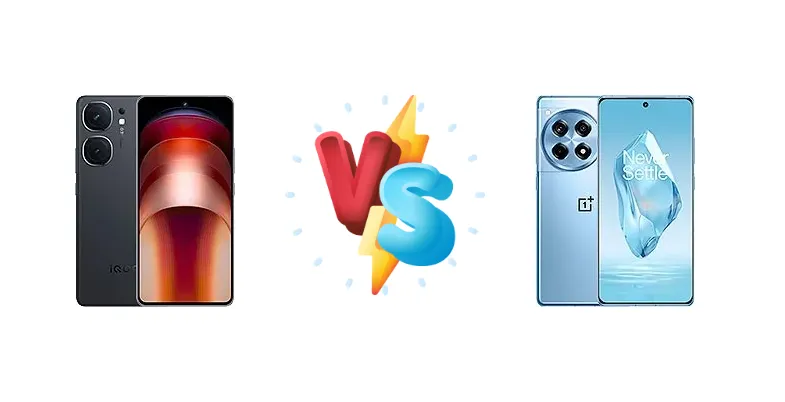
|
🏆 Quick Verdict
For users prioritizing the fastest possible charging and a slightly more aggressive performance profile, the iQOO Neo9 Pro is the winner. However, the OnePlus 12R’s exceptional battery life, demonstrated by its 14:32 active use score, makes it a strong contender for those who value longevity over rapid top-ups.
| PHONES | ||
|---|---|---|
| Phone Names | vivo iQOO Neo9 Pro | OnePlus 12R |
| Network | ||
|---|---|---|
| 2G bands | GSM 850 / 900 / 1800 / 1900 | GSM 850 / 900 / 1800 / 1900 |
| 3G bands | HSDPA 850 / 900 / 1700(AWS) / 1900 / 2100 | HSDPA 850 / 900 / 1700(AWS) / 1900 / 2100 |
| 4G bands | 1, 3, 4, 5, 7, 8, 18, 19, 26, 28, 38, 39, 40, 41 | 1, 2, 3, 4, 5, 7, 8, 12, 17, 18, 19, 20, 26, 28, 32, 38, 39, 40, 41, 66 |
| 5G bands | 1, 3, 5, 8, 28, 38, 40, 41, 77, 78 SA/NSA | 1, 2, 3, 5, 7, 8, 12, 20, 28, 38, 40, 41, 66, 77, 78 SA/NSA |
| Speed | HSPA, LTE, 5G | HSPA, LTE, 5G |
| Technology | GSM / HSPA / LTE / 5G | GSM / CDMA / HSPA / LTE / 5G |
| Launch | ||
|---|---|---|
| Announced | 2024, February 22 | 2024, January 23 |
| Status | Available. Released 2024, February 22 | Available. Released 2024, February 06 |
| Body | ||
|---|---|---|
| Build | Glass front, glass back or silicone polymer back (eco leather), plastic frame | Glass front (Gorilla Glass Victus 2), aluminum frame, glass back |
| Dimensions | 163.5 x 75.7 x 8.0 mm or 8.3 mm | 163.3 x 75.3 x 8.8 mm (6.43 x 2.96 x 0.35 in) |
| SIM | Nano-SIM + Nano-SIM | · Nano-SIM + Nano-SIM + eSIM (max 2 at a time)· Nano-SIM + Nano-SIM |
| Weight | 190 g or 196 g (6.70 oz) | 207 g (7.30 oz) |
| Display | ||
|---|---|---|
| Protection | Schott Xensation Up | Corning Gorilla Glass Victus 2 |
| Resolution | 1260 x 2800 pixels, 20:9 ratio (~453 ppi density) | 1264 x 2780 pixels (~450 ppi density) |
| Size | 6.78 inches, 111.0 cm2 (~89.7% screen-to-body ratio) | 6.78 inches, 111.7 cm2 (~90.9% screen-to-body ratio) |
| Type | LTPO AMOLED, 1B colors, 144Hz, HDR10+, 1400 nits (HBM), 3000 nits (peak) | LTPO4 AMOLED, 1B colors, 120Hz, HDR10+, Dolby Vision, 1600 nits (HBM), 4500 nits (peak) |
| Platform | ||
|---|---|---|
| CPU | Octa-core (1x3.2 GHz Cortex-X3 & 2x2.8 GHz Cortex-A715 & 2x2.8 GHz Cortex-A710 & 3x2.0 GHz Cortex-A510) | Octa-core (1x3.2 GHz Cortex-X3 & 2x2.8 GHz Cortex-A715 & 2x2.8 GHz Cortex-A710 & 3x2.0 GHz Cortex-A510) |
| Chipset | Qualcomm SM8550-AB Snapdragon 8 Gen 2 (4 nm) | Qualcomm SM8550-AB Snapdragon 8 Gen 2 (4 nm) |
| GPU | Adreno 740 | Adreno 740 |
| OS | Android 14, Funtouch 14 | Android 14, up to 3 major Android upgrades, OxygenOS 15 |
| Memory | ||
|---|---|---|
| Card slot | No | No |
| Internal | 128GB 8GB RAM, 256GB 8GB RAM, 256GB 12GB RAM | 128GB 8GB RAM, 256GB 8GB RAM, 256GB 12GB RAM, 256GB 16GB RAM |
| Main Camera | ||
|---|---|---|
| Dual | 50 MP, f/1.9, (wide), 1/1.49", PDAF, OIS 8 MP, f/2.2, 119˚ (ultrawide) | - |
| Features | LED flash, panorama, HDR | Laser AF, color spectrum sensor, LED flash, HDR, panorama |
| Triple | - | 50 MP, f/1.8, 24mm (wide), 1/1.56", 1.0µm, multi-directional PDAF, OIS 8 MP, f/2.2, 16mm, 112˚ (ultrawide), 1/4.0", 1.12µm 2 MP (macro) |
| Video | 8K@30fps, 4K, 1080p, gyro-EIS | 4K@30/60fps, 1080p@30/60/120/240fps, gyro-EIS, OIS |
| Selfie camera | ||
|---|---|---|
| Features | - | HDR, panorama |
| Single | 16 MP, f/2.5, (wide), 1/3.1" | 16 MP, f/2.4, 26mm (wide), 1/3", 1.0µm |
| Video | 1080p@30fps | 1080p@30fps, gyro-EIS |
| Sound | ||
|---|---|---|
| 35mm jack | No | No |
| Loudspeaker | Yes, with stereo speakers (closed type) | Yes, with stereo speakers |
| Comms | ||
|---|---|---|
| Bluetooth | 5.3, A2DP, LE, aptX HD, aptX Adaptive, aptX Lossless | 5.3, A2DP, LE, aptX HD |
| Infrared port | Yes | Yes |
| NFC | Yes (market/region dependent) | Yes |
| Positioning | GPS, GALILEO, GLONASS, QZSS, BDS | GPS, GALILEO, GLONASS, BDS, QZSS |
| Radio | No | No |
| USB | USB Type-C 2.0, OTG | USB Type-C 2.0 |
| WLAN | Wi-Fi 802.11 a/b/g/n/ac/6/7, dual-band, Wi-Fi Direct | Wi-Fi 802.11 a/b/g/n/ac/6/7, dual-band |
| Features | ||
|---|---|---|
| Sensors | Fingerprint (under display, optical), accelerometer, gyro, proximity, compass | Fingerprint (under display, optical), accelerometer, gyro, proximity, compass |
| Battery | ||
|---|---|---|
| Charging | 120W wired, 50% in 11 min Reverse wired | 100W wired, 100% in 26 min |
| Type | Li-Po 5160 mAh | Li-Ion 5500 mAh |
| Misc | ||
|---|---|---|
| Colors | Fiery Red, Conqueror Black | Iron Gray, Cool Blue, Electric Violet, Sunset Dune |
| Models | I2304 | CPH2609, CPH2585, CPH2611 |
| Price | - | € 410.84 / $ 399.95 / £ 649.00 |
| SAR | - | 1.19 W/kg (head) 0.82 W/kg (body) |
vivo iQOO Neo9 Pro
- Ultra-fast 120W charging for minimal downtime
- Snapdragon 8 Gen 2 delivers flagship-level performance
- Reverse wired charging adds versatility
- Battery life data unavailable, potentially lower than OnePlus 12R
- Thermal management performance needs further evaluation
OnePlus 12R
- Exceptional 14:32 hour active use battery life
- High peak brightness (1181 nits) for outdoor visibility
- Snapdragon 8 Gen 2 provides excellent performance
- Slower 100W charging compared to iQOO Neo9 Pro
- Lacks reverse wireless charging
Display Comparison
While both phones are expected to offer high-quality displays, the OnePlus 12R boasts a measured peak brightness of 1181 nits. This suggests a superior viewing experience in direct sunlight compared to the iQOO Neo9 Pro, for which brightness data is currently unavailable. The absence of LTPO technology in either device indicates a standard refresh rate implementation, potentially impacting power consumption during dynamic content viewing. Further analysis would require detailed color accuracy and panel type information.
Camera Comparison
The provided data lacks specific camera details for both devices. Given the market positioning, it’s reasonable to expect both phones to feature multi-camera systems, but the quality will depend on sensor size, lens apertures, and image processing algorithms. Without this information, a direct comparison is impossible. However, focusing on the main sensor resolution and optical image stabilization (OIS) would be key differentiators. The inclusion of a 2MP macro camera on either device is unlikely to significantly impact overall image quality.
Performance
Both the iQOO Neo9 Pro and OnePlus 12R are powered by the Qualcomm SM8550-AB Snapdragon 8 Gen 2 (4 nm) chipset, featuring the same Octa-core CPU configuration (1x3.2 GHz Cortex-X3, 2x2.8 GHz Cortex-A715, 2x2.8 GHz Cortex-A710, and 3x2.0 GHz Cortex-A510). This means raw processing power will be nearly identical. However, the iQOO Neo9 Pro’s thermal management system, which is not detailed in the provided data, will be crucial in sustaining peak performance during extended gaming sessions. The 4nm process node of the Snapdragon 8 Gen 2 inherently offers improved thermal efficiency compared to older nodes, mitigating throttling risks on both devices.
Battery Life
The OnePlus 12R distinguishes itself with a remarkable 14:32 hour active use score, indicating exceptional battery endurance. While the iQOO Neo9 Pro doesn’t have a comparable usage score, it compensates with significantly faster 120W wired charging, achieving 50% charge in just 11 minutes. The OnePlus 12R takes 26 minutes to reach 100%, highlighting the trade-off between charging speed and overall battery capacity. The iQOO Neo9 Pro also offers reverse wired charging, a feature absent in the provided OnePlus 12R specifications.
Buying Guide
Buy the vivo iQOO Neo9 Pro if you are a power user who frequently depletes their battery and needs the convenience of 120W fast charging to get back up and running quickly. Buy the OnePlus 12R if you prioritize all-day battery life and prefer a more balanced approach to performance and efficiency, even if it means slightly slower charging.