
iQOO Neo8 Pro vs Samsung Galaxy S23+: Which Android Flagship Reigns Supreme?
| Phones Images | |||||
|---|---|---|---|---|---|
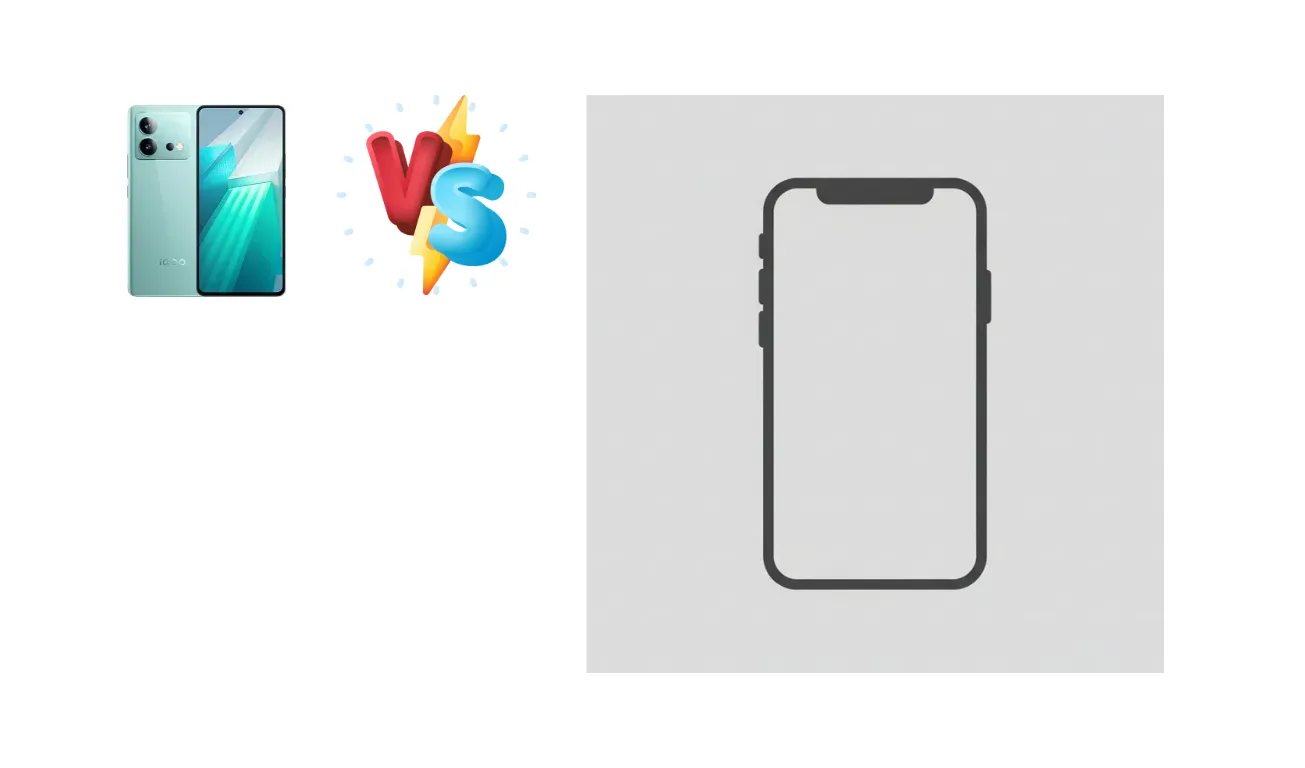
|
🏆 Quick Verdict
For the average user prioritizing a polished experience, excellent camera versatility, and long-term software support, the Samsung Galaxy S23+ is the better choice. However, gamers and power users who demand the fastest possible charging and peak performance will find the iQOO Neo8 Pro a compelling alternative.
| PHONES | ||
|---|---|---|
| Phone Names | vivo iQOO Neo8 Pro | Samsung Galaxy S23+ |
| Network | ||
|---|---|---|
| 2G bands | GSM 850 / 900 / 1800 / 1900 | GSM 850 / 900 / 1800 / 1900 - SIM 1 & SIM 2 (Dual SIM model only) |
| 3G bands | HSDPA 800 / 850 / 900 / 1700(AWS) / 1900 / 2100 | HSDPA 850 / 900 / 1700(AWS) / 1900 / 2100 |
| 4G bands | 1, 2, 3, 4, 5, 7, 8, 19, 28, 28, 34, 38, 39, 40, 41 | 1, 2, 3, 4, 5, 7, 8, 12, 13, 17, 18, 19, 20, 25, 26, 28, 32, 38, 39, 40, 41, 66 - International |
| 5G bands | 1, 3, 5, 8, 28, 40, 41, 77, 78 SA/NSA | 1, 2, 3, 5, 7, 8, 12, 20, 25, 28, 38, 40, 41, 66, 75, 77, 78 SA/NSA/Sub6 - International |
| Speed | HSPA, LTE, 5G | HSPA, LTE-A (up to 7CA), 5G |
| Technology | GSM / CDMA / HSPA / LTE / 5G | GSM / CDMA / HSPA / EVDO / LTE / 5G |
| - | 1, 7, 28, 41, 66, 71, 78, 258, 260, 261 SA/NSA/Sub6/mmWave - USA | |
| Launch | ||
|---|---|---|
| Announced | 2023, May 23 | 2023, February 01 |
| Status | Available. Released 2023, May 23 | Available. Released 2023, February 17 |
| Body | ||
|---|---|---|
| Build | Glass front, plastic frame, glass or leather back | Glass front (Gorilla Glass Victus 2), glass back (Gorilla Glass Victus 2), aluminum frame |
| Dimensions | 164.7 x 77 x 8.5 mm (6.48 x 3.03 x 0.33 in) | 157.8 x 76.2 x 7.6 mm (6.21 x 3.00 x 0.30 in) |
| SIM | Nano-SIM + Nano-SIM | Nano-SIM and eSIM or Dual SIM (2 Nano-SIMs and eSIM, dual stand-by) |
| Weight | 192 g (6.77 oz) | 196 g (6.91 oz) |
| - | IP68 dust/water resistant (up to 1.5m for 30 min) Armor aluminum frame with tougher drop and scratch resistance (advertised) | |
| Display | ||
|---|---|---|
| Protection | - | Corning Gorilla Glass Victus 2 |
| Resolution | 1260 x 2800 pixels, 20:9 ratio (~453 ppi density) | 1080 x 2340 pixels, 19.5:9 ratio (~393 ppi density) |
| Size | 6.78 inches, 111.0 cm2 (~87.5% screen-to-body ratio) | 6.6 inches, 105.3 cm2 (~87.6% screen-to-body ratio) |
| Type | AMOLED, 1B colors, 144Hz, HDR10, 1300 nits (peak) | Dynamic AMOLED 2X, 120Hz, HDR10+, 1200 nits (HBM), 1750 nits (peak) |
| - | Always-on display | |
| Platform | ||
|---|---|---|
| CPU | Octa-core (1x3.35 GHz Cortex-X3 & 3x3.0 GHz Cortex-A715 & 4x2.0 GHz Cortex-A510) | Octa-core (1x3.36 GHz Cortex-X3 & 2x2.8 GHz Cortex-A715 & 2x2.8 GHz Cortex-A710 & 3x2.0 GHz Cortex-A510) |
| Chipset | Mediatek Dimensity 9200+ (4 nm) | Qualcomm SM8550-AC Snapdragon 8 Gen 2 (4 nm) |
| GPU | Immortalis-G715 MC11 | Adreno 740 |
| OS | Android 13, Funtouch 13 or OriginOS 3 (China) | Android 13, One UI 5.1 |
| Memory | ||
|---|---|---|
| Card slot | Unspecified | No |
| Internal | 256GB 16GB RAM, 512GB 16GB RAM, 1TB 16GB RAM | 256GB 8GB RAM, 512GB 8GB RAM |
| - | UFS 4.0 | |
| Main Camera | ||
|---|---|---|
| Dual | 50 MP, f/1.9, (wide), 1/1.49", 1.0µm, PDAF, OIS 8 MP, f/2.2, 114˚ (ultrawide) | - |
| Features | LED flash, HDR, panorama | LED flash, auto-HDR, panorama |
| Triple | - | 50 MP, f/1.8, 24mm (wide), 1/1.56", 1.0µm, Dual Pixel PDAF, OIS 10 MP, f/2.4, 70mm (telephoto), 1/3.94", 1.0µm, PDAF, OIS, 3x optical zoom 12 MP, f/2.2, 13mm, 120˚ (ultrawide), 1/2.55" 1.4µm, Super Steady video |
| Video | 8K@30fps, 4K@30/60fps, 1080p@30/60fps, gyro-EIS | 8K@24/30fps, 4K@30/60fps, 1080p@30/60/240fps, 1080p@960fps, HDR10+, stereo sound rec., gyro-EIS |
| Selfie camera | ||
|---|---|---|
| Features | - | Dual video call, Auto-HDR, HDR10+ |
| Single | 16 MP, f/2.5, (wide) | 12 MP, f/2.2, 26mm (wide), Dual Pixel PDAF |
| Video | 1080p@30fps | 4K@30/60fps, 1080p@30fps |
| Sound | ||
|---|---|---|
| 3.5mm jack | - | No |
| 35mm jack | No | - |
| Loudspeaker | Yes, with stereo speakers | Yes, with stereo speakers |
| - | 32-bit/384kHz audio Tuned by AKG | |
| Comms | ||
|---|---|---|
| Bluetooth | 5.3, A2DP, LE, aptX HD, aptX Adaptive | 5.3, A2DP, LE |
| Infrared port | Yes | - |
| NFC | Yes | Yes |
| Positioning | GPS, GLONASS, GALILEO, BDS, QZSS | GPS, GLONASS, BDS, GALILEO |
| Radio | Unspecified | No |
| USB | USB Type-C 2.0, OTG | USB Type-C 3.2, OTG |
| WLAN | Wi-Fi 802.11 a/b/g/n/ac/6, dual-band, Wi-Fi Direct | Wi-Fi 802.11 a/b/g/n/ac/6e, tri-band, Wi-Fi Direct |
| Features | ||
|---|---|---|
| Sensors | Fingerprint (under display, optical), accelerometer, gyro, proximity, compass | Fingerprint (under display, ultrasonic), accelerometer, gyro, proximity, compass, barometer |
| - | Samsung DeX, Samsung Wireless DeX (desktop experience support) Bixby natural language commands and dictation Samsung Pay (Visa, MasterCard certified) Ultra Wideband (UWB) support | |
| Battery | ||
|---|---|---|
| Charging | 120W wired, 50% in 9 min | 45W wired, PD3.0, 65% in 30 min (advertised) 15W wireless (Qi/PMA) 4.5W reverse wireless |
| Type | 5000 mAh | Li-Ion 4700 mAh, non-removable |
| Misc | ||
|---|---|---|
| Colors | Red, Mint, Black | Phantom Black, Cream, Green, Lavender, Graphite, Lime |
| Models | V2302A | SM-S916B, SM-S916B/DS, SM-S916U, SM-S916U1, SM-S916W, SM-S916N, SM-S9160, SM-S916E, SM-S916E/DS |
| Price | About 430 EUR | $ 780.00 / C$ 1,399.99 / £ 919.08 / € 1,185.89 / ₹ 94,999 |
| SAR | - | 0.95 W/kg (head) 1.04 W/kg (body) |
| SAR EU | - | 0.77 W/kg (head) 1.45 W/kg (body) |
| Tests | ||
|---|---|---|
| Battery life | - | Endurance rating 111h |
| Camera | - | Photo / Video |
| Display | - | Contrast ratio: Infinite (nominal) |
| Loudspeaker | - | -26.5 LUFS (Good) |
| Performance | - | AnTuTu: 1234077 (v9) GeekBench: 5073 (v5.1) GFXBench: 110fps (ES 3.1 onscreen) |
vivo iQOO Neo8 Pro
- Blazing-fast 120W charging
- Potentially higher peak CPU performance
- Competitive price point
- Limited information on camera capabilities
- Software experience may be less refined
Samsung Galaxy S23+
- Excellent camera system with OIS
- Refined software experience (One UI)
- Long-term software support
- Slower charging speed (45W)
- Higher price tag
Display Comparison
While both phones utilize 4nm chipsets, display details are limited for the iQOO Neo8 Pro. The Galaxy S23+ boasts an 'Infinite' contrast ratio, indicating a high-quality OLED panel. The S23+'s display likely features LTPO technology for adaptive refresh rates, conserving battery life. Without specific nit brightness or refresh rate data for the iQOO, the S23+ likely offers a more visually refined experience, particularly in outdoor visibility and smoothness.
Camera Comparison
Detailed camera specs for the iQOO Neo8 Pro are unavailable, but the Galaxy S23+ is expected to feature a sophisticated multi-camera system with a high-resolution main sensor and optical image stabilization (OIS). Samsung’s image processing is known for vibrant colors and strong dynamic range. Without knowing the iQOO’s sensor sizes and lens apertures, it’s difficult to make a direct comparison. However, Samsung’s established camera expertise and OIS provide a significant advantage in image quality and video stabilization. The S23+ will likely excel in low-light photography and offer more versatile shooting options.
Performance
The core battle lies in the chipsets: Mediatek Dimensity 9200+ in the iQOO Neo8 Pro versus the Qualcomm Snapdragon 8 Gen 2 in the Galaxy S23+. Both are built on a 4nm process, but the Snapdragon 8 Gen 2 generally exhibits superior thermal efficiency. The S23+'s CPU configuration (1x3.36 GHz Cortex-X3, 2x2.8 GHz Cortex-A715, 2x2.8 GHz Cortex-A710, 3x2.0 GHz Cortex-A510) is subtly different from the iQOO’s (1x3.35 GHz Cortex-X3, 3x3.0 GHz Cortex-A715, 4x2.0 GHz Cortex-A510), potentially impacting multi-core performance. The S23+ benefits from Qualcomm’s optimizations and likely maintains higher sustained performance under load. The iQOO’s focus is on peak performance, while the S23+ prioritizes balanced performance and efficiency.
Battery Life
The Galaxy S23+ boasts an endurance rating of 111 hours, suggesting excellent battery life. While the iQOO Neo8 Pro’s battery capacity is unknown, its 120W wired charging is a game-changer, achieving 50% charge in just 9 minutes. The S23+’s 45W charging, while supporting PD3.0, takes considerably longer (65% in 30 minutes, advertised). The iQOO’s charging speed is ideal for users who frequently need to top up their battery quickly. The S23+ compensates with a larger battery and more efficient chipset, resulting in longer overall usage time.
Buying Guide
Buy the vivo iQOO Neo8 Pro if you need uncompromising gaming performance, incredibly fast 120W charging, and are comfortable with a less refined software experience. Buy the Samsung Galaxy S23+ if you prefer a premium build quality, a versatile camera system, Samsung’s One UI, and a longer software support lifecycle, even if it means sacrificing some charging speed and raw processing power.