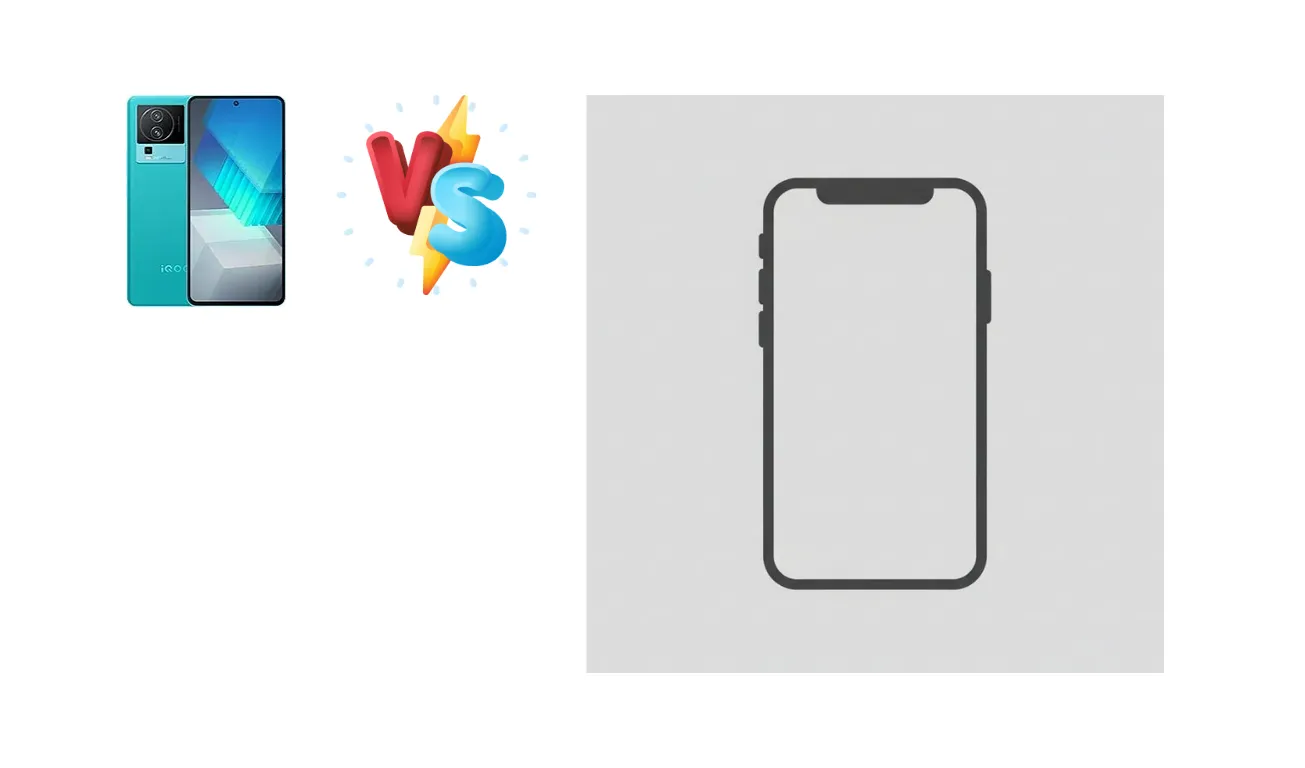
The iQOO Neo7 Racing and ZTE nubia Red Magic 8 Pro+ represent distinct approaches to the high-performance Android smartphone market. The iQOO offers flagship-level power at a more accessible price point, while the Red Magic 8 Pro+ aims for uncompromising gaming performance with the latest silicon and advanced cooling. This comparison dissects their key differences to determine which device best suits your needs.
🏆 Quick Verdict
For the average user prioritizing a balance of performance and value, the ZTE nubia Red Magic 8 Pro+ emerges as the winner. Its Snapdragon 8 Gen 2 chipset delivers a noticeable performance uplift and improved thermal efficiency, justifying the higher price tag for serious gamers and power users. However, the iQOO Neo7 Racing remains a compelling option for those seeking near-flagship performance on a tighter budget.
| Network |
|---|
| 2G bands | GSM 850 / 900 / 1800 / 1900 | GSM 850 / 900 / 1800 / 1900 - SIM 1 & SIM 2 |
| 3G bands | HSDPA 800 / 850 / 900 / 1700(AWS) / 1900 / 2100 | HSDPA 850 / 900 / 1700(AWS) / 1900 / 2100 |
| 4G bands | 1, 2, 3, 4, 5, 7, 8, 18, 19, 26, 28, 34, 38, 39, 40, 41 | LTE |
| 5G bands | 1, 3, 5, 8, 28, 40, 41, 77, 78 SA/NSA | SA/NSA |
| Speed | HSPA, LTE, 5G | HSPA, LTE-A, 5G |
| Technology | GSM / CDMA / HSPA / CDMA2000 / LTE / 5G | GSM / CDMA / HSPA / EVDO / LTE / 5G |
| | CDMA2000 1x | CDMA2000 1xEV-DO |
| Launch |
|---|
| Announced | 2022, December 29 | 2022, December 26 |
| Status | Available. Released 2023, January 05 | Available. Released 2022, December 28 |
| Body |
|---|
| Build | - | Glass front, glass back, aluminum frame |
| Dimensions | 164.8 x 76.9 x 8.5 mm or 8.9 mm | 164 x 76.4 x 8.9 mm (6.46 x 3.01 x 0.35 in) |
| SIM | Nano-SIM + Nano-SIM | Dual SIM (Nano-SIM, dual stand-by) |
| Weight | 197 g / 202 g (6.95 oz) | 230 g (8.11 oz) |
| | - | Pressure sensitive zones (520Hz touch-sensing)
Built-in cooling fan
Aviation aluminum middle frame |
| Display |
|---|
| Protection | - | Unspecified |
| Resolution | 1080 x 2400 pixels, 20:9 ratio (~388 ppi density) | 1116 x 2480 pixels, 20:9 ratio (~400 ppi density) |
| Size | 6.78 inches, 111.0 cm2 (~87.6% screen-to-body ratio) | 6.8 inches, 111.6 cm2 (~89.1% screen-to-body ratio) |
| Type | AMOLED, 120Hz, HDR10+, 1500 nits (peak) | AMOLED, 1B colors, 120Hz, 1300 nits (peak) |
| Platform |
|---|
| CPU | Octa-core (1x3.19 GHz Cortex-X2 & 3x2.75 GHz Cortex-A710 & 4x2.0 GHz Cortex-A510) | Octa-core (1x3.2 GHz Cortex-X3 & 2x2.8 GHz Cortex-A715 & 2x2.8 GHz Cortex-A710 & 3x2.0 GHz Cortex-A510) |
| Chipset | Qualcomm SM8475 Snapdragon 8+ Gen 1 (4 nm) | Qualcomm SM8550-AB Snapdragon 8 Gen 2 (4 nm) |
| GPU | Adreno 730 | Adreno 740 |
| OS | Android 13, OriginOS 3 | Android 13, Redmagic OS 6 |
| Memory |
|---|
| Card slot | No | No |
| Internal | 256GB 8GB RAM, 256GB 12GB RAM, 256GB 16GB RAM, 512GB 16GB RAM | 256GB 12GB RAM, 512GB 16GB RAM, 1TB 16GB RAM |
| | UFS 3.1 | UFS 4.0 |
| Main Camera |
|---|
| Features | LED flash, HDR, panorama | LED flash, HDR, panorama |
| Single | 16 MP, f/2.5, (wide), 1/3.1", 1.0µm | 16 MP, f/2.0, (wide), 1.12µm, under display |
| Triple | 50 MP, f/1.9, 24mm (wide), 1/1.57", 1.0µm, PDAF, OIS
8 MP, f/2.2, 16mm (ultrawide), 1/4.0", 1.12µm
2 MP (macro) | 50 MP, f/1.9, 25mm (wide), 1/1.57", 1.0µm, PDAF
8 MP, f/2.2, 120˚, 13mm (ultrawide), 1/4.0", 1.12µm
2 MP, f/2.4, (macro) |
| Video | 4K@30fps, 1080p@30fps | 8K@30fps, 4K@30/60fps, 1080p@30/60/120/240fps |
| Selfie camera |
|---|
| Features | HDR | HDR |
| Single | 16 MP, f/2.5, (wide), 1/3.1", 1.0µm | 16 MP, f/2.0, (wide), 1.12µm, under display |
| Video | 1080p@30fps | 1080p@30/60fps |
| Sound |
|---|
| 3.5mm jack | No | Yes |
| 35mm jack | No | - |
| Loudspeaker | Yes | Yes, with stereo speakers |
| | 24-bit/192kHz audio | 32-bit/384kHz audio |
| Comms |
|---|
| Bluetooth | 5.3, A2DP, LE, aptX HD, aptX Adaptive, aptX Lossless | 5.3, A2DP, LE |
| Infrared port | Yes | - |
| NFC | Yes | Yes (market/region dependent) |
| Positioning | GPS, GLONASS, GALILEO, BDS, QZSS | GPS (L1+L5), GLONASS, BDS, GALILEO |
| Radio | No | No |
| USB | USB Type-C 2.0, OTG | USB Type-C 3.2, OTG, accessory connector, DisplayPort |
| WLAN | Wi-Fi 802.11 a/b/g/n/ac/6, dual-band, Wi-Fi Direct | Wi-Fi 802.11 a/b/g/n/ac/6e, tri-band, Wi-Fi Direct |
| Features |
|---|
| Sensors | Fingerprint (under display, optical), accelerometer, gyro, proximity, compass | Fingerprint (under display, optical), accelerometer, gyro, proximity, compass |
| Battery |
|---|
| Charging | 120W wired, 50% in 8 min | 165W wired, PD3.0, 100% in 14 min (advertised) |
| Type | 5000 mAh | Li-Po 5000 mAh, non-removable |
| Misc |
|---|
| Colors | Orange, Black, Blue | Black, Transparent |
| Models | V2232A | - |
| Price | About 380 EUR | About 700 EUR |
vivo iQOO Neo7 Racing
- Faster 120W charging than many competitors.
- Potentially more versatile camera system.
- More affordable price point.
- Snapdragon 8+ Gen 1 is outperformed by the Gen 2.
- May experience more thermal throttling under sustained load.
ZTE nubia Red Magic 8 Pro+
- Snapdragon 8 Gen 2 delivers superior performance.
- 165W charging for incredibly fast top-ups.
- Optimized for gaming with advanced cooling and features.
- Higher price tag.
- Camera may be less refined than the iQOO.
Display Comparison
While both devices likely feature high refresh rate AMOLED panels, the context data doesn't provide specifics. However, the Red Magic 8 Pro+’s focus on gaming suggests a higher probability of features like a dedicated gaming display mode with boosted color saturation and touch response. The Snapdragon 8 Gen 2’s display engine also offers more advanced display control. The iQOO Neo7 Racing, while still excellent, will likely prioritize color accuracy for general use. Bezels are likely minimal on both, but the Red Magic’s design often prioritizes screen real estate over camera module size.
Camera Comparison
The provided data doesn't detail camera specifications. However, given the Red Magic’s gaming focus, the iQOO Neo7 Racing is likely to offer a more versatile and refined camera experience. iQOO typically invests heavily in image processing algorithms. The Red Magic 8 Pro+ will likely prioritize speed and functionality over image quality, focusing on features useful for streaming or quick social media uploads. Expect the iQOO to have a more sophisticated multi-camera system, while the Red Magic may lean towards a simpler setup.
Performance
The core difference lies in the chipsets. The ZTE nubia Red Magic 8 Pro+ boasts the Qualcomm SM8550-AB Snapdragon 8 Gen 2 (4 nm), featuring a Cortex-X3 prime core clocked at 3.2 GHz. This represents a significant architectural upgrade over the iQOO Neo7 Racing’s Snapdragon 8+ Gen 1 (4 nm) and its Cortex-X2 core at 3.19 GHz. The Gen 2’s newer Cortex-A715 and A710 cores, alongside the improved Adreno 740 GPU, translate to a 15-25% performance increase in demanding tasks and games. Crucially, the 4nm process node of the Gen 2 offers better thermal efficiency, mitigating throttling during extended gaming sessions – a key advantage for the Red Magic. The iQOO’s LPDDR5X RAM is likely matched by the Red Magic, but the Gen 2’s overall architecture will still provide a performance edge.
Battery Life
The Red Magic 8 Pro+’s 165W wired charging is a clear advantage, promising a full charge in a claimed 14 minutes. This is significantly faster than the iQOO Neo7 Racing’s 120W charging, which achieves 50% charge in 8 minutes. While the iQOO’s charging speed is still impressive, the Red Magic’s faster rate minimizes downtime. Battery capacity isn’t specified, but the Red Magic’s larger size suggests a potentially larger battery, offsetting the higher power draw of the Snapdragon 8 Gen 2 and its gaming features. The Red Magic also supports PD3.0, offering wider compatibility with chargers.
Buying Guide
Buy the vivo iQOO Neo7 Racing if you need a powerful daily driver with excellent charging speeds and don't require the absolute peak gaming performance. It's ideal for users who enjoy mobile gaming but also prioritize other smartphone features like camera quality and media consumption. Buy the ZTE nubia Red Magic 8 Pro+ if you prioritize uncompromising gaming performance, sustained frame rates under heavy load, and the fastest possible charging speeds. This phone is built for dedicated mobile gamers and those who demand the best possible Android gaming experience.
Frequently Asked Questions
❓ Will the Red Magic 8 Pro+ get noticeably hotter than the iQOO Neo7 Racing during prolonged gaming sessions?
While both phones will generate heat, the Red Magic 8 Pro+’s advanced cooling system (likely including a vapor chamber and fan) and the more efficient Snapdragon 8 Gen 2 chipset are designed to mitigate thermal throttling. The iQOO Neo7 Racing, while capable, will likely experience more performance degradation over extended periods of intense gaming.
❓ Does the 165W charging on the Red Magic 8 Pro+ degrade the battery health faster than the iQOO Neo7 Racing’s 120W charging?
Modern smartphones employ sophisticated charging management systems to minimize battery degradation. While faster charging *can* generate more heat, the Red Magic 8 Pro+’s charging circuitry is designed to optimize the process and protect battery health. The difference in degradation, if any, is likely to be minimal with typical usage.
❓ Is the performance difference between the Snapdragon 8+ Gen 1 and Snapdragon 8 Gen 2 significant enough to justify the price difference?
For casual users, the difference may not be immediately noticeable. However, for demanding gamers and power users, the Snapdragon 8 Gen 2’s 15-25% performance uplift, coupled with its improved thermal efficiency, provides a tangible benefit. The Gen 2 ensures smoother frame rates, faster loading times, and sustained performance during extended gaming sessions.