
iQOO Neo11 vs Xiaomi Civi 4 Pro: A Head-to-Head Battle of Snapdragon Power
| Phones Images | |||||
|---|---|---|---|---|---|
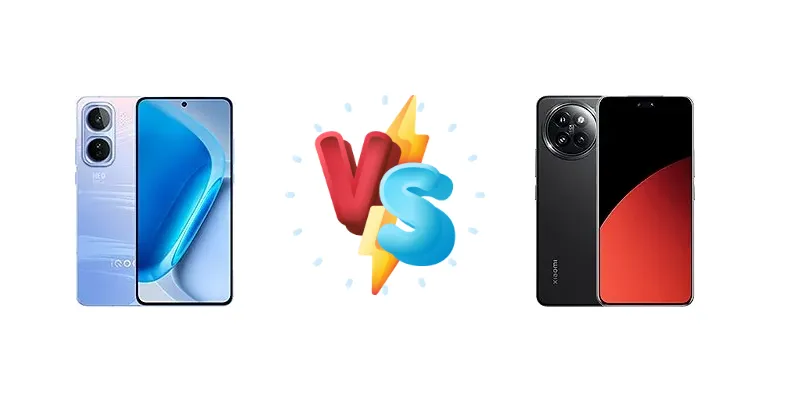
|
🏆 Quick Verdict
For users prioritizing raw performance and rapid charging, the iQOO Neo11 is the clear winner. Its Snapdragon 8 Elite chipset delivers a significant performance advantage, complemented by 100W wired charging. However, the Xiaomi Civi 4 Pro offers a more balanced package with good efficiency and a competitive price.
| PHONES | ||
|---|---|---|
| Phone Names | vivo iQOO Neo11 (China) | Xiaomi Civi 4 Pro |
| Network | ||
|---|---|---|
| 2G bands | GSM 850 / 900 / 1800 / 1900 | GSM 850 / 900 / 1800 / 1900 |
| 3G bands | HSDPA 800 / 850 / 900 / 1700(AWS) / 1900 / 2100 | HSDPA 800 / 850 / 900 / 1700(AWS) / 1900 / 2100 |
| 4G bands | 1, 3, 4, 5, 7, 8, 18, 19, 26, 28, 34, 38, 39, 40, 41, 42, 43, 48, 66 | 1, 3, 4, 5, 8, 18, 19, 26, 28, 34, 38, 39, 40, 41, 42, 48, 66 |
| 5G bands | 1, 3, 5, 7, 8, 18, 26, 28, 38, 40, 41, 48, 66, 77, 78 SA/NSA | 1, 3, 5, 8, 28, 38, 40, 41, 48, 66, 77, 78 SA/NSA |
| Speed | HSPA, LTE, 5G | HSPA, LTE, 5G |
| Technology | GSM / HSPA / LTE / 5G | GSM / CDMA / HSPA / CDMA2000 / LTE / 5G |
| Launch | ||
|---|---|---|
| Announced | 2025, October 30 | 2024, March 21 |
| Status | Available. Released 2025, October 30 | Available. Released 2024, March 21 |
| Body | ||
|---|---|---|
| Build | Glass front, aluminum alloy frame, fiber-reinforced plastic back | Glass front (Gorilla Glass Victus 2), glass back or silicone polymer back (eco leather), aluminum frame |
| Dimensions | 163.4 x 76.7 x 8.1 mm (6.43 x 3.02 x 0.32 in) | 157.2 x 72.8 x 7.5 mm or 7.8 mm |
| SIM | Nano-SIM + Nano-SIM | Nano-SIM + Nano-SIM |
| Weight | 210 g or 216 g (7.41 oz) | 177.6 or 179.3 g or 180.9 g (6.28 oz) |
| Display | ||
|---|---|---|
| Protection | Rock Glass | Corning Gorilla Glass Victus 2 |
| Resolution | 1440 x 3168 pixels (~510 ppi density) | 1236 x 2750 pixels, 20:9 ratio (~460 ppi density) |
| Size | 6.82 inches, 113.0 cm2 (~90.2% screen-to-body ratio) | 6.55 inches, 103.5 cm2 (~90.4% screen-to-body ratio) |
| Type | LTPO AMOLED, 1B colors, 144Hz, 2592Hz PWM, HDR10+ | AMOLED, 68B colors, 120Hz, Dolby Vision, HDR10+, 3000 nits (peak) |
| Platform | ||
|---|---|---|
| CPU | Octa-core (2x4.32 GHz Oryon V2 Phoenix L + 6x3.53 GHz Oryon V2 Phoenix M) | Octa-core (1x3.0 GHz Cortex-X4 & 4x2.8 GHz Cortex-A720 & 3x2.0 GHz Cortex-A520) |
| Chipset | Qualcomm SM8750-AC Snapdragon 8 Elite (3 nm) | Qualcomm SM8635 Snapdragon 8s Gen 3 (4 nm) |
| GPU | Adreno 830 | Adreno 735 |
| OS | Android 16, OriginOS 6 | Android 14, HyperOS |
| Memory | ||
|---|---|---|
| Card slot | No | No |
| Internal | 256GB 12GB RAM, 256GB 16GB RAM, 512GB 12GB RAM, 512GB 16GB RAM, 1TB 16GB RAM | 256GB 12GB RAM, 512GB 12GB RAM, 512GB 16GB RAM |
| Main Camera | ||
|---|---|---|
| Dual | 50 MP, f/1.9, (wide), 1/1.56", PDAF, OIS 8 MP, f/2.2, 119˚ (ultrawide) | - |
| Features | LED flash, panorama, HDR | Color spectrum sensor, Dual-LED flash, HDR, panorama, Leica lenses |
| Triple | - | 50 MP, f/1.6, 25mm (wide), 1/1.55", 1.0µm, PDAF, OIS 50 MP, f/2.0, 50mm (telephoto), 0.64µm, PDAF, 2x optical zoom 12 MP, f/2.2, 15mm, 120˚ (ultrawide), 1.12µm |
| Video | 8K, 4K, 1080p, gyro-EIS | 4K@24/30/60fps, 1080p@30/60/120/240/960fps, 720p@1920fps, HDR10+, BT.2020, 10-bit video, gyro-EIS |
| Selfie camera | ||
|---|---|---|
| Dual | - | 32 MP, f/2.0, 26mm (wide), 1/2.8", 0.8µm, AF 32 MP, f/2.4, 100˚ (ultrawide), 1/2.8", 0.8µm |
| Features | - | HDR, panorama |
| Single | 16 MP, f/2.5, (wide) | - |
| Video | 1080p@30fps | 4K@30fps, 1080p@30/60fps; gyro-EIS |
| Sound | ||
|---|---|---|
| 35mm jack | No | No |
| Loudspeaker | Yes, with stereo speakers | Yes, with stereo speakers |
| Comms | ||
|---|---|---|
| Bluetooth | 5.4, A2DP, LE, aptX HD, aptX Adaptive, aptX Lossless, LHDC 5 | 5.4, A2DP, LE, LHDC |
| Infrared port | Yes | Yes |
| NFC | Yes | Yes |
| Positioning | GPS (L1+L5), GLONASS, BDS (B1I+B1c+B2a), GALILEO (E1+E5a), QZSS (L1+L5) | GPS (L1), GLONASS (G1), BDS (B1I+B1c), GALILEO (E1), QZSS (L1) |
| Radio | No | No |
| USB | USB Type-C 2.0, OTG | USB Type-C 2.0, OTG |
| WLAN | Wi-Fi 802.11 a/b/g/n/ac/6/7, dual-band | Wi-Fi 802.11 a/b/g/n/ac/6, dual-band, Wi-Fi Direct |
| Features | ||
|---|---|---|
| Sensors | Fingerprint (under display, ultrasonic), accelerometer, gyro, proximity, compass | Fingerprint (under display, optical), accelerometer, gyro, proximity, compass |
| Battery | ||
|---|---|---|
| Charging | 100W wired, 44W UFCS, 55W PD3.0/PPS Reverse wired | 67W wired, PD3.0, 100% in 40 minutes |
| Type | Si/C Li-Ion 7500 mAh | Li-Po 4700 mAh |
| Misc | ||
|---|---|---|
| Colors | Black, White, Orange, Blue | Black, Pink, Blue, Green |
| Models | V2520A | 24053PY09C |
| Price | About 320 EUR | About 380 EUR |
vivo iQOO Neo11 (China)
- Significantly faster Snapdragon 8 Elite processor
- Ultra-fast 100W wired charging
- Reverse wired charging support
- Potentially shorter battery life due to power-hungry chipset
- May run hotter under sustained load
Xiaomi Civi 4 Pro
- More efficient Snapdragon 8s Gen 3 processor
- Competitive 67W wired charging
- Likely more balanced power consumption
- Noticeably slower processor compared to the iQOO Neo11
- Lacks reverse wired charging
Display Comparison
Neither device's display specifications are provided, so we must infer. Given the iQOO Neo11's gaming focus, it likely features a high refresh rate panel (144Hz or higher) optimized for responsiveness. The Xiaomi Civi 4 Pro, positioned as a more lifestyle-oriented device, may prioritize color accuracy and viewing angles. The absence of LTPO information suggests both may not have adaptive refresh rates, potentially impacting battery life during static content viewing. Bezels are likely minimal on both, reflecting current design trends.
Camera Comparison
Without specific camera sensor details, analysis is limited. However, the iQOO Neo11, targeting gamers, may prioritize video recording capabilities and low-light performance. The Xiaomi Civi 4 Pro, with its lifestyle focus, might emphasize selfie quality and portrait modes. The absence of information regarding OIS (Optical Image Stabilization) is notable; its presence would be a significant advantage for both devices, particularly in low-light conditions. We can assume both will feature multi-camera setups, but the quality will depend heavily on sensor size and image processing algorithms.
Performance
The iQOO Neo11’s Snapdragon 8 Elite, built on a 3nm process, represents a substantial leap in performance over the Xiaomi Civi 4 Pro’s 4nm Snapdragon 8s Gen 3. The 8 Elite’s Oryon V2 Phoenix CPU cores (2x4.32 GHz + 6x3.53 GHz) offer significantly higher clock speeds and architectural improvements compared to the 8s Gen 3’s (1x3.0 GHz Cortex-X4 + 4x2.8 GHz Cortex-A720 + 3x2.0 GHz Cortex-A520). This translates to faster app loading, smoother multitasking, and superior gaming performance. While the 8s Gen 3 is no slouch, the 8 Elite’s advantage is considerable. The iQOO Neo11 will likely exhibit less thermal throttling under sustained load due to the more efficient 3nm node.
Battery Life
The iQOO Neo11’s 100W wired charging is a game-changer, promising a full charge in under 30 minutes. The Xiaomi Civi 4 Pro’s 67W charging, while respectable, takes approximately 40 minutes to reach 100%. The iQOO Neo11 also supports 44W UFCS and 55W PD3.0/PPS, offering greater charging flexibility. Battery capacity is not specified for either device, but the iQOO Neo11’s higher charging speed suggests it may have a slightly smaller battery to accommodate the faster charging cycle. The Neo11’s reverse wired charging capability is also a useful feature absent in the Civi 4 Pro.
Buying Guide
Buy the vivo iQOO Neo11 (China) if you need uncompromising gaming performance, the fastest possible charging speeds, and are willing to trade some battery life for peak power. Buy the Xiaomi Civi 4 Pro if you prefer a more balanced device with excellent efficiency, a sleek design, and a competitive price point, prioritizing daily usability over absolute top-end performance.