
iQOO Neo11 (Snapdragon 8 Elite) vs. Meizu 20 Classic: A Deep Dive Comparison
| Phones Images | |||||
|---|---|---|---|---|---|
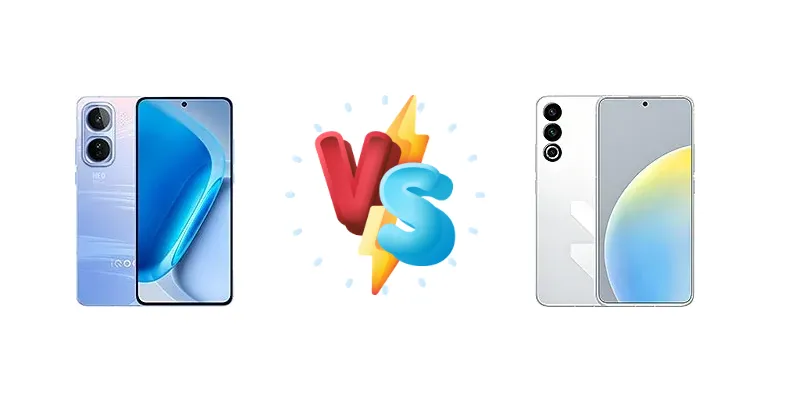
|
🏆 Quick Verdict
For users prioritizing raw performance and future-proofing, the iQOO Neo11 emerges as the winner thanks to its Snapdragon 8 Elite chipset. However, the Meizu 20 Classic provides a refined experience with efficient power management and a competitive feature set, making it a strong contender for those valuing optimization over sheer speed.
| PHONES | ||
|---|---|---|
| Phone Names | vivo iQOO Neo11 (China) | Meizu 20 Classic |
| Network | ||
|---|---|---|
| 2G bands | GSM 850 / 900 / 1800 / 1900 | GSM 850 / 900 / 1800 / 1900 |
| 3G bands | HSDPA 800 / 850 / 900 / 1700(AWS) / 1900 / 2100 | HSDPA 800 / 850 / 900 / 1900 / 2100 |
| 4G bands | 1, 3, 4, 5, 7, 8, 18, 19, 26, 28, 34, 38, 39, 40, 41, 42, 43, 48, 66 | 1, 2, 3, 4, 5, 7, 8, 12, 28, 34, 38, 39, 40, 41 |
| 5G bands | 1, 3, 5, 7, 8, 18, 26, 28, 38, 40, 41, 48, 66, 77, 78 SA/NSA | 1, 3, 5, 8, 28, 38, 41, 77, 78 SA/NSA |
| Speed | HSPA, LTE, 5G | HSPA, LTE, 5G |
| Technology | GSM / HSPA / LTE / 5G | GSM / HSPA / LTE / 5G |
| Launch | ||
|---|---|---|
| Announced | 2025, October 30 | 2023, October 19 |
| Status | Available. Released 2025, October 30 | Available. Released 2023, October 31 |
| Body | ||
|---|---|---|
| Build | Glass front, aluminum alloy frame, fiber-reinforced plastic back | - |
| Dimensions | 163.4 x 76.7 x 8.1 mm (6.43 x 3.02 x 0.32 in) | 157.9 x 73.5 x 8 mm (6.22 x 2.89 x 0.31 in) |
| SIM | Nano-SIM + Nano-SIM | Nano-SIM + Nano-SIM |
| Weight | 210 g or 216 g (7.41 oz) | 190 g (6.70 oz) |
| Display | ||
|---|---|---|
| Protection | Rock Glass | - |
| Resolution | 1440 x 3168 pixels (~510 ppi density) | 1080 x 2400 pixels, 20:9 ratio (~402 ppi density) |
| Size | 6.82 inches, 113.0 cm2 (~90.2% screen-to-body ratio) | 6.55 inches, 103.6 cm2 (~89.2% screen-to-body ratio) |
| Type | LTPO AMOLED, 1B colors, 144Hz, 2592Hz PWM, HDR10+ | OLED, 1B colors, 144Hz, 500 nits (typ), 800 nits (HBM) |
| Platform | ||
|---|---|---|
| CPU | Octa-core (2x4.32 GHz Oryon V2 Phoenix L + 6x3.53 GHz Oryon V2 Phoenix M) | Octa-core (1x3.2 GHz Cortex-X3 & 2x2.8 GHz Cortex-A715 & 2x2.8 GHz Cortex-A710 & 3x2.0 GHz Cortex-A510) |
| Chipset | Qualcomm SM8750-AC Snapdragon 8 Elite (3 nm) | Qualcomm SM8550-AB Snapdragon 8 Gen 2 (4 nm) |
| GPU | Adreno 830 | Adreno 740 |
| OS | Android 16, OriginOS 6 | Android 13, Flyme 10 |
| Memory | ||
|---|---|---|
| Card slot | No | No |
| Internal | 256GB 12GB RAM, 256GB 16GB RAM, 512GB 12GB RAM, 512GB 16GB RAM, 1TB 16GB RAM | 256GB 16GB RAM, 512GB 16GB RAM |
| Main Camera | ||
|---|---|---|
| Dual | 50 MP, f/1.9, (wide), 1/1.56", PDAF, OIS 8 MP, f/2.2, 119˚ (ultrawide) | - |
| Features | LED flash, panorama, HDR | Ring-LED flash, panorama, HDR |
| Triple | - | 50 MP, f/1.9, 24mm (wide), 1/1.56", PDAF, OIS 16 MP, f/2.4, 16mm, 122˚ (ultrawide) 5 MP, f/2.4 |
| Video | 8K, 4K, 1080p, gyro-EIS | 8K, 4K, 1080p; gyro-EIS |
| Selfie camera | ||
|---|---|---|
| Features | - | HDR |
| Single | 16 MP, f/2.5, (wide) | 32 MP, f/2.5, (wide) |
| Video | 1080p@30fps | Yes |
| Sound | ||
|---|---|---|
| 35mm jack | No | No |
| Loudspeaker | Yes, with stereo speakers | Yes, with stereo speakers |
| Comms | ||
|---|---|---|
| Bluetooth | 5.4, A2DP, LE, aptX HD, aptX Adaptive, aptX Lossless, LHDC 5 | 5.3, A2DP, LE |
| Infrared port | Yes | - |
| NFC | Yes | Yes |
| Positioning | GPS (L1+L5), GLONASS, BDS (B1I+B1c+B2a), GALILEO (E1+E5a), QZSS (L1+L5) | GPS (L1+L5), GLONASS, BDS (B1I+B1c+B2a), GALILEO, QZSS |
| Radio | No | No |
| USB | USB Type-C 2.0, OTG | USB Type-C, OTG |
| WLAN | Wi-Fi 802.11 a/b/g/n/ac/6/7, dual-band | Wi-Fi 802.11 а/b/g/n/ac/6e/7, dual-band |
| Features | ||
|---|---|---|
| Sensors | Fingerprint (under display, ultrasonic), accelerometer, gyro, proximity, compass | Fingerprint (under display, ultrasonic), accelerometer, gyro, proximity, compass |
| Battery | ||
|---|---|---|
| Charging | 100W wired, 44W UFCS, 55W PD3.0/PPS Reverse wired | 67W wired, PD3 PPS, QC4+ |
| Type | Si/C Li-Ion 7500 mAh | Li-Po 4700 mAh |
| Misc | ||
|---|---|---|
| Colors | Black, White, Orange, Blue | Gray, Silver, Green |
| Models | V2520A | - |
| Price | About 320 EUR | About 400 EUR |
vivo iQOO Neo11 (China)
- Significantly faster charging with 100W wired and UFCS.
- Newer Snapdragon 8 Elite chipset for superior performance.
- Potentially better thermal management due to 3nm process.
- Software experience may be less refined than Meizu.
- Potential for higher price point.
Meizu 20 Classic
- Proven Snapdragon 8 Gen 2 chipset with excellent performance.
- Potentially more polished software experience.
- Efficient power management.
- Slower charging speeds compared to iQOO Neo11.
- Older chipset architecture.
Display Comparison
Neither device's display specifications are provided, so a direct comparison is limited. However, given the iQOO Neo11's gaming focus, it likely features a high refresh rate panel. The Meizu 20 Classic, positioned as a 'Classic' model, may prioritize color accuracy and viewing angles. The absence of LTPO information suggests both may not have adaptive refresh rates, potentially impacting battery life during static content viewing. Bezels are likely minimal on both, reflecting current design trends.
Camera Comparison
Without detailed camera specifications, a precise comparison is difficult. However, the market positioning suggests the Meizu 20 Classic may focus on image quality and color science, while the iQOO Neo11 might prioritize speed and features. The absence of sensor size information is critical; larger sensors generally capture more light and detail. OIS (Optical Image Stabilization) is expected on both, but its effectiveness will depend on implementation. Lens apertures will also play a role in low-light performance. We can assume both phones will offer a versatile camera system, but the iQOO Neo11’s processing might lean towards a more vibrant, gaming-oriented aesthetic.
Performance
The iQOO Neo11’s Qualcomm SM8750-AC Snapdragon 8 Elite (3nm) represents a significant leap in architecture. Its octa-core configuration, featuring 2x4.32 GHz Oryon V2 Phoenix L cores and 6x3.53 GHz Oryon V2 Phoenix M cores, promises substantial performance gains over the Meizu 20 Classic’s Snapdragon 8 Gen 2 (4nm). The 3nm process node of the Snapdragon 8 Elite translates to improved thermal efficiency, potentially reducing throttling during sustained workloads. While the Snapdragon 8 Gen 2 is a powerhouse with its 1x3.2 GHz Cortex-X3 core, the iQOO Neo11’s newer architecture and process node give it a theoretical edge in CPU and GPU performance. The iQOO Neo11 will likely excel in demanding tasks like video editing and high-end gaming.
Battery Life
The iQOO Neo11’s charging capabilities are a standout feature, supporting 100W wired charging, 44W UFCS, and 55W PD3.0/PPS. This combination allows for incredibly fast charging times and broad compatibility. The Meizu 20 Classic’s 67W wired charging, while respectable, falls short of the iQOO Neo11’s speed. UFCS support on the iQOO Neo11 is a unique advantage, enabling faster charging with compatible accessories. While battery capacity isn’t specified, the iQOO Neo11’s faster charging mitigates the impact of a potentially smaller battery, allowing for quick top-ups throughout the day. The Meizu 20 Classic’s QC4+ and PD3 PPS support ensure compatibility with a wide range of chargers.
Buying Guide
Buy the vivo iQOO Neo11 (China) if you demand the absolute fastest processing power for demanding games and applications, and if you value the latest charging technologies like UFCS. Buy the Meizu 20 Classic if you prioritize a balanced experience with a proven chipset, efficient power consumption, and a potentially more polished software experience, even if it means sacrificing the latest silicon.