
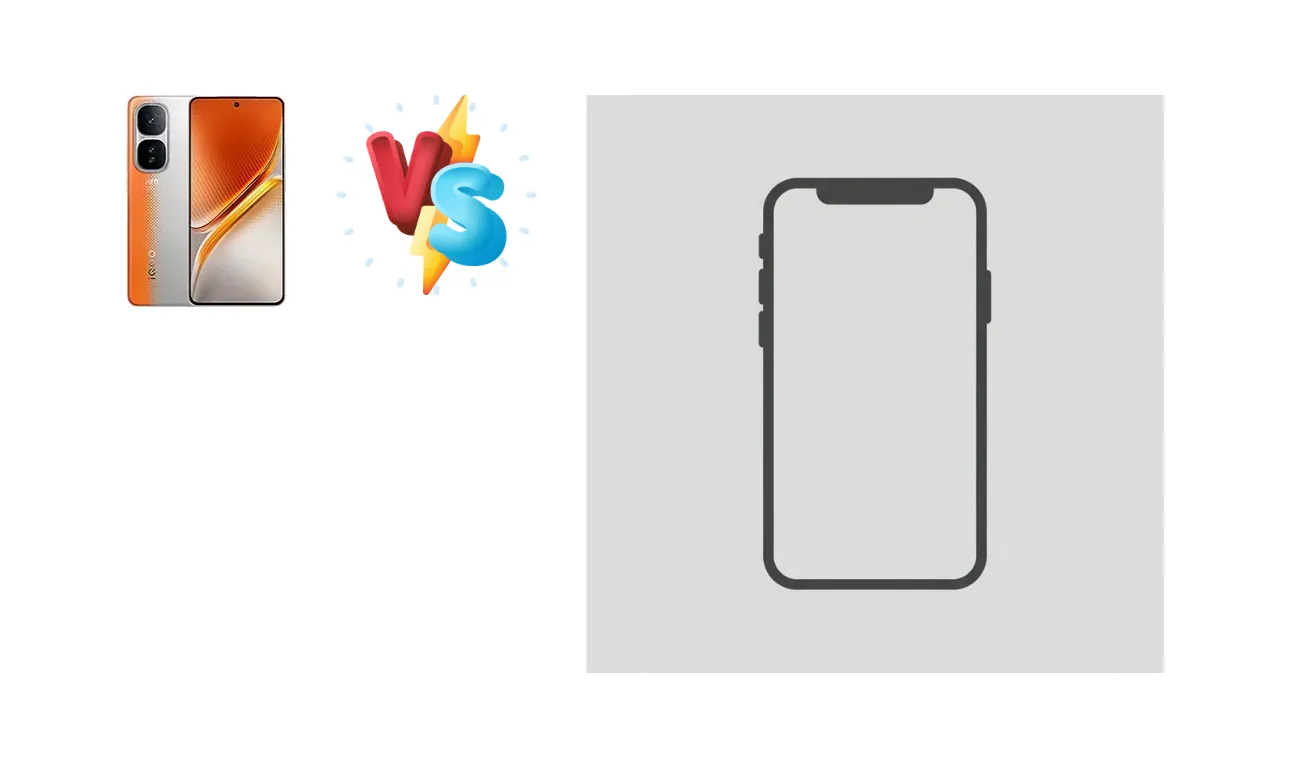
iQOO Neo10 Pro vs Samsung Galaxy S23+: A Head-to-Head Flagship Battle
| Phones Images | |||||
|---|---|---|---|---|---|
|
🏆 Quick Verdict
For the power user prioritizing charging speed and raw performance, the iQOO Neo10 Pro is the clear winner. However, the Samsung Galaxy S23+ offers a more polished software experience, wider availability, and proven reliability, making it the better choice for the average user.
| PHONES | ||
|---|---|---|
| Phone Names | vivo iQOO Neo10 Pro (China) | Samsung Galaxy S23+ |
| Network | ||
|---|---|---|
| 2G bands | GSM 850 / 900 / 1800 / 1900 | GSM 850 / 900 / 1800 / 1900 - SIM 1 & SIM 2 (Dual SIM model only) |
| 3G bands | HSDPA 800 / 850 / 900 / 1700(AWS) / 1900 / 2100 | HSDPA 850 / 900 / 1700(AWS) / 1900 / 2100 |
| 4G bands | 1, 3, 4, 5, 7, 8, 18, 19, 26, 28, 34, 38, 39, 40, 41 | 1, 2, 3, 4, 5, 7, 8, 12, 13, 17, 18, 19, 20, 25, 26, 28, 32, 38, 39, 40, 41, 66 - International |
| 5G bands | 1, 3, 5, 8, 28, 38, 40, 41, 77, 78 SA/NSA | 1, 2, 3, 5, 7, 8, 12, 20, 25, 28, 38, 40, 41, 66, 75, 77, 78 SA/NSA/Sub6 - International |
| Speed | HSPA, LTE, 5G | HSPA, LTE-A (up to 7CA), 5G |
| Technology | GSM / HSPA / LTE / 5G | GSM / CDMA / HSPA / EVDO / LTE / 5G |
| - | 1, 7, 28, 41, 66, 71, 78, 258, 260, 261 SA/NSA/Sub6/mmWave - USA | |
| Launch | ||
|---|---|---|
| Announced | 2024, November 29 | 2023, February 01 |
| Status | Available. Released 2024, November 29 | Available. Released 2023, February 17 |
| Body | ||
|---|---|---|
| Build | - | Glass front (Gorilla Glass Victus 2), glass back (Gorilla Glass Victus 2), aluminum frame |
| Dimensions | 162.9 x 75.4 x 8 mm (6.41 x 2.97 x 0.31 in) | 157.8 x 76.2 x 7.6 mm (6.21 x 3.00 x 0.30 in) |
| SIM | Nano-SIM + Nano-SIM | Nano-SIM and eSIM or Dual SIM (2 Nano-SIMs and eSIM, dual stand-by) |
| Weight | 199 g or 206 g (7.05 oz) | 196 g (6.91 oz) |
| - | IP68 dust/water resistant (up to 1.5m for 30 min) Armor aluminum frame with tougher drop and scratch resistance (advertised) | |
| Display | ||
|---|---|---|
| Protection | - | Corning Gorilla Glass Victus 2 |
| Resolution | 1260 x 2800 pixels, 20:9 ratio (~453 ppi density) | 1080 x 2340 pixels, 19.5:9 ratio (~393 ppi density) |
| Size | 6.78 inches, 111.0 cm2 (~90.4% screen-to-body ratio) | 6.6 inches, 105.3 cm2 (~87.6% screen-to-body ratio) |
| Type | LTPO AMOLED, 1B colors, 144Hz, HDR10+, 1800 nits (HBM), 4500 nits (peak) | Dynamic AMOLED 2X, 120Hz, HDR10+, 1200 nits (HBM), 1750 nits (peak) |
| - | Always-on display | |
| Platform | ||
|---|---|---|
| CPU | Octa-core (1x3.63 GHz Cortex-X925 & 3x3.3 GHz Cortex-X4 & 4x2.4 GHz Cortex-A720) | Octa-core (1x3.36 GHz Cortex-X3 & 2x2.8 GHz Cortex-A715 & 2x2.8 GHz Cortex-A710 & 3x2.0 GHz Cortex-A510) |
| Chipset | Mediatek Dimensity 9400 (3 nm) | Qualcomm SM8550-AC Snapdragon 8 Gen 2 (4 nm) |
| GPU | Immortalis-G925 | Adreno 740 |
| OS | Android 15, OriginOS 5 | Android 13, One UI 5.1 |
| Memory | ||
|---|---|---|
| Card slot | No | No |
| Internal | 256GB 12GB RAM, 256GB 16GB RAM, 512GB 12GB RAM, 512GB 16GB RAM, 1TB 16GB RAM | 256GB 8GB RAM, 512GB 8GB RAM |
| - | UFS 4.0 | |
| Main Camera | ||
|---|---|---|
| Dual | 50 MP, f/1.8, (wide), 1/1.56", PDAF, OIS 50 MP, f/2.0, 119˚ (ultrawide), 1/2.76", 0.64µm, AF | - |
| Features | LED flash, panorama, HDR | LED flash, auto-HDR, panorama |
| Triple | - | 50 MP, f/1.8, 24mm (wide), 1/1.56", 1.0µm, Dual Pixel PDAF, OIS 10 MP, f/2.4, 70mm (telephoto), 1/3.94", 1.0µm, PDAF, OIS, 3x optical zoom 12 MP, f/2.2, 13mm, 120˚ (ultrawide), 1/2.55" 1.4µm, Super Steady video |
| Video | 8K, 4K, 1080p, gyro-EIS | 8K@24/30fps, 4K@30/60fps, 1080p@30/60/240fps, 1080p@960fps, HDR10+, stereo sound rec., gyro-EIS |
| Selfie camera | ||
|---|---|---|
| Features | - | Dual video call, Auto-HDR, HDR10+ |
| Single | 16 MP, f/2.5, (wide) | 12 MP, f/2.2, 26mm (wide), Dual Pixel PDAF |
| Video | 1080p@30fps | 4K@30/60fps, 1080p@30fps |
| Sound | ||
|---|---|---|
| 3.5mm jack | - | No |
| 35mm jack | No | - |
| Loudspeaker | Yes, with stereo speakers (closed type) | Yes, with stereo speakers |
| - | 32-bit/384kHz audio Tuned by AKG | |
| Comms | ||
|---|---|---|
| Bluetooth | 5.4, A2DP, LE, aptX HD, LHDC 5 | 5.3, A2DP, LE |
| Infrared port | Yes | - |
| NFC | Yes | Yes |
| Positioning | GPS (L1+L5), GLONASS, BDS (B1I+B1c+B2a+B2b), GALILEO (E1+E5a+E5b), QZSS (L1+L5), NavIC (L1+L5) | GPS, GLONASS, BDS, GALILEO |
| Radio | No | No |
| USB | USB Type-C 2.0, OTG | USB Type-C 3.2, OTG |
| WLAN | Wi-Fi 802.11 a/b/g/n/ac/6/7, dual-band | Wi-Fi 802.11 a/b/g/n/ac/6e, tri-band, Wi-Fi Direct |
| Features | ||
|---|---|---|
| Sensors | Fingerprint (under display, ultrasonic), accelerometer, gyro, proximity, compass | Fingerprint (under display, ultrasonic), accelerometer, gyro, proximity, compass, barometer |
| - | Samsung DeX, Samsung Wireless DeX (desktop experience support) Bixby natural language commands and dictation Samsung Pay (Visa, MasterCard certified) Ultra Wideband (UWB) support | |
| Battery | ||
|---|---|---|
| Charging | 120W wired, 100W PPS+PD, 50% in 15 min Reverse wired | 45W wired, PD3.0, 65% in 30 min (advertised) 15W wireless (Qi/PMA) 4.5W reverse wireless |
| Type | Si/C Li-Ion 6100 mAh | Li-Ion 4700 mAh, non-removable |
| Misc | ||
|---|---|---|
| Colors | Black, White, Orange | Phantom Black, Cream, Green, Lavender, Graphite, Lime |
| Models | 2426A | SM-S916B, SM-S916B/DS, SM-S916U, SM-S916U1, SM-S916W, SM-S916N, SM-S9160, SM-S916E, SM-S916E/DS |
| Price | About 420 EUR | $ 780.00 / C$ 1,399.99 / £ 919.08 / € 1,185.89 / ₹ 94,999 |
| SAR | - | 0.95 W/kg (head) 1.04 W/kg (body) |
| SAR EU | - | 0.77 W/kg (head) 1.45 W/kg (body) |
| Tests | ||
|---|---|---|
| Battery life | - | Endurance rating 111h |
| Camera | - | Photo / Video |
| Display | - | Contrast ratio: Infinite (nominal) |
| Loudspeaker | - | -26.5 LUFS (Good) |
| Performance | - | AnTuTu: 1234077 (v9) GeekBench: 5073 (v5.1) GFXBench: 110fps (ES 3.1 onscreen) |
vivo iQOO Neo10 Pro (China)
- Blazing-fast 120W wired charging
- Potentially superior CPU performance with Dimensity 9400
- Likely faster RAM (LPDDR5x)
- China-exclusive, potential import issues
- Limited software support compared to Samsung
- Camera specs currently unknown
Samsung Galaxy S23+
- Globally available with full support
- Refined software experience with One UI
- Proven camera system with excellent image quality
- Slower 45W charging
- Snapdragon 8 Gen 2 is a generation behind the Dimensity 9400
- Less impressive charging speed
Display Comparison
The Galaxy S23+ boasts an 'Infinite' contrast ratio, suggesting a high-quality OLED panel, though specific peak brightness data is missing. The iQOO Neo10 Pro’s display specifications are currently unavailable, but given its positioning, we anticipate a comparable OLED experience. The S23+'s display benefits from Samsung’s established color calibration and potentially LTPO technology for adaptive refresh rates, contributing to better battery efficiency. Without detailed specs on the iQOO, the S23+ likely holds an edge in display refinement.
Camera Comparison
Detailed camera specs for the iQOO Neo10 Pro are absent, making a direct comparison difficult. The Galaxy S23+ is known for its consistent image quality and versatile camera system. While megapixel counts aren't everything, the S23+'s image processing and OIS are likely superior. Without knowing the iQOO’s sensor sizes and lens apertures, it’s safe to assume the S23+ offers a more refined and reliable camera experience, particularly in low-light conditions. We can expect the S23+ to excel in video recording as well, given Samsung’s expertise.
Performance
The core battle lies in the chipsets. The iQOO Neo10 Pro’s Mediatek Dimensity 9400, built on a 3nm process, promises significant performance gains over the Samsung Galaxy S23+'s 4nm Snapdragon 8 Gen 2. The Dimensity 9400’s Cortex-X925 core, clocked at 3.63 GHz, is a newer architecture than the S23+'s Cortex-X3, suggesting superior single-core performance. However, the Snapdragon 8 Gen 2 is a highly optimized chip with excellent thermal management. The iQOO’s advantage will be most noticeable in sustained workloads, but the S23+’s efficiency could lead to longer gaming sessions before throttling. The iQOO also benefits from potentially faster LPDDR5x RAM, further boosting performance.
Battery Life
The Galaxy S23+ achieves 65% charge in 30 minutes with its 45W wired charging, while the iQOO Neo10 Pro reaches 50% in just 15 minutes with its 120W charging. This is a massive difference in charging speed, making the iQOO significantly more convenient for users who frequently need to top up their battery. The S23+ offers 15W wireless charging and 4.5W reverse wireless, while the iQOO supports 100W PPS+PD and reverse wired charging. Despite the S23+'s 111-hour endurance rating, the iQOO’s faster charging mitigates concerns about battery life, allowing for quick power boosts throughout the day.
Buying Guide
Buy the vivo iQOO Neo10 Pro (China) if you absolutely need the fastest charging available, prioritize peak CPU performance for demanding tasks, and are comfortable with a China-specific ROM and potential import complexities. Buy the Samsung Galaxy S23+ if you value a refined user experience, global support, a mature camera system, and long-term software updates, even if it means sacrificing some charging speed and raw processing power.