
iQOO Neo10 (Snapdragon 8 Gen 3) vs iQOO 11S: A Deep Dive Comparison
| Phones Images | |||||
|---|---|---|---|---|---|
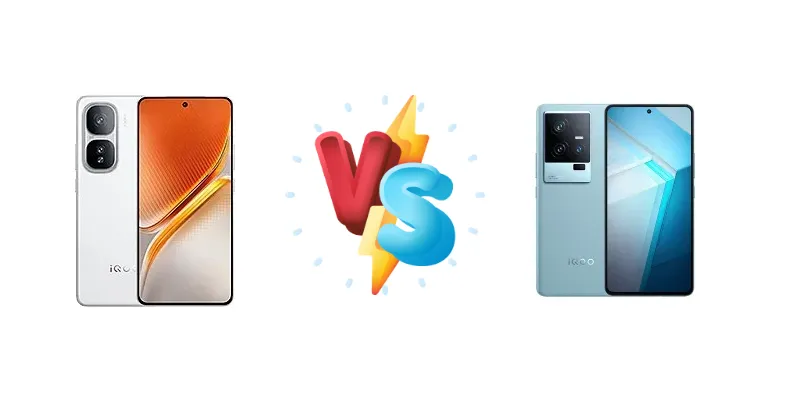
|
🏆 Quick Verdict
For users prioritizing peak performance and future-proofing, the iQOO Neo10 with the Snapdragon 8 Gen 3 is the clear winner. However, the iQOO 11S’s 200W charging and established platform offer a compelling alternative for those who value speed of refueling above all else.
| PHONES | ||
|---|---|---|
| Phone Names | vivo iQOO Neo10 (China) | vivo iQOO 11S |
| Network | ||
|---|---|---|
| 2G bands | GSM 850 / 900 / 1800 / 1900 | GSM 850 / 900 / 1800 / 1900 |
| 3G bands | HSDPA 800 / 850 / 900 / 1700(AWS) / 1900 / 2100 | HSDPA 800 / 850 / 900 / 1700(AWS) / 1900 / 2100 |
| 4G bands | 1, 3, 4, 5, 7, 8, 18, 19, 26, 28, 34, 38, 39, 40, 41 | 1, 2, 3, 4, 5, 7, 8, 12, 17, 18, 19, 20, 26, 28, 34, 38, 39, 40, 41 |
| 5G bands | 1, 3, 5, 8, 28, 38, 40, 41, 77, 78 SA/NSA | 1, 3, 5, 8, 28, 40, 41, 77, 78 SA/NSA |
| Speed | HSPA, LTE, 5G | HSPA, LTE, 5G |
| Technology | GSM / HSPA / LTE / 5G | GSM / CDMA / HSPA / CDMA2000 / LTE / 5G |
| Launch | ||
|---|---|---|
| Announced | 2024, November 29 | 2023, July 04 |
| Status | Available. Released 2024, November 29 | Available. Released 2023, July 10 |
| Body | ||
|---|---|---|
| Dimensions | 162.9 x 75.4 x 8 mm (6.41 x 2.97 x 0.31 in) | 164.9 x 77.1 x 8.4 mm or 8.7 mm |
| SIM | Nano-SIM + Nano-SIM | Nano-SIM + Nano-SIM |
| Weight | 199 g or 206 g (7.05 oz) | 207 g or 210 g (7.30 oz) |
| Display | ||
|---|---|---|
| Protection | - | Corning Gorilla Glass Victus |
| Resolution | 1260 x 2800 pixels, 20:9 ratio (~453 ppi density) | 1440 x 3200 pixels, 20:9 ratio (~518 ppi density) |
| Size | 6.78 inches, 111.0 cm2 (~90.4% screen-to-body ratio) | 6.78 inches, 111.0 cm2 (~87.3% screen-to-body ratio) |
| Type | LTPO AMOLED, 1B colors, 144Hz, HDR10+, 1800 nits (HBM), 4500 nits (peak) | LTPO4 AMOLED, 1B colors, 144Hz, HDR10+, 1800 nits (peak) |
| Platform | ||
|---|---|---|
| CPU | Octa-core (1x3.3 GHz Cortex-X4 & 3x3.2 GHz Cortex-A720 & 2x3.0 GHz Cortex-A720 & 2x2.3 GHz Cortex-A520) | Octa-core (1x3.2 GHz Cortex-X3 & 2x2.8 GHz Cortex-A715 & 2x2.8 GHz Cortex-A710 & 3x2.0 GHz Cortex-A510) |
| Chipset | Qualcomm SM8650-AB Snapdragon 8 Gen 3 (4 nm) | Qualcomm SM8550-AB Snapdragon 8 Gen 2 (4 nm) |
| GPU | Adreno 750 | Adreno 740 |
| OS | Android 15, OriginOS 5 | Android 13, OriginOS 3 (China) |
| Memory | ||
|---|---|---|
| Card slot | No | No |
| Internal | 256GB 12GB RAM, 256GB 16GB RAM, 512GB 12GB RAM, 512GB 16GB RAM, 1TB 16GB RAM | 256GB 12GB RAM, 256GB 16GB RAM, 512GB 16GB RAM, 1TB 16GB RAM |
| Main Camera | ||
|---|---|---|
| Dual | 50 MP, f/1.8, (wide), 1/1.56", PDAF, OIS 8 MP, f/2.2, 119˚ (ultrawide) | - |
| Features | LED flash, panorama, HDR | Dual-LED flash, HDR, panorama |
| Triple | - | 50 MP, f/1.9, 23mm (wide), 1/1.49", 1.0µm, PDAF, OIS 13 MP, f/2.5, 47mm (telephoto), PDAF, 2x optical zoom 8 MP, f/2.2, 16mm (ultrawide) |
| Video | 8K, 4K, 1080p, gyro-EIS | 8K@30fps, 4K@30/60fps, 1080p@30/60/120/240fps, gyro-EIS |
| Selfie camera | ||
|---|---|---|
| Features | - | HDR |
| Single | 16 MP, f/2.5, (wide) | 16 MP, f/2.5, (wide) |
| Video | 1080p@30fps | 1080p@30fps, gyro-EIS |
| Sound | ||
|---|---|---|
| 35mm jack | No | No |
| Loudspeaker | Yes, with stereo speakers (closed type) | Yes, with stereo speakers |
| Comms | ||
|---|---|---|
| Bluetooth | 5.4, A2DP, LE, aptX HD, aptX Adaptive, aptX Lossless, LHDC 5 | 5.3, A2DP, LE, aptX HD, aptX Adaptive, aptX Lossless |
| Infrared port | Yes | Yes |
| NFC | Yes | Yes |
| Positioning | GPS (L1+L5), GLONASS, BDS (B1I+B1c+B2a), GALILEO (E1+E5a), QZSS (L1+L5) | GPS, GLONASS, GALILEO, BDS, NavIC |
| Radio | No | No |
| USB | USB Type-C 2.0, OTG | USB Type-C 2.0, OTG |
| WLAN | Wi-Fi 802.11 a/b/g/n/ac/6/7, dual-band | Wi-Fi 802.11 a/b/g/n/ac/6, dual-band, Wi-Fi Direct |
| Features | ||
|---|---|---|
| Sensors | Fingerprint (under display, ultrasonic), accelerometer, gyro, proximity, compass | Fingerprint (under display, optical), accelerometer, gyro, proximity, compass |
| Battery | ||
|---|---|---|
| Charging | 120W wired, 100W PPS+PD, 50% in 15 min Reverse wired | 200W wired, PD3.0, UFCS |
| Type | Si/C Li-Ion 6100 mAh | 4700 mAh |
| Misc | ||
|---|---|---|
| Colors | Black, White, Orange | Black, Sky Blue, Legendary White (BMW M branding) |
| Models | 2425A, V2425A | V2304A |
| Price | About 300 EUR | About 500 EUR |
vivo iQOO Neo10 (China)
- Latest Snapdragon 8 Gen 3 processor for top-tier performance
- Improved ISP for enhanced camera capabilities
- 120W fast charging with reverse wired charging
- Potentially less refined software experience due to newer release
- Charging speed is slower than the iQOO 11S
vivo iQOO 11S
- Incredibly fast 200W wired charging
- Mature software build and established platform
- Supports PD3.0 and UFCS charging standards
- Older Snapdragon 8 Gen 2 processor
- May not offer the same level of future-proofing as the Neo10
Display Comparison
While specific display details (resolution, panel type) are missing, both phones likely feature high refresh rate AMOLED panels typical of the iQOO brand. The key difference lies in the underlying processors impacting display responsiveness. The Snapdragon 8 Gen 3’s improved ISP in the Neo10 could translate to slightly better color accuracy and dynamic range. However, without knowing the peak brightness or PWM dimming rates, a definitive display winner is impossible to declare.
Camera Comparison
Without detailed camera specifications, it’s difficult to make a precise comparison. However, the Snapdragon 8 Gen 3’s improved ISP in the Neo10 offers advantages in image processing, potentially resulting in better dynamic range, noise reduction, and low-light performance. The 11S’s image processing is still excellent, but the Neo10 has a hardware advantage. We assume both phones will feature capable main sensors, but the Neo10’s newer ISP will likely provide a more refined image output.
Performance
The iQOO Neo10’s Snapdragon 8 Gen 3 (4nm) represents a significant architectural leap over the iQOO 11S’s Snapdragon 8 Gen 2 (4nm). The Gen 3 features a new CPU core configuration – 1x3.3 GHz Cortex-X4, 3x3.2 GHz Cortex-A720, 2x3.0 GHz Cortex-A720, and 2x2.3 GHz Cortex-A520 – compared to the Gen 2’s 1x3.2 GHz Cortex-X3, 2x2.8 GHz Cortex-A715, 2x2.8 GHz Cortex-A710, and 3x2.0 GHz Cortex-A510. This translates to faster single-core and multi-core performance, particularly benefiting demanding tasks like video editing and high-end gaming. The Gen 3’s improved GPU will also deliver a noticeable boost in graphics performance. While both utilize LPDDR5x RAM, the Gen 3’s memory controller is more efficient, potentially leading to faster data access speeds.
Battery Life
The iQOO 11S’s 200W wired charging is the standout feature here, capable of replenishing the battery incredibly quickly. While the Neo10’s 120W charging is still fast (50% in 15 minutes), it’s significantly slower. The 11S also supports PD3.0 and UFCS, offering broader compatibility. The actual battery capacity isn’t specified, but the 11S’s charging speed effectively mitigates any potential capacity disadvantage. The Neo10 adds 100W PPS+PD and reverse wired charging, offering versatility, but the 11S’s charging speed is the dominant factor.
Buying Guide
Buy the vivo iQOO Neo10 (China) if you need the absolute latest processing power for demanding games and applications, and are comfortable with a potentially newer software experience. Buy the vivo iQOO 11S if you prioritize incredibly fast charging, a more mature software build, and don't necessarily require the bleeding edge in CPU/GPU performance.