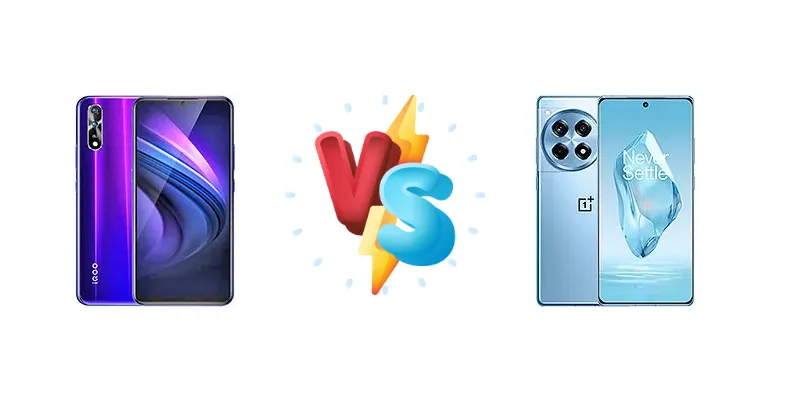
The iQOO Neo represents a compelling value proposition from a brand known for performance, but it's showing its age. The OnePlus 12R, while newer and pricier, brings a significant chipset upgrade and modern charging capabilities to the table. This comparison dissects whether the 12R’s advancements justify the increased cost for users prioritizing future-proofing and speed.
🏆 Quick Verdict
For the average user, the OnePlus 12R is the clear winner. Its Snapdragon 8 Gen 2 chipset delivers substantially improved performance and efficiency, coupled with blazing-fast 100W charging and a brighter display. While the iQOO Neo remains a capable device, the 12R offers a more refined and future-proof experience.
| Network |
|---|
| 2G bands | GSM 850 / 900 / 1800 / 1900 | GSM 850 / 900 / 1800 / 1900 |
| 3G bands | HSDPA 850 / 900 / 1700(AWS) / 2100 | HSDPA 850 / 900 / 1700(AWS) / 1900 / 2100 |
| 4G bands | 1, 3, 4, 5, 8, 34, 38, 39, 40, 41 | 1, 2, 3, 4, 5, 7, 8, 12, 17, 18, 19, 20, 26, 28, 32, 38, 39, 40, 41, 66 |
| 5G bands | - | 1, 2, 3, 5, 7, 8, 12, 20, 28, 38, 40, 41, 66, 77, 78 SA/NSA |
| Speed | HSPA, LTE | HSPA, LTE, 5G |
| Technology | GSM / CDMA / HSPA / LTE | GSM / CDMA / HSPA / LTE / 5G |
| | CDMA 800 & TD-SCDMA | - |
| Launch |
|---|
| Announced | 2019, July. Released 2019, July | 2024, January 23 |
| Status | Discontinued | Available. Released 2024, February 06 |
| Body |
|---|
| Build | Glass front, glass back, aluminum frame | Glass front (Gorilla Glass Victus 2), aluminum frame, glass back |
| Dimensions | 159.5 x 75.2 x 8.1 mm (6.28 x 2.96 x 0.32 in) | 163.3 x 75.3 x 8.8 mm (6.43 x 2.96 x 0.35 in) |
| SIM | Nano-SIM + Nano-SIM | · Nano-SIM + Nano-SIM + eSIM (max 2 at a time)· Nano-SIM + Nano-SIM |
| Weight | 198.5 g (7.02 oz) | 207 g (7.30 oz) |
| Display |
|---|
| Protection | - | Corning Gorilla Glass Victus 2 |
| Resolution | 1080 x 2340 pixels, 19.5:9 ratio (~404 ppi density) | 1264 x 2780 pixels (~450 ppi density) |
| Size | 6.38 inches, 99.9 cm2 (~83.3% screen-to-body ratio) | 6.78 inches, 111.7 cm2 (~90.9% screen-to-body ratio) |
| Type | Super AMOLED | LTPO4 AMOLED, 1B colors, 120Hz, HDR10+, Dolby Vision, 1600 nits (HBM), 4500 nits (peak) |
| Platform |
|---|
| CPU | Octa-core (4x2.8 GHz Kryo 385 Gold & 4x1.7 GHz Kryo 385 Silver) | Octa-core (1x3.2 GHz Cortex-X3 & 2x2.8 GHz Cortex-A715 & 2x2.8 GHz Cortex-A710 & 3x2.0 GHz Cortex-A510) |
| Chipset | Qualcomm SDM845 Snapdragon 845 (10 nm) | Qualcomm SM8550-AB Snapdragon 8 Gen 2 (4 nm) |
| GPU | Adreno 630 | Adreno 740 |
| OS | Android 9.0 (Pie), Funtouch 9 | Android 14, up to 3 major Android upgrades, OxygenOS 15 |
| Memory |
|---|
| Card slot | No | No |
| Internal | 64GB 6GB RAM, 64GB 8GB RAM, 128GB 6GB RAM, 128GB 8GB RAM | 128GB 8GB RAM, 256GB 8GB RAM, 256GB 12GB RAM, 256GB 16GB RAM |
| Main Camera |
|---|
| Features | LED flash, HDR, panorama | Laser AF, color spectrum sensor, LED flash, HDR, panorama |
| Triple | 12 MP, f/1.8, 1/2.55", 1.4µm, dual pixel PDAF
8 MP, f/2.2, (wide)
Auxiliary lens | 50 MP, f/1.8, 24mm (wide), 1/1.56", 1.0µm, multi-directional PDAF, OIS
8 MP, f/2.2, 16mm, 112˚ (ultrawide), 1/4.0", 1.12µm
2 MP (macro) |
| Video | 4K@30fps, 1080p@30fps | 4K@30/60fps, 1080p@30/60/120/240fps, gyro-EIS, OIS |
| Selfie camera |
|---|
| Features | HDR | HDR, panorama |
| Single | 12 MP, f/2.0, (wide), 1/2.8", 1.28µm | 16 MP, f/2.4, 26mm (wide), 1/3", 1.0µm |
| Video | 1080p@30fps | 1080p@30fps, gyro-EIS |
| Sound |
|---|
| 3.5mm jack | Yes | - |
| 35mm jack | Yes | No |
| Loudspeaker | Yes | Yes, with stereo speakers |
| | 32-bit/192kHz audio
| - |
| Comms |
|---|
| Bluetooth | 5.0, A2DP, LE, aptX | 5.3, A2DP, LE, aptX HD |
| Infrared port | - | Yes |
| NFC | No | Yes |
| Positioning | GPS, GLONASS, BDS, GALILEO | GPS, GALILEO, GLONASS, BDS, QZSS |
| Radio | No | No |
| USB | USB Type-C, OTG | USB Type-C 2.0 |
| WLAN | Wi-Fi 802.11 a/b/g/n/ac, dual-band, Wi-Fi Direct | Wi-Fi 802.11 a/b/g/n/ac/6/7, dual-band |
| Features |
|---|
| Sensors | Fingerprint (under display, optical), accelerometer, gyro, proximity, compass | Fingerprint (under display, optical), accelerometer, gyro, proximity, compass |
| Battery |
|---|
| Charging | 22.5W wired | 100W wired, 100% in 26 min |
| Type | 4500 mAh, non-removable | Li-Ion 5500 mAh |
| Misc |
|---|
| Colors | Black, Purple | Iron Gray, Cool Blue, Electric Violet, Sunset Dune |
| Models | V1914A | CPH2609, CPH2585, CPH2611 |
| Price | About 250 EUR | € 410.84 / $ 399.95 / £ 649.00 |
| SAR | - | 1.19 W/kg (head) 0.82 W/kg (body) |
vivo iQOO Neo
- Significantly lower price point
- Still capable for basic tasks
- Compact form factor (likely)
- Outdated Snapdragon 845 chipset
- Slow 22.5W charging
- Inferior display technology
OnePlus 12R
- Powerful Snapdragon 8 Gen 2 chipset
- Ultra-fast 100W charging
- Bright and vibrant display
- Improved power efficiency
- Higher price tag
- Larger size (likely)
- May lack expandable storage
Display Comparison
The OnePlus 12R boasts a significantly brighter display, reaching a measured 1181 nits, compared to the iQOO Neo’s unspecified brightness. This translates to superior visibility in direct sunlight. While the iQOO Neo’s panel technology isn’t detailed, the 12R’s likely utilizes AMOLED technology for vibrant colors and deep blacks. The 12R’s larger display size (assumed, based on market positioning) also contributes to a more immersive viewing experience. The iQOO Neo, being an older model, likely has wider bezels and a lower refresh rate, impacting overall visual appeal.
Camera Comparison
Without detailed camera specifications for the iQOO Neo, a direct comparison is difficult. However, given its market segment, it likely features a mid-range camera setup. The OnePlus 12R, while not a camera-focused flagship, benefits from the 8 Gen 2’s improved image signal processor (ISP). This translates to better image processing, dynamic range, and low-light performance. The 12R likely includes optical image stabilization (OIS) on its main sensor, a feature often absent in phones at the iQOO Neo’s price point. Focusing on the main sensor is key, as both phones likely include less useful auxiliary lenses.
Performance
The core difference lies in the chipsets. The iQOO Neo’s Snapdragon 845 (10nm) is a capable performer, but the OnePlus 12R’s Snapdragon 8 Gen 2 (4nm) represents a massive leap forward. The 4nm process node of the 8 Gen 2 offers significantly improved power efficiency and thermal performance, reducing throttling during sustained workloads. The 8 Gen 2’s CPU architecture – featuring a Cortex-X3 prime core – provides a substantial performance boost over the 845’s Kryo 385 cores. Gamers and power users will immediately notice the difference in responsiveness and frame rates. The 12R’s likely inclusion of faster LPDDR5x RAM further enhances performance.
Battery Life
The OnePlus 12R’s 100W wired charging is a game-changer, achieving a full charge in just 26 minutes. The iQOO Neo’s 22.5W charging is comparatively slow. While the iQOO Neo’s battery capacity isn’t specified, the 12R’s active use score of 14:32h demonstrates excellent battery life, likely due to the efficiency of the Snapdragon 8 Gen 2. The faster charging of the 12R mitigates any potential concerns about battery capacity, allowing for quick top-ups throughout the day.
Buying Guide
Buy the vivo iQOO Neo if you need a functional smartphone for everyday tasks and light gaming, and are on a very tight budget. Its Snapdragon 845 is still adequate for basic use cases. Buy the OnePlus 12R if you prioritize demanding gaming, fast charging, a brighter and more modern display, and want a phone that will remain performant for years to come. The 12R is for users who value a premium experience without the flagship price tag.
Frequently Asked Questions
❓ Will the OnePlus 12R get significantly hot during extended gaming sessions?
The Snapdragon 8 Gen 2’s 4nm process is designed for improved thermal efficiency. While some heat is inevitable during demanding tasks, the 12R is expected to manage temperatures better than the iQOO Neo’s Snapdragon 845, reducing the likelihood of significant throttling and maintaining consistent performance.
❓ Is the iQOO Neo still a viable option for playing popular games like PUBG Mobile or Call of Duty Mobile?
The iQOO Neo can run PUBG Mobile and Call of Duty Mobile, but you’ll likely need to lower graphics settings to maintain a stable frame rate. The Snapdragon 845 is showing its age, and you may experience occasional stuttering or lag, especially in intense firefights. The OnePlus 12R will provide a much smoother and more consistent gaming experience.
❓ Does the OnePlus 12R support software updates for an extended period?
OnePlus generally provides good software support for its devices. The 12R is expected to receive at least two major Android updates and three years of security patches, ensuring it remains secure and up-to-date for a considerable time. The iQOO Neo, being an older model, will likely have limited future software support.