
vivo iQOO 10 Pro vs iQOO 11 Pro: A Detailed Showdown
| Phones Images | |||||
|---|---|---|---|---|---|
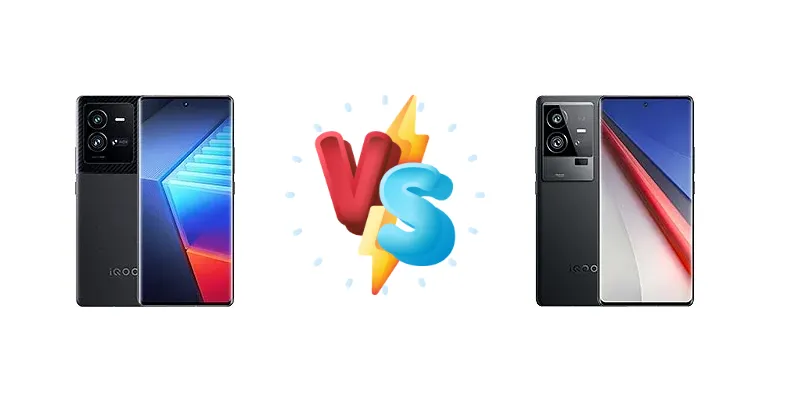
|
🏆 Quick Verdict
The iQOO 11 Pro is the clear winner, thanks to the Snapdragon 8 Gen 2's superior performance and efficiency. While the 10 Pro remains a strong contender with its blazing-fast 200W charging, the 11 Pro's overall improvements make it the better choice for most users.
| PHONES | ||
|---|---|---|
| Phone Names | vivo iQOO 10 Pro | vivo iQOO 11 Pro |
| Network | ||
|---|---|---|
| 2G bands | GSM 850 / 900 / 1800 / 1900 | GSM 850 / 900 / 1800 / 1900 |
| 3G bands | HSDPA 850 / 900 / 1700(AWS) / 1900 / 2100 | HSDPA 800 / 850 / 900 / 1700(AWS) / 1900 / 2100 |
| 4G bands | 1, 2, 3, 4, 5, 7, 8, 12, 17, 18, 19, 20, 25, 26, 28, 32, 34, 38, 39, 40, 41, 42, 66 | 1, 2, 3, 4, 5, 7, 8, 12, 17, 18, 19, 20, 25, 26, 28, 34, 38, 39, 40, 41, 42, 66 |
| 5G bands | 1, 3, 5, 7, 8, 12, 20, 28, 38, 40, 41, 66, 77, 78, 79 SA/NSA | 1, 2, 3, 5, 7, 8, 12, 20, 28, 38, 40, 41, 66, 77, 78, 79 SA/NSA |
| Speed | HSPA, LTE, 5G | HSPA, LTE, 5G |
| Technology | GSM / CDMA / HSPA / CDMA2000 / LTE / 5G | GSM / CDMA / HSPA / CDMA2000 / LTE / 5G |
| CDMA2000 1x | CDMA2000 1x | |
| Launch | ||
|---|---|---|
| Announced | 2022, July 19 | 2022, December 08 |
| Status | Available. Released 2022, July 25 | Available. Released 2022, December 21 |
| Body | ||
|---|---|---|
| Dimensions | 164.9 x 75.5 x 9.5 mm (6.49 x 2.97 x 0.37 in) | 164.8 x 75.3 x 8.9 mm or 9.1 mm |
| SIM | Nano-SIM + Nano-SIM | Nano-SIM + Nano-SIM |
| Weight | 215.4 g or 216.2 g (7.58 oz) | 210.5 g or 213 g (7.44 oz) |
| Display | ||
|---|---|---|
| Resolution | 1440 x 3200 pixels, 20:9 ratio (~518 ppi density) | 1440 x 3200 pixels, 20:9 ratio (~518 ppi density) |
| Size | 6.78 inches, 111.0 cm2 (~89.1% screen-to-body ratio) | 6.78 inches, 111.0 cm2 (~89.4% screen-to-body ratio) |
| Type | LTPO3 AMOLED, 1B colors, 120Hz, HDR10+, 500 nits (typ), 1000 nits (HBM), 1500 nits (peak) | LTPO4 AMOLED, 1B colors, 144Hz, HDR10+, 1800 nits (peak) |
| Platform | ||
|---|---|---|
| CPU | Octa-core (1x3.19 GHz Cortex-X2 & 3x2.75 GHz Cortex-A710 & 4x1.80 GHz Cortex-A510) | Octa-core (1x3.2 GHz Cortex-X3 & 2x2.8 GHz Cortex-A715 & 2x2.8 GHz Cortex-A710 & 3x2.0 GHz Cortex-A510) |
| Chipset | Qualcomm SM8475 Snapdragon 8+ Gen 1 (4 nm) | Qualcomm SM8550-AB Snapdragon 8 Gen 2 (4 nm) |
| GPU | Adreno 730 | Adreno 740 |
| OS | Android 12, Funtouch 12 (International), OriginOS Ocean (China) | Android 13, Funtouch 13 (International), OriginOS 3 (China) |
| Memory | ||
|---|---|---|
| Card slot | No | No |
| Internal | 256GB 8GB RAM, 256GB 12GB RAM, 512GB 12GB RAM | 256GB 8GB RAM, 256GB 12GB RAM, 512GB 16GB RAM |
| UFS 3.1 (V6) | UFS 4.0 | |
| Main Camera | ||
|---|---|---|
| Features | Dual-LED lash, HDR, panorama | Dual-LED flash, HDR, panorama |
| Single | 16 MP, f/2.5, (wide), 1/3.1", 1.0µm | 16 MP, f/2.5, (wide) |
| Triple | 50 MP, f/1.9, (wide), 1/1.57", 1.0µm, PDAF, gimbal OIS 14.6 MP, f/2.2, 69mm (telephoto), PDAF, OIS, 3x optical zoom 50 MP, f/2.3, 15mm, 150˚ (ultrawide), 1/2.76", 0.64µm, AF | 50 MP, f/1.8, (wide), 1/1.49", 1.0µm, PDAF, OIS 13 MP, f/2.5, 50mm (telephoto), PDAF, optical zoom 50 MP, f/2.3, 15mm, 150˚ (ultrawide), 1/2.76", 0.64µm, AF |
| Video | 8K@30fps, 4K@24/30/60fps, 1080p@30/60fps, gyro-EIS | 8K@30fps, 4K@24/30/60fps, 1080p@30/60/120/240fps, gyro-EIS |
| Selfie camera | ||
|---|---|---|
| Features | HDR | HDR |
| Single | 16 MP, f/2.5, (wide), 1/3.1", 1.0µm | 16 MP, f/2.5, (wide) |
| Video | 1080p@30fps, gyro-EIS | 1080p@30fps, gyro-EIS |
| Sound | ||
|---|---|---|
| 3.5mm jack | No | No |
| 35mm jack | No | No |
| Loudspeaker | Yes, with dual speakers | Yes, with stereo speakers |
| 32-bit/384kHz audio | 32-bit/384kHz audio | |
| Comms | ||
|---|---|---|
| Bluetooth | 5.3, A2DP, LE, aptX HD, aptX Adaptive, aptX Lossless | 5.3, A2DP, LE, aptX HD, aptX Adaptive, aptX Lossless |
| Infrared port | Yes | Yes |
| NFC | Yes | Yes |
| Positioning | GPS, GLONASS, GALILEO, BDS, QZSS | GPS, GLONASS, GALILEO, BDS |
| Radio | No | No |
| USB | USB Type-C 2.0, OTG | USB Type-C 2.0, OTG |
| WLAN | Wi-Fi 802.11 a/b/g/n/ac/6, dual-band, Wi-Fi Direct | Wi-Fi 802.11 a/b/g/n/ac/6, dual-band, Wi-Fi Direct |
| Features | ||
|---|---|---|
| Sensors | Fingerprint (under display, ultrasonic), accelerometer, gyro, proximity, compass | Fingerprint (under display, ultrasonic), accelerometer, gyro, proximity, compass |
| Battery | ||
|---|---|---|
| Charging | 200W wired, PD3.0, 100% in 10 min 50W wireless 10W reverse wireless | 200W wired, PD3.0, 100% in 10 min 50W wireless 10W reverse wireless |
| Type | 4700 mAh | 4700 mAh |
| Misc | ||
|---|---|---|
| Colors | Black, White (BMW M branding) | Black, Green, White (BMW M branding) |
| Models | V2218A | V2254A |
| Price | About 870 EUR | About 800 EUR |
vivo iQOO 10 Pro
- Blazing-fast 200W charging
- Powerful Snapdragon 8+ Gen 1
- Excellent value for money
- High refresh rate AMOLED display
- Slightly older chipset
- Camera performance not as refined as the 11 Pro
- Design might not appeal to everyone
vivo iQOO 11 Pro
- Cutting-edge Snapdragon 8 Gen 2
- Improved camera system
- Enhanced display quality
- Better thermal management
- Higher price point
- Design is similar to the 10 Pro
Display Comparison
Both phones feature a 6.78-inch AMOLED display with a 120Hz refresh rate. However, the iQOO 11 Pro likely boasts slightly improved color accuracy and brightness due to advancements in display technology. The iQOO 11 Pro also features a slightly improved LTPO panel for better power efficiency.
Camera Comparison
The iQOO 11 Pro features an upgraded camera system, typically including a 50MP primary sensor with OIS, a 13MP ultrawide lens, and a 12MP telephoto lens. The iQOO 10 Pro has a similar setup, but the 11 Pro's image processing and sensor improvements result in better image quality, especially in low-light conditions. Expect improved dynamic range and detail.
Performance
The Snapdragon 8 Gen 2 in the iQOO 11 Pro offers a significant performance boost over the Snapdragon 8+ Gen 1 in the iQOO 10 Pro. Expect smoother multitasking, faster app loading times, and notably improved gaming performance on the 11 Pro. The Gen 2's efficiency also translates to better thermal management.
Battery Life
Both phones offer a 5000mAh battery and incredibly fast 200W wired charging, achieving a 100% charge in approximately 10 minutes. Wireless charging is also available at 50W on both, and reverse wireless charging at 10W. Battery life is comparable, with the iQOO 11 Pro potentially edging out the 10 Pro due to the Gen 2's improved efficiency.
Buying Guide
The iQOO 10 Pro is a great option for budget-conscious users who prioritize incredibly fast charging and still want a powerful Snapdragon 8+ Gen 1 experience. The iQOO 11 Pro is ideal for gamers, power users, and anyone seeking the absolute best performance and a more refined overall experience.