
vivo iQOO 10 Pro vs iQOO 11: A Detailed Showdown
| Phones Images | |||||
|---|---|---|---|---|---|
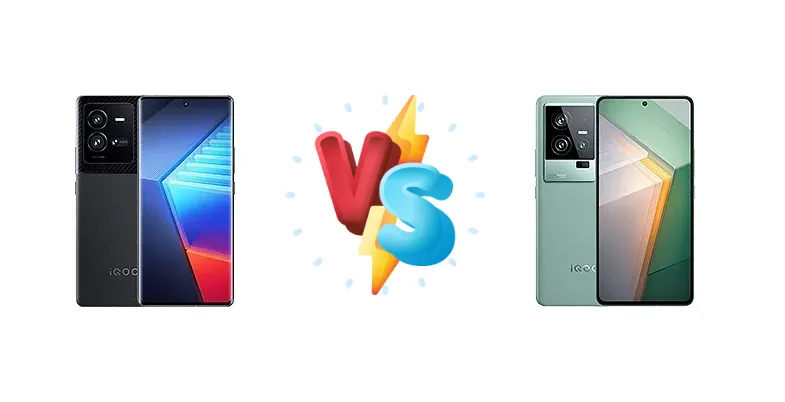
|
🏆 Quick Verdict
The iQOO 11 emerges as the clear winner thanks to its Snapdragon 8 Gen 2 chipset, brighter display, and refined camera system. While the iQOO 10 Pro boasts incredibly fast 200W charging, the iQOO 11's overall improvements make it the superior choice for most users.
| PHONES | ||
|---|---|---|
| Phone Names | vivo iQOO 10 Pro | vivo iQOO 11 |
| Network | ||
|---|---|---|
| 2G bands | GSM 850 / 900 / 1800 / 1900 | GSM 850 / 900 / 1800 / 1900 |
| 3G bands | HSDPA 850 / 900 / 1700(AWS) / 1900 / 2100 | HSDPA 800 / 850 / 900 / 1700(AWS) / 1900 / 2100 |
| 4G bands | 1, 2, 3, 4, 5, 7, 8, 12, 17, 18, 19, 20, 25, 26, 28, 32, 34, 38, 39, 40, 41, 42, 66 | 1, 2, 3, 4, 5, 7, 8, 12, 17, 18, 19, 20, 26, 28, 34, 38, 39, 40, 41 - International |
| 5G bands | 1, 3, 5, 7, 8, 12, 20, 28, 38, 40, 41, 66, 77, 78, 79 SA/NSA | 1, 3, 5, 8, 28, 40, 41, 77, 78 SA/NSA |
| Speed | HSPA, LTE, 5G | HSPA, LTE, 5G |
| Technology | GSM / CDMA / HSPA / CDMA2000 / LTE / 5G | GSM / CDMA / HSPA / CDMA2000 / LTE / 5G |
| CDMA2000 1x | 1, 2, 3, 4, 5, 7, 8, 12, 17, 18, 19, 20, 25, 26, 28, 34, 38, 39, 40, 41, 66 - China | |
| Launch | ||
|---|---|---|
| Announced | 2022, July 19 | 2022, December 08 |
| Status | Available. Released 2022, July 25 | Available. Released 2022, December 08 |
| Body | ||
|---|---|---|
| Dimensions | 164.9 x 75.5 x 9.5 mm (6.49 x 2.97 x 0.37 in) | 164.9 x 77.1 x 8.4 mm or 8.7 mm |
| SIM | Nano-SIM + Nano-SIM | Nano-SIM + Nano-SIM |
| Weight | 215.4 g or 216.2 g (7.58 oz) | 205 g or 208 g (7.23 oz) |
| Display | ||
|---|---|---|
| Protection | - | Corning Gorilla Glass Victus |
| Resolution | 1440 x 3200 pixels, 20:9 ratio (~518 ppi density) | 1440 x 3200 pixels, 20:9 ratio (~518 ppi density) |
| Size | 6.78 inches, 111.0 cm2 (~89.1% screen-to-body ratio) | 6.78 inches, 111.0 cm2 (~87.3% screen-to-body ratio) |
| Type | LTPO3 AMOLED, 1B colors, 120Hz, HDR10+, 500 nits (typ), 1000 nits (HBM), 1500 nits (peak) | LTPO4 AMOLED, 1B colors, 144Hz, HDR10+, 1800 nits (peak) |
| Platform | ||
|---|---|---|
| CPU | Octa-core (1x3.19 GHz Cortex-X2 & 3x2.75 GHz Cortex-A710 & 4x1.80 GHz Cortex-A510) | Octa-core (1x3.2 GHz Cortex-X3 & 2x2.8 GHz Cortex-A715 & 2x2.8 GHz Cortex-A710 & 3x2.0 GHz Cortex-A510) |
| Chipset | Qualcomm SM8475 Snapdragon 8+ Gen 1 (4 nm) | Qualcomm SM8550-AB Snapdragon 8 Gen 2 (4 nm) |
| GPU | Adreno 730 | Adreno 740 |
| OS | Android 12, Funtouch 12 (International), OriginOS Ocean (China) | Android 13, upgradable to Android 14, Funtouch 14 (International), OriginOS 3 (China) |
| Memory | ||
|---|---|---|
| Card slot | No | No |
| Internal | 256GB 8GB RAM, 256GB 12GB RAM, 512GB 12GB RAM | 128GB 8GB RAM, 256GB 8GB RAM, 256GB 12GB RAM, 256GB 16GB RAM, 512GB 16GB RAM |
| UFS 3.1 (V6) | UFS 3.1 - 128GB UFS 4.0 - 256/512GB | |
| Main Camera | ||
|---|---|---|
| Features | Dual-LED lash, HDR, panorama | Dual-LED flash, HDR, panorama |
| Single | 16 MP, f/2.5, (wide), 1/3.1", 1.0µm | 16 MP, f/2.5, (wide) |
| Triple | 50 MP, f/1.9, (wide), 1/1.57", 1.0µm, PDAF, gimbal OIS 14.6 MP, f/2.2, 69mm (telephoto), PDAF, OIS, 3x optical zoom 50 MP, f/2.3, 15mm, 150˚ (ultrawide), 1/2.76", 0.64µm, AF | 50 MP, f/1.9, 23mm (wide), 1/1.57", 1.0µm, PDAF, OIS 13 MP, f/2.5, 47mm (telephoto), PDAF, 2x optical zoom 8 MP, f/2.2, 16mm (ultrawide) |
| Video | 8K@30fps, 4K@24/30/60fps, 1080p@30/60fps, gyro-EIS | 8K@30fps, 4K@30/60fps, 1080p@30/60/120/240fps, gyro-EIS |
| Selfie camera | ||
|---|---|---|
| Features | HDR | HDR |
| Single | 16 MP, f/2.5, (wide), 1/3.1", 1.0µm | 16 MP, f/2.5, (wide) |
| Video | 1080p@30fps, gyro-EIS | 1080p@30fps, gyro-EIS |
| Sound | ||
|---|---|---|
| 3.5mm jack | No | No |
| 35mm jack | No | No |
| Loudspeaker | Yes, with dual speakers | Yes, with stereo speakers |
| 32-bit/384kHz audio | 24-bit/192kHz audio | |
| Comms | ||
|---|---|---|
| Bluetooth | 5.3, A2DP, LE, aptX HD, aptX Adaptive, aptX Lossless | 5.3, A2DP, LE, aptX HD, aptX Adaptive, aptX Lossless |
| Infrared port | Yes | Yes |
| NFC | Yes | Yes |
| Positioning | GPS, GLONASS, GALILEO, BDS, QZSS | GPS, GLONASS, GALILEO, BDS, NavIC |
| Radio | No | No |
| USB | USB Type-C 2.0, OTG | USB Type-C 2.0, OTG |
| WLAN | Wi-Fi 802.11 a/b/g/n/ac/6, dual-band, Wi-Fi Direct | Wi-Fi 802.11 a/b/g/n/ac/6, dual-band, Wi-Fi Direct |
| Features | ||
|---|---|---|
| Sensors | Fingerprint (under display, ultrasonic), accelerometer, gyro, proximity, compass | Fingerprint (under display, optical), accelerometer, gyro, proximity, compass |
| Battery | ||
|---|---|---|
| Charging | 200W wired, PD3.0, 100% in 10 min 50W wireless 10W reverse wireless | 120W wired, PD3.0, 100% in 25 min |
| Type | 4700 mAh | 5000 mAh |
| Misc | ||
|---|---|---|
| Colors | Black, White (BMW M branding) | Black, Green, White (BMW M branding) |
| Models | V2218A | V2243A |
| Price | About 870 EUR | About 650 EUR |
| Tests | ||
|---|---|---|
| Battery life | - | Endurance rating 127h |
| Camera | - | Photo / Video |
| Display | - | Contrast ratio: Infinite (nominal) |
| Loudspeaker | - | -26.3 LUFS (Good) |
| Performance | - | AnTuTu: 1281665 (v9) GeekBench: 4803 (v5.1) GFXBench: 67fps (ES 3.1 onscreen) |
vivo iQOO 10 Pro
- Incredibly fast 200W charging
- Excellent performance with Snapdragon 8+ Gen 1
- Competitive price
- Slightly older chipset
- Potentially less refined camera compared to iQOO 11
- Lower peak brightness display
vivo iQOO 11
- Latest Snapdragon 8 Gen 2 chipset
- Brighter and more vibrant display
- Improved camera system
- Excellent battery life
- Higher price
- Slower charging speed compared to iQOO 10 Pro
Display Comparison
The iQOO 11 takes the display crown with a measured peak brightness of 1147 nits, significantly brighter than the iQOO 10 Pro. While the iQOO 10 Pro's display is excellent, the iQOO 11's higher brightness offers better visibility in direct sunlight and a more vibrant viewing experience. Both feature high refresh rates for smooth gaming.
Camera Comparison
While both phones offer capable camera systems, the iQOO 11 is expected to have improvements in image processing and low-light performance. The iQOO 10 Pro's camera is still very good, but the iQOO 11's advancements provide a more refined photographic experience. Specific camera specs are missing, but the Gen 2 typically offers better computational photography.
Performance
The Snapdragon 8 Gen 2 in the iQOO 11 provides a noticeable performance boost over the Snapdragon 8+ Gen 1 in the iQOO 10 Pro. Expect faster app loading times, smoother multitasking, and improved gaming performance, especially in demanding titles. Both phones handle everyday tasks with ease.
Battery Life
Both phones boast impressive battery life, with an endurance rating of 127h. The iQOO 10 Pro's 200W charging is a game-changer, allowing for a full charge in just 10 minutes. The iQOO 11's 120W charging is still incredibly fast, reaching 100% in 25 minutes, but not as rapid as its predecessor.
Buying Guide
The iQOO 10 Pro is a great option for those prioritizing blazing-fast charging and a slightly lower price point. The iQOO 11 is ideal for users who demand top-tier performance, a stunning display, and a more advanced camera system, even if it means paying a premium.