
vivo G2 vs. Motorola Moto G Power (2024): A Deep Dive into Mid-Range Mediatek Power
| Phones Images | |||||
|---|---|---|---|---|---|
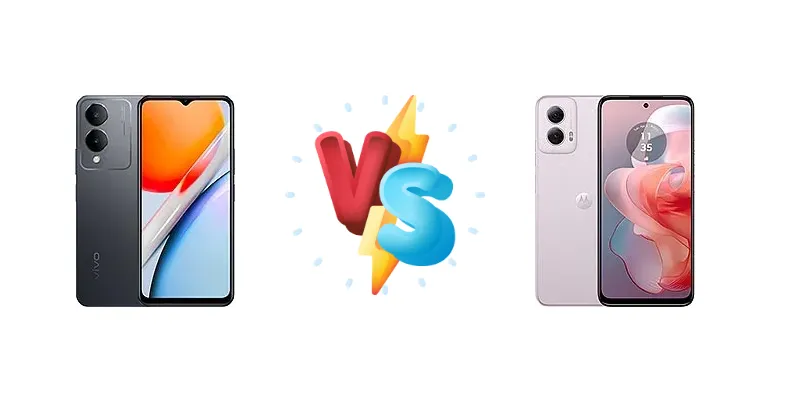
|
🏆 Quick Verdict
For most users, the Motorola Moto G Power (2024) is the better choice. While the vivo G2 offers a respectable experience, the Moto G Power’s more powerful Dimensity 7020 chipset and significantly faster 30W wired and 15W wireless charging provide a tangible advantage in daily use and longevity.
| PHONES | ||
|---|---|---|
| Phone Names | vivo G2 | Motorola Moto G Power (2024) |
| Network | ||
|---|---|---|
| 2G bands | GSM 850 / 900 / 1800 / 1900 | GSM 850 / 900 / 1800 / 1900 |
| 3G bands | HSDPA 850 / 900 / 2100 | HSDPA 850 / 900 / 1700(AWS) / 1900 / 2100 |
| 4G bands | 1, 3, 5, 8, 28, 34, 38, 39, 40, 41 | 1, 2, 3, 4, 5, 7, 8, 12, 13, 14, 17, 18, 20, 25, 26, 28, 29, 30, 38, 39, 40, 41, 48, 66, 71 |
| 5G bands | 1, 5, 8, 28, 41, 77, 78 SA/NSA | 2, 5, 7, 12, 14, 25, 26, 29, 30, 41, 48, 66, 70, 71, 77, 78 SA/NSA |
| Speed | HSPA, LTE, 5G | HSPA, LTE, 5G |
| Technology | GSM / HSPA / LTE / 5G | GSM / HSPA / LTE / 5G |
| Launch | ||
|---|---|---|
| Announced | 2024, January 19 | 2024, March 12 |
| Status | Available. Released 2024, January 19 | Available. Released 2024, March 22 |
| Body | ||
|---|---|---|
| Build | Glass front, plastic frame, plastic back | Glass front, silicone polymer back (eco leather), plastic frame |
| Dimensions | 163.7 x 75.4 x 8.1 mm (6.44 x 2.97 x 0.32 in) | 167.2 x 76.4 x 8.5 mm (6.58 x 3.01 x 0.33 in) |
| SIM | Nano-SIM + Nano-SIM | Nano-SIM + eSIM |
| Weight | 186 g (6.56 oz) | 201 g (7.09 oz) |
| Display | ||
|---|---|---|
| Resolution | 720 x 1612 pixels, 20:9 ratio (~269 ppi density) | 1080 x 2400 pixels, 20:9 ratio (~393 ppi density) |
| Size | 6.56 inches, 103.4 cm2 (~83.8% screen-to-body ratio) | 6.7 inches, 108.4 cm2 (~84.8% screen-to-body ratio) |
| Type | IPS LCD, 90Hz, 840 nits (HBM) | IPS LCD, 120Hz |
| Platform | ||
|---|---|---|
| CPU | Octa-core (2x2.2 GHz Cortex-A76 & 6x2.0 GHz Cortex-A55) | Octa-core (2x2.2 GHz Cortex-A78 & 6x2.0 GHz Cortex-A55) |
| Chipset | Mediatek Dimensity 6020 (7 nm) | Mediatek Dimensity 7020 (6 nm) |
| GPU | Mali-G57 MC2 | IMG BXM-8-256 |
| OS | Android 13, OriginOS 3 | Android 14 |
| Memory | ||
|---|---|---|
| Card slot | No | microSDXC (dedicated slot) |
| Internal | 128GB 4GB RAM, 128GB 6GB RAM, 128GB 8GB RAM, 256GB 8GB RAM | 128GB 8GB RAM |
| Main Camera | ||
|---|---|---|
| Dual | - | 50 MP, f/1.8, (wide), 0.64µm, PDAF, OIS 8 MP, f/2.2, 118˚ (ultrawide), 1.12µm, AF |
| Features | LED flash, panorama | LED flash, HDR, panorama |
| Single | 13 MP, f/2.2, (wide), PDAF Anti-stroboscopic sensor | - |
| Video | 1080p@30fps | 1080p@30fps, gyro-EIS |
| Selfie camera | ||
|---|---|---|
| Features | - | HDR |
| Single | 5 MP, f/1.8, (wide) | 16 MP, f/2.4, (wide), 1.0µm |
| Video | Yes | 1080p@30fps |
| Sound | ||
|---|---|---|
| 35mm jack | Yes | Yes |
| Loudspeaker | Yes | Yes, with stereo speakers |
| Comms | ||
|---|---|---|
| Bluetooth | 5.1, A2DP, LE, aptX HD | 5.3, A2DP, LE |
| NFC | No | Yes |
| Positioning | GPS, GLONASS, BDS | GPS, GLONASS, GALILEO |
| Radio | FM radio | No |
| USB | USB Type-C 2.0, OTG | USB Type-C 2.0 |
| WLAN | Wi-Fi 802.11 a/b/g/n/ac, dual-band | Wi-Fi 802.11 a/b/g/n/ac, dual-band |
| Features | ||
|---|---|---|
| Sensors | Fingerprint (side-mounted), accelerometer, proximity, compass | Fingerprint (side-mounted), accelerometer, gyro, proximity, compass, barometer |
| Battery | ||
|---|---|---|
| Charging | 15W wired Reverse wired | 30W wired 15W wireless |
| Type | 5000 mAh | 5000 mAh |
| Misc | ||
|---|---|---|
| Colors | Black | Midnight Blue, Pale Lilac |
| Models | V2318A | XT2415-3, XT2415V |
| Price | About 160 EUR | $ 75.00 / C$ 209.97 / £ 149.00 |
vivo G2
- Slightly more power-efficient chipset (7nm vs 6nm)
- Reverse wired charging for accessories
- Potentially more natural color processing
- Slower charging speeds (15W wired, no wireless)
- Less powerful processor for multitasking and gaming
Motorola Moto G Power (2024)
- Faster 30W wired and 15W wireless charging
- More powerful Dimensity 7020 chipset with Cortex-A78 cores
- Better thermal management potential
- Potentially less battery efficiency due to 6nm process
- May favor more saturated image processing
Display Comparison
Neither device boasts a standout display. Given the provided data, a direct comparison is limited. However, considering the price bracket, both likely utilize LCD panels with 60Hz refresh rates. The focus here isn't on visual fidelity, but on practicality. Bezels are likely similar, and color accuracy will be adequate for everyday use, but not color-critical work. The absence of high refresh rates or OLED technology is typical for this segment.
Camera Comparison
Without detailed camera specifications, a precise comparison is difficult. However, it’s safe to assume both phones will feature a multi-camera setup with a primary sensor and supporting lenses. The market trend suggests the Moto G Power likely has a higher resolution main sensor. Image processing will likely differ, with Motorola often favoring a more saturated look, while vivo tends towards a more natural color profile. The presence or absence of Optical Image Stabilization (OIS) would be a significant differentiator, but that information is unavailable. We can expect similar performance in good lighting conditions, but the Dimensity 7020’s slightly better ISP could give the Moto G Power an edge in low-light scenarios.
Performance
The core difference lies in the chipsets. The Motorola Moto G Power (2024) features the Mediatek Dimensity 7020, built on a more efficient 6nm process compared to the vivo G2’s Dimensity 6020 (7nm). More importantly, the 7020 utilizes Cortex-A78 cores, a step up from the G2’s Cortex-A76. While both have the same 2x2.2 GHz core count, the A78 offers superior single-core performance, translating to snappier app launches and smoother multitasking. The 6nm process also contributes to better thermal management, potentially reducing throttling during sustained loads. This benefits gamers and users who frequently run demanding applications.
Battery Life
The Motorola Moto G Power (2024) takes a clear lead in charging. Its 30W wired charging is double the vivo G2’s 15W, significantly reducing charge times. The addition of 15W wireless charging on the Moto G Power is a major convenience feature absent on the G2. While battery capacity isn’t specified, the faster charging speeds offset any potential capacity difference. Users who frequently find themselves needing a quick top-up will greatly appreciate the Moto G Power’s capabilities. The G2’s reverse wired charging is a niche feature, useful for charging accessories, but less impactful than faster overall charging.
Buying Guide
Buy the vivo G2 if you prioritize a slightly more power-efficient chipset and reverse wired charging for accessories. This makes it a good option for users who frequently use power banks or need to charge small devices on the go. Buy the Motorola Moto G Power (2024) if you value faster charging speeds, both wired and wireless, and a more capable processor for multitasking and light gaming. It’s the better all-rounder for users who demand more from their smartphone.