
Umidigi C1 vs Motorola Moto G Play (2023): A Deep Dive into Budget Smartphone Performance
| Phones Images | |||||
|---|---|---|---|---|---|
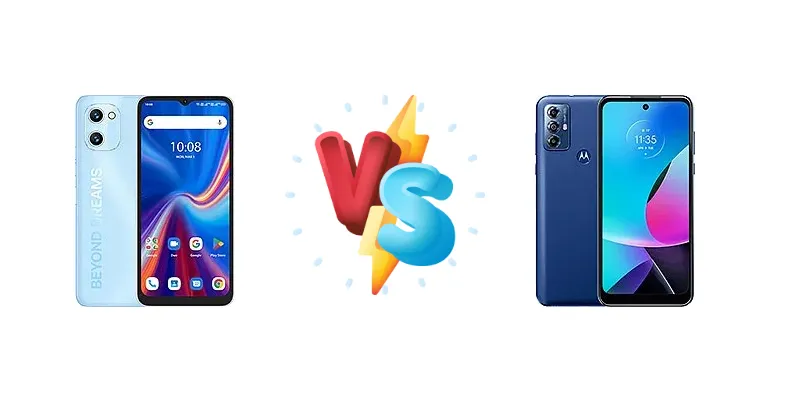
|
🏆 Quick Verdict
For the average user prioritizing responsiveness and a smoother experience, the Motorola Moto G Play (2023) is the clear winner. Its Helio G37 chipset, built on a more efficient 12nm process, provides a substantial performance uplift over the Umidigi C1’s older MT6739. While both offer basic functionality, the Moto G Play handles multitasking and app loading with noticeably less lag.
| PHONES | ||
|---|---|---|
| Phone Names | Umidigi C1 | Motorola Moto G Play (2023) |
| Network | ||
|---|---|---|
| 2G bands | GSM 850 / 900 / 1800 / 1900 | GSM 850 / 900 / 1800 / 1900 |
| 3G bands | HSDPA 850 / 900 / 1700(AWS) / 1900 / 2100 | HSDPA 850 / 900 / 1700(AWS) / 1900 / 2100 |
| 4G bands | 1, 2, 3, 4, 5, 7, 8, 12, 17, 20, 28, 38, 40, 41 | 1, 2, 3, 4, 5, 7, 8, 12, 13, 14, 17, 18, 19, 20, 25, 26, 29, 30, 38, 39, 40, 41, 66, 71 |
| Speed | HSPA, LTE | HSPA, LTE |
| Technology | GSM / HSPA / LTE | GSM / CDMA / HSPA / LTE |
| - | CDMA 800 / 1900 | |
| Launch | ||
|---|---|---|
| Announced | 2022 | 2022, December 08 |
| Status | Available. Released 2022 | Available. Released 2022, December 12 |
| Body | ||
|---|---|---|
| Build | - | Plastic frame, plastic back |
| Dimensions | 164.2 x 76.4 x 8.8 mm (6.46 x 3.01 x 0.35 in) | 167.2 x 76.5 x 9.4 mm (6.58 x 3.01 x 0.37 in) |
| SIM | Nano-SIM + Nano-SIM | Nano-SIM |
| Weight | 192 g (6.77 oz) | 203 g (7.20 oz) |
| - | Water-repellent coating | |
| Display | ||
|---|---|---|
| Resolution | 720 x 1600 pixels, 20:9 ratio (~269 ppi density) | 720 x 1600 pixels, 20:9 ratio (~270 ppi density) |
| Size | 6.52 inches, 102.6 cm2 (~81.8% screen-to-body ratio) | 6.5 inches, 102.0 cm2 (~79.7% screen-to-body ratio) |
| Type | IPS LCD | IPS LCD, 90Hz |
| Platform | ||
|---|---|---|
| CPU | Quad-core 1.5 GHz Cortex-A53 | Octa-core (4x2.3 GHz Cortex-A53 & 4x1.8 GHz Cortex-A53) |
| Chipset | Mediatek MT6739 (28 nm) | Mediatek MT6765 Helio G37 (12 nm) |
| GPU | PowerVR GE8100 | PowerVR GE8320 |
| OS | Android 13 | Android 12 |
| Memory | ||
|---|---|---|
| Card slot | microSDXC (uses shared SIM slot) | microSDXC (dedicated slot) |
| Internal | 32GB 3GB RAM | 32GB 3GB RAM |
| - | eMMC 5.1 | |
| Main Camera | ||
|---|---|---|
| Dual | 13 MP, f/2.2, (wide), AF Auxiliary lens | - |
| Features | Dual-LED flash | LED flash, HDR, panorama |
| Triple | - | 16 MP, f/2.2, (wide), 1.12µm, PDAF 2 MP (macro) Auxiliary lens |
| Video | 1080p@30fps | 1080p@30/60fps |
| Selfie camera | ||
|---|---|---|
| Features | - | HDR |
| Single | 5 MP, f/2.2, (wide) | 5 MP, f/2.4, (wide), 1.12µm |
| Video | 720p@30fps | 1080p@30fps |
| Sound | ||
|---|---|---|
| 3.5mm jack | - | Yes |
| 35mm jack | Yes | Yes |
| Loudspeaker | Yes | Yes |
| Comms | ||
|---|---|---|
| Bluetooth | 4.2, A2DP | 5.0, A2DP, LE |
| NFC | No | No |
| Positioning | GPS, GALILEO, GLONASS, BDS | GPS, GLONASS |
| Radio | No | No |
| USB | USB Type-C, OTG | USB Type-C 2.0 |
| WLAN | Wi-Fi 802.11 b/g/n/ac, dual-band, Wi-Fi Direct | Wi-Fi 802.11 a/b/g/n/ac, dual-band |
| Features | ||
|---|---|---|
| Sensors | Accelerometer, proximity, compass | Fingerprint (rear-mounted), accelerometer, proximity, barometer |
| Battery | ||
|---|---|---|
| Charging | 10W wired | 10W wired |
| Type | 5150 mAh | Li-Po 5000 mAh |
| Misc | ||
|---|---|---|
| Colors | Sunglow Gold, Galaxy Blue, Starry Black | Deep Indigo |
| Models | - | XT2271-1, XT2271-3, XT2271-5, XT2271-4 |
| Price | - | $ 54.00 / C$ 129.00 |
Umidigi C1
- Potentially lower price point
- Compact size (5.5-inch display)
- Basic smartphone functionality
- Outdated and slow processor
- Poor multitasking performance
- Likely limited battery life
- Lower build quality
Motorola Moto G Play (2023)
- Significantly faster processor
- Larger battery capacity for longer runtime
- More responsive user experience
- Better thermal management
- Larger size may not suit all users
- Still a budget device with limitations
- 2MP macro camera is largely ineffective
Display Comparison
Neither device boasts a standout display. Details regarding panel type, resolution, and brightness are unavailable for the Umidigi C1, suggesting a basic LCD panel. The Moto G Play (2023) also utilizes an LCD, but its larger size (6.6 inches vs. the C1’s 5.5 inches) and likely higher peak brightness (based on Motorola’s typical display calibration) offer a more immersive viewing experience. Bezels are expected to be substantial on both, reflecting their budget positioning.
Camera Comparison
Camera performance is likely to be similar – basic. Both phones are expected to feature a primary camera and potentially a secondary depth sensor. Specific sensor sizes and apertures are unknown for the Umidigi C1, but given its price point, it’s unlikely to compete with even mid-range camera systems. The Moto G Play (2023) likely features a more refined image processing pipeline, leveraging Motorola’s software optimizations, but don’t expect flagship-level image quality. The presence of a 2MP macro camera on the Moto G Play is largely a marketing gimmick and offers limited practical benefit.
Performance
The core difference lies in the chipsets. The Umidigi C1’s Mediatek MT6739, fabricated on a 28nm process, features a quad-core Cortex-A53 CPU clocked at 1.5 GHz. This is a significantly older architecture. Conversely, the Motorola Moto G Play (2023) utilizes the Mediatek MT6765 Helio G37, built on a more efficient 12nm process, and boasts an octa-core CPU configuration (4x2.3 GHz Cortex-A53 & 4x1.8 GHz Cortex-A53). The Helio G37’s higher clock speeds and additional cores translate to a demonstrably faster and more fluid user experience, particularly when multitasking or launching applications. The 12nm process also contributes to better thermal management, reducing the likelihood of performance throttling under sustained load.
Battery Life
Both devices feature 10W wired charging, indicating similar charging speeds. While battery capacity is not specified for the Umidigi C1, the Moto G Play (2023) packs a 5000mAh battery. This larger capacity, combined with the more efficient Helio G37 chipset, should translate to significantly longer battery life for the Motorola device. Users can expect to comfortably get through a full day of moderate use on the Moto G Play, whereas the Umidigi C1 may require a midday top-up.
Buying Guide
Buy the Umidigi C1 if you absolutely need the lowest possible price and are willing to tolerate significant performance limitations for basic tasks like calls, texts, and light web browsing. Buy the Motorola Moto G Play (2023) if you value a more responsive user experience, even for everyday tasks, and anticipate using your phone for more than just the bare essentials – such as social media, occasional gaming, or running multiple apps simultaneously.