
Umidigi C1 Plus vs Doogee X98 Pro: A Detailed Comparison for Budget Buyers
| Phones Images | |||||
|---|---|---|---|---|---|
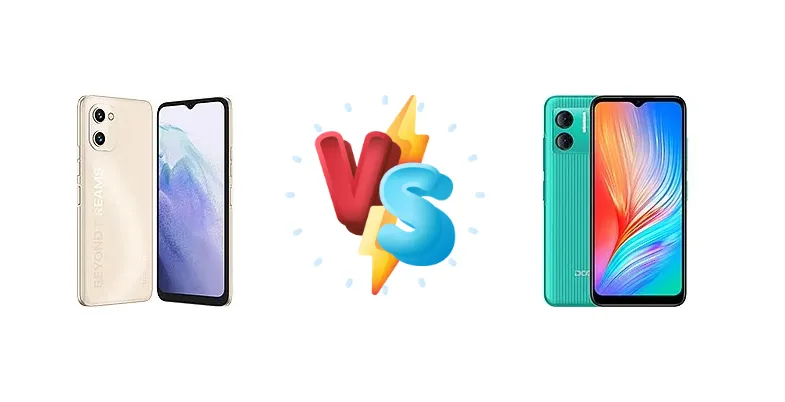
|
🏆 Quick Verdict
For most users, the Doogee X98 Pro is the superior choice. Its Helio G25 chipset, featuring an octa-core CPU, provides a significantly more responsive experience than the Umidigi C1 Plus’s quad-core MT8766. While both offer 10W charging, the X98 Pro’s processing power justifies the slight price premium.
| PHONES | ||
|---|---|---|
| Phone Names | Umidigi C1 Plus | Doogee X98 Pro |
| Network | ||
|---|---|---|
| 2G bands | GSM 850 / 900 / 1800 / 1900 | GSM 850 / 900 / 1800 / 1900 |
| 3G bands | HSDPA 850 / 900 / 1700(AWS) / 1900 / 2100 | HSDPA 800 / 850 / 900 / 1700(AWS) / 1900 / 2100 |
| 4G bands | 1, 2, 3, 4, 5, 7, 8, 12, 17, 20, 28, 38, 40, 41 | 1, 2, 3, 4, 5, 7, 8, 12, 13, 17, 18, 19, 20, 25, 26, 28, 34, 38, 39, 40, 41, 66 |
| Speed | HSPA, LTE | HSPA, LTE |
| Technology | GSM / HSPA / LTE | GSM / HSPA / LTE |
| Launch | ||
|---|---|---|
| Announced | 2023 | 2022, November |
| Status | Available. Released 2023 | Available. Released 2022, November 10 |
| Body | ||
|---|---|---|
| Dimensions | 164.2 x 76.4 x 8.8 mm (6.46 x 3.01 x 0.35 in) | 165.3 x 76.3 x 8.8 mm (6.51 x 3.00 x 0.35 in) |
| SIM | Nano-SIM + Nano-SIM | Nano-SIM + Nano-SIM |
| Weight | 192 g (6.77 oz) | - |
| Display | ||
|---|---|---|
| Resolution | 720 x 1600 pixels, 20:9 ratio (~269 ppi density) | 720 x 1600 pixels, 20:9 ratio (~269 ppi density) |
| Size | 6.52 inches, 102.6 cm2 (~81.8% screen-to-body ratio) | 6.52 inches, 102.6 cm2 (~81.4% screen-to-body ratio) |
| Type | IPS LCD | IPS LCD |
| Platform | ||
|---|---|---|
| CPU | Quad-core 1.5 GHz Cortex-A53 | Octa-core (4x2.0 GHz Cortex-A53 & 4x1.5 GHz Cortex-A53) |
| Chipset | Mediatek MT8766 | Mediatek MT6762 Helio G25 (12 nm) |
| GPU | PowerVR GE8300 | PowerVR GE8320 |
| OS | Android 13 | Android 12 |
| Memory | ||
|---|---|---|
| Card slot | microSDXC (uses shared SIM slot) | microSDXC (uses shared SIM slot) |
| Internal | 32GB 3GB RAM | 64GB 4GB RAM |
| Main Camera | ||
|---|---|---|
| Dual | 13 MP, f/2.2, (wide), AF Auxiliary lens | 12 MP, f/1.8, (wide), PDAF Auxiliary lens |
| Features | Dual-LED flash | Triple-LED flash, HDR, panorama |
| Video | 1080p@30fps | Yes |
| Selfie camera | ||
|---|---|---|
| Single | 5 MP, f/2.2, (wide) | 8 MP, f/2.2, (wide) |
| Video | 720p@30fps | Yes |
| Sound | ||
|---|---|---|
| 35mm jack | Yes | Yes |
| Loudspeaker | Yes | Yes |
| Comms | ||
|---|---|---|
| Bluetooth | 4.2, A2DP | 5.0, A2DP, LE |
| NFC | No | No |
| Positioning | GPS, GLONASS, GALILEO, BDS | GPS, GLONASS, BDS, GALILEO |
| Radio | No | FM radio |
| USB | USB Type-C, OTG | USB Type-C 2.0, OTG |
| WLAN | Wi-Fi 802.11 b/g/n/ac, dual-band, Wi-Fi Direct | Wi-Fi 802.11 a/b/g/n/ac, dual-band |
| Features | ||
|---|---|---|
| Sensors | Fingerprint (side-mounted), accelerometer, proximity, compass | Accelerometer, proximity, compass |
| Battery | ||
|---|---|---|
| Charging | 10W wired | 10W wired |
| Type | 5150 mAh | 4200 mAh |
| Misc | ||
|---|---|---|
| Colors | Starry Black, Sunglow Gold | Emerald Green, Ocean Blue, Graphite Gray |
| Price | - | About 130 EUR |
Umidigi C1 Plus
- Lowest possible price point
- Functional for basic tasks
- Simple and straightforward software experience
- Significantly slower performance
- Limited multitasking capabilities
- Poor gaming performance
Doogee X98 Pro
- Faster and more responsive performance
- Better multitasking capabilities
- Improved gaming experience (casual games)
- Slightly higher price
- Still limited camera capabilities
- 10W charging is relatively slow
Display Comparison
Neither Umidigi nor Doogee provide detailed display specifications beyond resolution. Given the price point, both likely utilize IPS LCD panels. However, the X98 Pro’s chipset allows for potentially better image processing, leading to slightly more vibrant colors. Bezels are expected to be substantial on both devices, typical for this segment. Color accuracy is unlikely to be a strong point on either.
Camera Comparison
Without detailed camera specs, it’s difficult to make a definitive judgment. Both phones likely feature basic camera setups, potentially with a primary sensor and a depth or macro lens. The image processing capabilities of the Helio G25 in the Doogee X98 Pro will likely result in better image quality, particularly in challenging lighting conditions. Expect limited dynamic range and detail on both devices. Any 2MP macro lenses included are likely to offer minimal practical benefit.
Performance
The Doogee X98 Pro’s Mediatek MT6762 Helio G25 is the clear winner here. Its octa-core configuration (4x2.0 GHz Cortex-A53 & 4x1.5 GHz Cortex-A53) significantly outperforms the Umidigi C1 Plus’s quad-core 1.5 GHz Cortex-A53. The Helio G25, built on a 12nm process, offers improved efficiency and thermal management compared to the MT8766. This translates to smoother multitasking, faster app loading times, and a more enjoyable user experience. While both use Cortex-A53 cores, the higher clock speeds and additional cores on the X98 Pro provide a substantial performance boost.
Battery Life
Both devices feature 10W wired charging, indicating similar charging speeds. Battery capacity isn’t specified, but given the target price point, both likely house batteries in the 4000-5000 mAh range. The Doogee X98 Pro’s more efficient chipset could translate to slightly better battery life, despite potentially having a similar capacity, due to reduced power consumption during typical usage.
Buying Guide
Buy the Umidigi C1 Plus if you prioritize absolute minimal cost and only need a phone for the most basic tasks – calls, texts, and light web browsing. It’s a functional device for those on the tightest of budgets. Buy the Doogee X98 Pro if you want a smoother, more capable experience for everyday use, including social media, video streaming, and casual gaming. The extra processing power makes a noticeable difference.