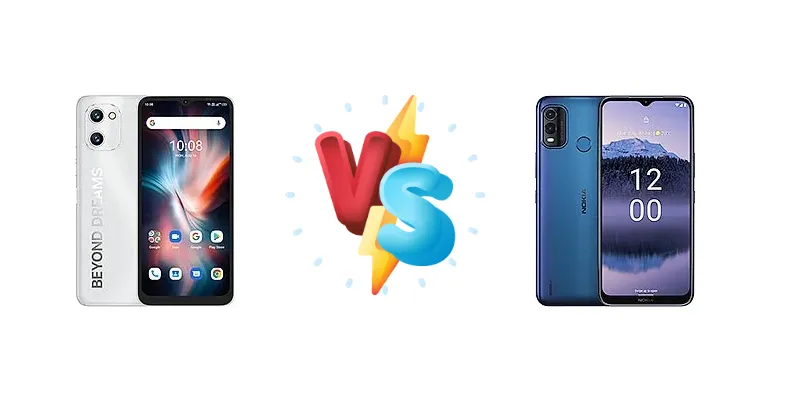
The Umidigi C1 Max and Nokia G11 Plus represent the fiercely competitive sub-$150 smartphone market. Both devices rely on Unisoc chipsets to deliver a functional Android experience, but subtle differences in CPU clock speeds and overall optimization can significantly impact daily usability. This comparison dissects these nuances to determine which phone offers the best bang for your buck.
🏆 Quick Verdict
For the average user prioritizing slightly smoother performance in demanding apps, the Umidigi C1 Max edges out the Nokia G11 Plus. Its marginally faster Unisoc T610 chipset provides a noticeable, though not dramatic, advantage. However, Nokia’s brand reputation for software support and build quality makes the G11 Plus a strong contender.
| Network |
|---|
| 2G bands | GSM 850 / 900 / 1800 / 1900 | GSM 850 / 900 / 1800 / 1900 |
| 3G bands | HSDPA 850 / 900 / 1700(AWS) / 1900 / 2100 | HSDPA 850 / 900 / 2100 - International |
| 4G bands | 1, 2, 3, 4, 5, 7, 8, 12, 17, 20, 28, 38, 40, 41 | 1, 3, 5, 7, 8, 20, 28, 38, 40, 41 - International |
| Speed | HSPA, LTE | HSPA 42.2/5.76 Mbps, LTE Cat4 150/50 Mbps |
| Technology | GSM / HSPA / LTE | GSM / HSPA / LTE |
| | - | 1, 3, 5, 8, 40, 41 - India |
| Launch |
|---|
| Announced | 2022 | 2022, June 29 |
| Status | Available. Released 2022 | Available. Released 2022, July 20 |
| Body |
|---|
| Build | - | Glass front, plastic frame, plastic back |
| Dimensions | 164.2 x 76.4 x 8.8 mm (6.46 x 3.01 x 0.35 in) | 164.8 x 75.9 x 8.6 mm (6.49 x 2.99 x 0.34 in) |
| SIM | Nano-SIM + Nano-SIM | · Nano-SIM· Nano-SIM + Nano-SIM |
| Weight | 192 g (6.77 oz) | 192 g (6.77 oz) |
| | - | Splash protection |
| Display |
|---|
| Resolution | 720 x 1600 pixels, 20:9 ratio (~269 ppi density) | 720 x 1600 pixels, 20:9 ratio (~269 ppi density) |
| Size | 6.52 inches, 102.6 cm2 (~81.8% screen-to-body ratio) | 6.52 inches, 102.6 cm2 (~82.1% screen-to-body ratio) |
| Type | IPS LCD | IPS LCD, 90Hz, 400 nits (typ) |
| Platform |
|---|
| CPU | Octa-core (2x1.8 GHz Cortex-A75 & 6x1.8 GHz Cortex-A55) | Octa-core (2x1.6 GHz Cortex-A75 & 6x1.6 GHz Cortex-A55) |
| Chipset | Unisoc T610 (12 nm) | Unisoc T606 (12 nm) |
| GPU | Mali-G52 MP2 | Mali-G57 MP1 |
| OS | Android 12 | Android 12, upgradable to Android 13 |
| Memory |
|---|
| Card slot | microSDXC (uses shared SIM slot) | microSDXC (dedicated slot) |
| Internal | 128GB 6GB RAM | 32GB 3GB RAM, 64GB 3GB RAM, 64GB 4GB RAM, 128GB 3GB RAM |
| | - | eMMC 5.1 |
| Main Camera |
|---|
| Dual | 50 MP, f/1.8, (wide), AF
Auxiliary lens | 50 MP, f/1.8, (wide), 1/2.67", PDAF
Auxiliary lens |
| Features | Dual-LED flash, HDR, panorama | LED flash |
| Single | - | 8 MP, f/2.0, (wide), 1/4.0" |
| Video | 1080p@30fps | 1080p@30fps |
| Selfie camera |
|---|
| Single | 8 MP, f/2.2, (wide) | 8 MP, f/2.0, (wide), 1/4.0" |
| Video | 720p@30fps | 1080p@30fps |
| Sound |
|---|
| 3.5mm jack | - | Yes |
| 35mm jack | Yes | Yes |
| Loudspeaker | Yes | Yes |
| Comms |
|---|
| Bluetooth | 5.0, A2DP, LE | 5.0, A2DP, LE |
| NFC | No | No |
| Positioning | GPS, GALILEO, GLONASS, BDS | GPS |
| Radio | No | FM radio |
| USB | USB Type-C, OTG | USB Type-C 2.0, OTG |
| WLAN | Wi-Fi 802.11 a/b/g/n/ac, dual-band, Wi-Fi Direct | Wi-Fi 802.11 a/b/g/n/ac, dual-band, Wi-Fi Direct |
| Features |
|---|
| Sensors | Fingerprint (side-mounted), accelerometer, proximity | Fingerprint (rear-mounted), accelerometer, proximity |
| Battery |
|---|
| Charging | 10W wired | 10W wired |
| Type | 5150 mAh | Li-Ion 5000 mAh |
| Misc |
|---|
| Colors | Starry Black, Galaxy Blue | Lake Blue, Charcoal Grey |
| Price | - | About 130 EUR |
Umidigi C1 Max
- Slightly faster CPU clock speed (Unisoc T610)
- Potentially better performance in demanding apps
- Competitive price point
- Less established brand reputation
- Software update support may be limited
Nokia G11 Plus
- Stronger brand reputation (Nokia)
- Potentially better software update support
- Durable build quality (typical of Nokia)
- Slightly slower CPU clock speed (Unisoc T606)
- May exhibit minor performance limitations in demanding tasks
Display Comparison
Neither Umidigi nor Nokia provide detailed display specifications beyond the panel type. Given the price point, both likely utilize IPS LCDs. The absence of information regarding peak brightness, color gamut coverage, or refresh rates suggests a focus on cost reduction. Bezels are expected to be substantial on both devices, impacting the overall screen-to-body ratio. Color accuracy will likely be standard for this segment, prioritizing power efficiency over vibrant visuals.
Camera Comparison
Camera details are sparse. Both phones likely feature a primary camera and potentially depth/macro sensors. Without knowing sensor sizes, apertures, or image processing algorithms, a direct comparison is difficult. The market segment suggests these cameras will perform adequately in good lighting conditions but struggle in low light. The inclusion of a 2MP macro camera on either device is largely a marketing tactic, offering limited practical benefit due to the low resolution and lack of autofocus. Image processing will likely be basic, prioritizing speed over advanced features.
Performance
The core difference lies in the chipsets: the Umidigi C1 Max features the Unisoc T610, while the Nokia G11 Plus uses the T606. Both are 12nm chips with an octa-core configuration of 2x Cortex-A75 and 6x Cortex-A55 cores. However, the T610 is clocked slightly higher at 1.8 GHz versus the T606’s 1.6 GHz. This 200 MHz difference, while seemingly small, can translate to a measurable performance boost in CPU-intensive tasks. The impact on GPU performance is likely minimal, as both chipsets utilize similar Mali-G52 MC2 GPUs. RAM configurations are not specified, but both will likely ship with 3-4GB, which will impact multitasking capabilities.
Battery Life
Both devices are equipped with 10W wired charging, indicating a similar charging experience – expect approximately 2.5-3 hours for a full charge. Battery capacity is not specified, but typical capacities for phones in this price range are between 4000-5000 mAh. The power efficiency of the Unisoc T610 and T606 chipsets will be a key factor in determining real-world battery life. Users should expect a full day of light to moderate use, but heavy gaming or video streaming will significantly reduce battery endurance.
Buying Guide
Buy the Umidigi C1 Max if you need a phone for moderate multitasking, occasional gaming, and prioritize the best possible performance within a tight budget. Buy the Nokia G11 Plus if you prefer a brand with a stronger track record for software updates and a potentially more durable build, even if it means sacrificing a small amount of processing power.
Frequently Asked Questions
❓ Will the Unisoc T610 in the Umidigi C1 Max handle popular games like PUBG Mobile?
The Unisoc T610 can run PUBG Mobile, but expect to play at lower graphics settings and frame rates to maintain a stable experience. The chipset isn't designed for high-end gaming, and prolonged sessions may result in thermal throttling.
❓ How reliable is Nokia's software update support for the G11 Plus?
Nokia generally provides more consistent software updates than many other brands in this price range, including security patches and occasional Android version upgrades. However, the G11 Plus is an entry-level device, so the number of major Android updates it receives may be limited to one or two.
❓ Is the 10W charging speed on either phone sufficient for daily use?
10W charging is relatively slow by modern standards. While it will charge the phone overnight, it's not ideal for quick top-ups. Users who frequently run out of battery may find the slow charging speed inconvenient.