
Umidigi Bison X10G vs GT2 Pro 5G: A Deep Dive into Rugged 5G Value
| Phones Images | |||||
|---|---|---|---|---|---|
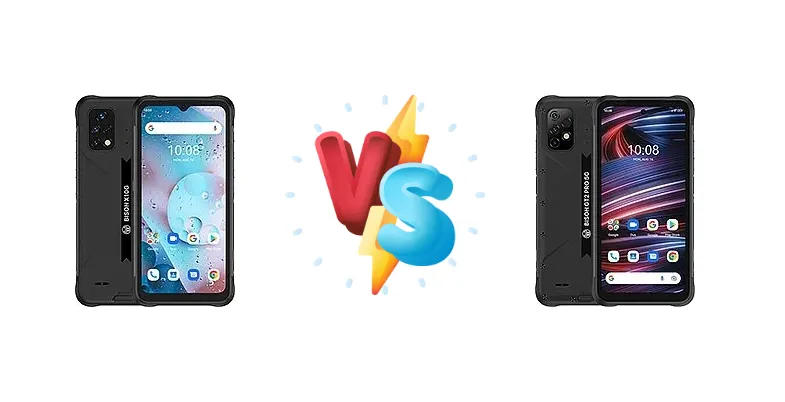
|
🏆 Quick Verdict
For most users, the Umidigi Bison GT2 Pro 5G is the clear winner. Its Mediatek Dimensity 900 chipset offers substantially improved CPU and GPU performance compared to the X10G’s Unisoc Tiger T310, making it better suited for demanding tasks and future-proofing. The faster 18W charging is also a significant advantage.
| PHONES | ||
|---|---|---|
| Phone Names | Umidigi Bison X10G | Umidigi Bison GT2 Pro 5G |
| Network | ||
|---|---|---|
| 2G bands | GSM 850 / 900 / 1800 / 1900 | GSM 850 / 900 / 1800 / 1900 |
| 3G bands | HSDPA 850 / 900 / 1700(AWS) / 1900 / 2100 | HSDPA 800 / 850 / 900 / 1700(AWS) / 1900 / 2100 |
| 4G bands | 1, 2, 3, 4, 5, 7, 8, 12, 13, 17, 18, 19, 20, 25, 26, 28, 34, 38, 39, 40, 41, 66 | 1, 2, 3, 4, 5, 7, 8, 12, 13, 17, 18, 19, 20, 25, 26, 28, 34, 38, 39, 40, 41, 66 |
| 5G bands | - | 1, 2, 3, 5, 7, 8, 20, 25, 28, 38, 40, 41, 66, 77, 78, 79 SA/NSA |
| Speed | HSPA, LTE | HSPA, LTE, 5G |
| Technology | GSM / HSPA / LTE | GSM / CDMA / HSPA / LTE / 5G |
| Launch | ||
|---|---|---|
| Announced | 2021. Released 2021 | 2022 |
| Status | Discontinued | Available. Released 2022 |
| Body | ||
|---|---|---|
| Dimensions | 172.1 x 83.8 x 13.1 mm (6.78 x 3.30 x 0.52 in) | 172.2 x 83.9 x 12.9 mm (6.78 x 3.30 x 0.51 in) |
| SIM | Nano-SIM + Nano-SIM | Nano-SIM + Nano-SIM |
| Weight | - | 280 g (9.88 oz) |
| Display | ||
|---|---|---|
| Resolution | 720 x 1600 pixels, 20:9 ratio (~269 ppi density) | 1080 x 2400 pixels, 20:9 ratio (~405 ppi density) |
| Size | 6.53 inches, 102.9 cm2 (~71.4% screen-to-body ratio) | 6.5 inches, 102.0 cm2 (~70.6% screen-to-body ratio) |
| Type | IPS LCD | IPS LCD, 90Hz |
| Platform | ||
|---|---|---|
| CPU | Quad-core (1x2.0 GHz Cortex-A75 & 3x1.8 GHz Cortex-A55) | Octa-core (2x2.4 GHz Cortex-A78 & 6x2.0 GHz Cortex-A55) |
| Chipset | Unisoc Tiger T310 (12nm) | Mediatek Dimensity 900 (6 nm) |
| GPU | PowerVR GE8300 | Mali-G68 MC4 |
| OS | Android 11 | Android 12 |
| Memory | ||
|---|---|---|
| Card slot | microSDXC (uses shared SIM slot) | microSDXC (uses shared SIM slot) |
| Internal | 32GB 4GB RAM | 256GB 8GB RAM |
| Main Camera | ||
|---|---|---|
| Features | Dual-LED flash, HDR, panorama | Dual-LED flash, HDR, panorama |
| Triple | 16 MP, f/2.2, (wide), AF 8 MP, 119˚ (ultrawide) 5 MP (macro) | 64 MP, f/1.8, (wide), AF 8 MP, f/2.2, 117˚ (ultrawide) 5 MP (macro) |
| Video | 1080p@30fps | 4K@30fps, 1080p@30fps |
| Selfie camera | ||
|---|---|---|
| Single | 8 MP, f/2.2, (wide) | 24 MP, f/2.0, (wide) |
| Video | 1080p@30fps | 1080p@30fps |
| Sound | ||
|---|---|---|
| 35mm jack | Yes | Yes |
| Loudspeaker | Yes | Yes |
| Comms | ||
|---|---|---|
| Bluetooth | 5.0, A2DP, LE | 5.2, A2DP, LE |
| NFC | No | Yes |
| Positioning | GPS, GLONASS, GALILEO, BDS | GPS, GLONASS, GALILEO, BDS |
| Radio | Wireless FM radio | Wireless FM radio |
| USB | USB Type-C, OTG | USB Type-C |
| WLAN | Wi-Fi 802.11 a/b/g/n, dual-band, Wi-Fi Direct | Wi-Fi 802.11 a/b/g/n/ac/6, dual-band, Wi-Fi Direct |
| Features | ||
|---|---|---|
| Sensors | Accelerometer, proximity, compass | Fingerprint (side-mounted), accelerometer, proximity, compass, barometer, thermometer (skin temperature) |
| Battery | ||
|---|---|---|
| Charging | 10W wired | 18W wired |
| Type | 6150 mAh | 6150 mAh |
| Misc | ||
|---|---|---|
| Colors | Hack Black | Hack Black |
Umidigi Bison X10G
- Most affordable option
- Rugged design for durability
- Suitable for basic smartphone tasks
- Slow 10W charging
- Limited processing power
- Unisoc chipset may struggle with demanding apps
Umidigi Bison GT2 Pro 5G
- Significantly faster performance with Dimensity 900
- Faster 18W charging
- More efficient 6nm chipset for better battery life
- Higher price point than the X10G
- Rugged design may add bulk
- Camera performance dependent on sensor quality (unspecified)
Display Comparison
Neither device’s display specifications are provided, so a direct comparison is limited. However, given the price point, both likely utilize IPS LCD panels. The GT2 Pro 5G’s more powerful chipset *could* support a higher refresh rate display, offering smoother scrolling and animations, but this is unconfirmed. Bezels are likely similar, focusing on durability rather than minimizing size. Color accuracy will likely be standard for this segment.
Camera Comparison
Without detailed camera specifications, analysis is limited. Both phones likely feature a multi-camera setup, but the GT2 Pro 5G’s processing power allows for more sophisticated image processing algorithms. The X10G’s Unisoc chipset may struggle with complex computational photography tasks. The presence of a 2MP macro camera on either device is likely a marketing feature with limited real-world utility; image quality will be significantly lower than the main sensor. The GT2 Pro 5G’s ISP (Image Signal Processor) within the Dimensity 900 will likely offer better noise reduction and dynamic range.
Performance
The core difference lies in the chipsets. The Bison X10G’s Unisoc Tiger T310, built on a 12nm process, features a quad-core configuration with a single Cortex-A75 core for peak performance and three Cortex-A55 cores for efficiency. This is adequate for basic tasks. Conversely, the Bison GT2 Pro 5G boasts the Mediatek Dimensity 900, fabricated on a more efficient 6nm process. Its octa-core setup, with two high-performance Cortex-A78 cores and six Cortex-A55 cores, delivers significantly higher multi-core and single-core performance. This translates to faster app loading times, smoother multitasking, and a more responsive user experience. The Dimensity 900 also benefits from a more capable GPU, improving gaming performance.
Battery Life
Battery capacity isn’t specified for either device, but the charging speeds offer a clear distinction. The Bison X10G’s 10W charging is slow by modern standards, requiring a significant amount of time to fully charge. The Bison GT2 Pro 5G’s 18W charging is considerably faster, reducing downtime. While a larger battery capacity on the X10G might partially offset the slower charging, the Dimensity 900’s 6nm efficiency likely results in comparable or even better real-world battery life despite potentially having a similar capacity.
Buying Guide
Buy the Umidigi Bison X10G if you need an extremely budget-friendly, durable phone for basic tasks like calls, texts, and light social media. It’s ideal for users who prioritize longevity and don’t require demanding performance. Buy the Umidigi Bison GT2 Pro 5G if you prefer a smoother, more responsive experience, especially when multitasking, gaming, or using 5G connectivity. It’s the better choice for users who want a phone that can keep up with their digital lives without breaking the bank.