
Umidigi Bison X10G NFC vs. Ulefone Power Armor 14 Pro: A Rugged Showdown
| Phones Images | |||||
|---|---|---|---|---|---|
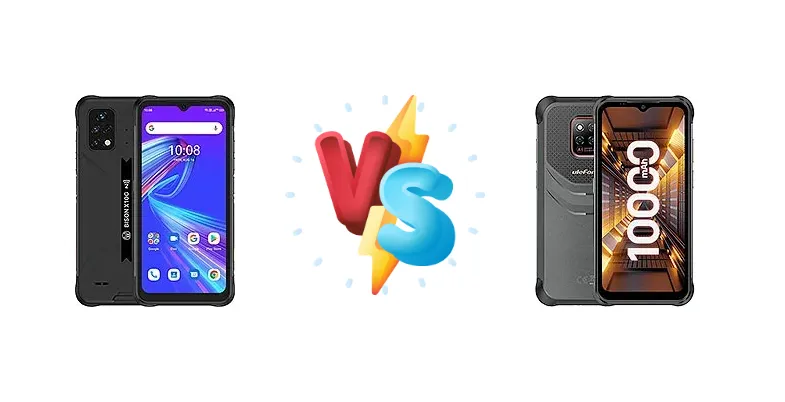
|
🏆 Quick Verdict
For the average user prioritizing overall performance and charging convenience, the Ulefone Power Armor 14 Pro emerges as the stronger contender. Its Helio G85 chipset offers a noticeable CPU and GPU advantage, coupled with the flexibility of 18W wired and 15W wireless charging, making it a more versatile daily driver.
| PHONES | ||
|---|---|---|
| Phone Names | Umidigi Bison X10G NFC | Ulefone Power Armor 14 Pro |
| Network | ||
|---|---|---|
| 2G bands | GSM 850 / 900 / 1800 / 1900 | GSM 850 / 900 / 1800 / 1900 |
| 3G bands | HSDPA 850 / 900 / 1700(AWS) / 1900 / 2100 | HSDPA 850 / 900 / 1700(AWS) / 1900 / 2100 |
| 4G bands | 1, 2, 3, 4, 5, 7, 8, 12, 13, 17, 18, 19, 20, 25, 26, 28, 34, 38, 39, 40, 41, 66 | 1, 2, 3, 4, 5, 7, 8, 12, 13, 17, 18, 19, 20, 25, 26, 28, 38, 40 |
| Speed | HSPA, LTE | HSPA, LTE |
| Technology | GSM / HSPA / LTE | GSM / HSPA / LTE |
| Launch | ||
|---|---|---|
| Announced | 2021. Released 2021 | 2022, March 09 |
| Status | Discontinued | Available. Released 2022, March 09 |
| Body | ||
|---|---|---|
| Dimensions | 172.1 x 83.8 x 13.1 mm (6.78 x 3.30 x 0.52 in) | 175.6 x 82.5 x 17.2 mm (6.91 x 3.25 x 0.68 in) |
| SIM | Nano-SIM + Nano-SIM | Nano-SIM + Nano-SIM |
| Weight | - | 358.2 g (12.63 oz) |
| - | IP68 dust/water resistant (up to 1.5m for 30 min) Drop-to-concrete resistance from up to 1.5m MIL-STD-810G compliant | |
| Display | ||
|---|---|---|
| Protection | - | Corning Gorilla Glass 3 |
| Resolution | 720 x 1600 pixels, 20:9 ratio (~269 ppi density) | 720 x 1600 pixels, 20:9 ratio (~269 ppi density) |
| Size | 6.53 inches, 102.9 cm2 (~71.4% screen-to-body ratio) | 6.52 inches, 102.6 cm2 (~70.8% screen-to-body ratio) |
| Type | IPS LCD | IPS LCD |
| Platform | ||
|---|---|---|
| CPU | Quad-core (1x2.0 GHz Cortex-A75 & 3x1.8 GHz Cortex-A55) | Octa-core (2x2.0 GHz Cortex-A75 & 6x1.8 GHz Cortex-A55) |
| Chipset | Unisoc Tiger T310 (12nm) | Mediatek MT6769Z Helio G85 (12 nm) |
| GPU | PowerVR GE8300 | Mali-G52 MC2 |
| OS | Android 11 | Android 12 |
| Memory | ||
|---|---|---|
| Card slot | microSDXC (uses shared SIM slot) | microSDXC (uses shared SIM slot) |
| Internal | 64GB 4GB RAM | 128GB 6GB RAM, 128GB 8GB RAM |
| - | eMMC 5.1 | |
| Main Camera | ||
|---|---|---|
| Features | Dual-LED flash, HDR, panorama | LED flash, HDR, panorama |
| Single | - | 16 MP, f/2.2 |
| Triple | 16 MP, f/2.2, (wide), AF 8 MP, 119˚ (ultrawide) 5 MP (macro) | 20 MP, f/1.8, 26mm (wide), 1/2.78", 1.0µm, PDAF 2 MP (macro) Auxiliary lens |
| Video | 1080p@30fps | 1080p@30fps |
| Selfie camera | ||
|---|---|---|
| Features | - | HDR, panorama |
| Single | 8 MP, f/2.2, (wide) | 16 MP, f/2.2 |
| Video | 1080p@30fps | 1080p@30fps |
| Sound | ||
|---|---|---|
| 3.5mm jack | - | Yes |
| 35mm jack | Yes | Yes |
| Loudspeaker | Yes | Yes |
| Comms | ||
|---|---|---|
| Bluetooth | 5.0, A2DP, LE | 5.0, A2DP, LE |
| NFC | Yes | Yes |
| Positioning | GPS, GLONASS, GALILEO, BDS | GPS, GLONASS, GALILEO, BDS |
| Radio | Wireless FM radio | FM radio, RDS, recording |
| USB | USB Type-C, OTG | USB Type-C 2.0, OTG |
| WLAN | Wi-Fi 802.11 a/b/g/n, dual-band, Wi-Fi Direct | Wi-Fi 802.11 a/b/g/n/ac, dual-band |
| Features | ||
|---|---|---|
| Sensors | Fingerprint (side-mounted), accelerometer, proximity, compass | Fingerprint (side-mounted), accelerometer, proximity, compass |
| Battery | ||
|---|---|---|
| Charging | 10W wired | 18W wired 15W wireless |
| Type | 6150 mAh | Li-Po 10000 mAh |
| Misc | ||
|---|---|---|
| Colors | Hack Black | Black |
| Price | - | About 260 EUR |
Umidigi Bison X10G NFC
- More affordable price point
- Rugged design for durability
- NFC support for contactless payments
- Slower Unisoc Tiger T310 chipset
- Limited 10W wired charging only
- Likely lower performance in demanding tasks
Ulefone Power Armor 14 Pro
- More powerful Mediatek Helio G85 chipset
- 18W wired and 15W wireless charging
- Potentially better multitasking and gaming performance
- Higher price compared to the Bison X10G
- Rugged design may add bulk
- Camera performance likely average
Display Comparison
Neither device's display specifications are provided, so a direct comparison is limited. However, given the price points, both likely utilize IPS LCD panels. The Ulefone, positioned slightly higher in the market, may benefit from a marginally brighter panel. The absence of details like refresh rate or resolution suggests neither phone prioritizes a premium visual experience, focusing instead on durability and practicality.
Camera Comparison
Without detailed camera specifications, a precise comparison is difficult. However, the market segment suggests both phones will feature basic camera systems. The absence of information regarding sensor size or optical image stabilization (OIS) implies neither device will excel in low-light photography. The Ulefone, being the slightly more premium option, *may* incorporate a larger main sensor, potentially leading to better image quality in favorable lighting conditions. It's likely both phones will include a 2MP macro lens, which, while present, offers limited practical benefit due to its low resolution.
Performance
The Ulefone Power Armor 14 Pro’s Mediatek Helio G85 chipset represents a significant upgrade over the Umidigi Bison X10G NFC’s Unisoc Tiger T310. The G85’s octa-core configuration (2x2.0 GHz Cortex-A75 & 6x1.8 GHz Cortex-A55) provides more processing power than the Bison X10G’s quad-core setup (1x2.0 GHz Cortex-A75 & 3x1.8 GHz Cortex-A55). This translates to smoother multitasking, faster app loading times, and a more enjoyable gaming experience on the Ulefone. While both chips are built on a 12nm process, the G85’s additional cores and higher clock speeds give it a clear advantage. Users who frequently switch between apps or play mobile games will find the Power Armor 14 Pro noticeably more responsive.
Battery Life
Both devices target long battery life, a key feature of rugged phones. The Ulefone Power Armor 14 Pro distinguishes itself with 18W wired charging and the addition of 15W wireless charging. The Umidigi Bison X10G NFC is limited to 10W wired charging. This difference in charging speed is substantial; the Ulefone will significantly reduce the time spent tethered to a wall outlet. While battery capacity isn't specified, the faster charging capabilities of the Ulefone make it the more convenient option for users who need to quickly top up their battery.
Buying Guide
Buy the Umidigi Bison X10G NFC if you need a highly affordable, basic rugged phone for essential communication and light tasks, and are comfortable with slower charging speeds. Buy the Ulefone Power Armor 14 Pro if you prefer a more responsive experience for multitasking and occasional gaming, and value the convenience of wireless charging and a more powerful chipset for future-proofing.