
Umidigi Bison X10 vs Cubot KingKong 7: Which Rugged Phone Reigns Supreme?
| Phones Images | |||||
|---|---|---|---|---|---|
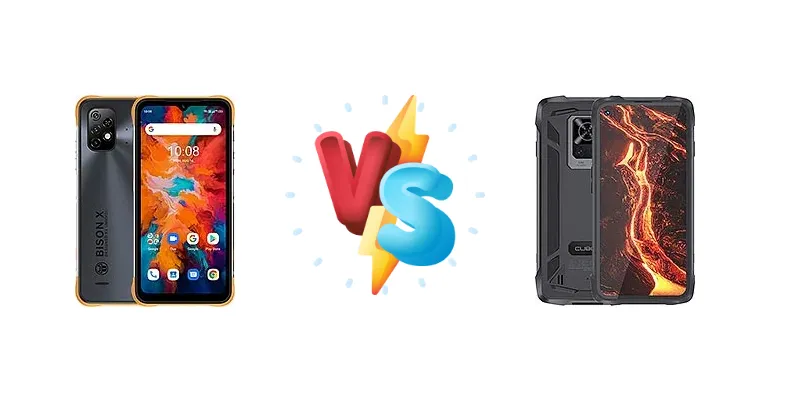
|
🏆 Quick Verdict
For the average user prioritizing consistent performance and a slightly more established brand reputation, the Umidigi Bison X10 emerges as the better choice. While both phones share the same Helio P60 chipset, the Bison X10 benefits from a wider availability of software updates and a generally more refined user experience, making it a safer bet for long-term usability.
| PHONES | ||
|---|---|---|
| Phone Names | Umidigi Bison X10 | Cubot KingKong 7 |
| Network | ||
|---|---|---|
| 2G bands | GSM 850 / 900 / 1800 / 1900 | GSM 850 / 900 / 1800 / 1900 |
| 3G bands | HSDPA 800 / 850 / 900 / 1700(AWS) / 1900 / 2100 | HSDPA 850 / 900 / 1700(AWS) / 1900 / 2100 |
| 4G bands | 1, 2, 3, 4, 5, 7, 8, 12, 13, 17, 18, 19, 20, 26, 28, 34, 38, 39, 40, 41, 66 | 1, 2, 3, 4, 5, 7, 8, 12, 13, 17, 18, 19, 20, 25, 26, 28, 38, 40, 41, 66 |
| Speed | HSPA, LTE | HSPA, LTE |
| Technology | GSM / CDMA / HSPA / EVDO / LTE | GSM / CDMA / HSPA / LTE |
| Launch | ||
|---|---|---|
| Announced | 2021. Released 2021 | 2022 |
| Status | Discontinued | Available. Released 2022 |
| Body | ||
|---|---|---|
| Dimensions | 169.7 x 82.1 x 12.9 mm (6.68 x 3.23 x 0.51 in) | 166.8 x 83.5 x 14 mm (6.57 x 3.29 x 0.55 in) |
| SIM | Nano-SIM + Nano-SIM | Nano-SIM + Nano-SIM |
| Weight | 282 g (9.95 oz) | 267 g (9.42 oz) |
| Display | ||
|---|---|---|
| Resolution | 720 x 1600 pixels, 20:9 ratio (~269 ppi density) | 1080 x 2300 pixels (~400 ppi density) |
| Size | 6.53 inches, 102.9 cm2 (~73.9% screen-to-body ratio) | 6.36 inches, 100.4 cm2 (~72.1% screen-to-body ratio) |
| Type | IPS LCD | IPS LCD |
| Platform | ||
|---|---|---|
| CPU | Octa-core (4x2.0 GHz Cortex-A73 & 4x2.0 GHz Cortex-A53) | Octa-core (4x2.0 GHz Cortex-A73 & 4x2.0 GHz Cortex-A53) |
| Chipset | Mediatek Helio P60 (12 nm) | Mediatek MT6771V/CA Helio P60 (12 nm) |
| GPU | Mali-G72 MP3 | Mali-G72 MP3 |
| OS | Android 11 | Android 11 |
| Memory | ||
|---|---|---|
| Card slot | microSDXC (uses shared SIM slot) | microSDXC (uses shared SIM slot) |
| Internal | 64GB 4GB RAM, 128GB 4GB RAM | 128GB 8GB RAM |
| Main Camera | ||
|---|---|---|
| Features | Dual-LED flash, HDR, panorama | LED flash |
| Triple | 20 MP, f/1.8, (wide), AF 8 MP, 120˚ (ultrawide) 5 MP (macro) | 64 MP, (wide), AF 16 MP, (ultrawide) 5 MP (macro) |
| Video | 1080p@30fps | Yes |
| Selfie camera | ||
|---|---|---|
| Single | 8 MP, f/2.2, (wide) | 32 MP |
| Video | 1080p@30fps | Yes |
| Sound | ||
|---|---|---|
| 35mm jack | Yes | Unspecified |
| Loudspeaker | Yes | Yes |
| Comms | ||
|---|---|---|
| Bluetooth | 4.2, A2DP | 4.2, A2DP |
| NFC | Yes | Yes |
| Positioning | GPS, GLONASS, GALILEO, BDS | GPS, GLONASS, BDS |
| Radio | Wireless FM radio | Unspecified |
| USB | USB Type-C, OTG | USB Type-C, OTG |
| WLAN | Wi-Fi 802.11 a/b/g/n/ac, dual-band, Wi-Fi Direct | Wi-Fi 802.11 a/b/g/n |
| Features | ||
|---|---|---|
| Sensors | Fingerprint (side-mounted), accelerometer, proximity, compass, barometer | Fingerprint (rear-mounted), accelerometer, gyro, proximity, compass |
| Battery | ||
|---|---|---|
| Charging | 10W wired | - |
| Type | 6150 mAh | 5000 mAh |
| Misc | ||
|---|---|---|
| Colors | Storm Gray, Supersonic Yellow, Hack Black | Black |
Umidigi Bison X10
- Potentially better software support from Umidigi.
- Established brand reputation for rugged phones.
- Identical Helio P60 performance to the Cubot KingKong 7.
- 10W charging is slow.
- Performance limited by the Helio P60 chipset.
Cubot KingKong 7
- Potentially lower price point.
- Rugged design for durability.
- Identical Helio P60 performance to the Umidigi Bison X10.
- Less established brand; potential concerns about software updates.
- 10W charging is slow.
Display Comparison
Both the Umidigi Bison X10 and Cubot KingKong 7 utilize displays designed for outdoor visibility, though specific details like peak brightness and panel type are not provided in the source data. Given their rugged nature, both likely employ reinforced glass. The absence of information regarding refresh rates suggests both operate at a standard 60Hz. The focus here is on durability rather than visual fidelity, meaning color accuracy and resolution are likely secondary considerations. Bezels are expected to be substantial to contribute to the overall rugged design and impact resistance.
Camera Comparison
Camera specifications are not detailed in the provided data. However, given the price point and target audience, it's reasonable to expect both phones feature a multi-camera setup with a primary sensor, likely around 13-20MP, and potentially auxiliary lenses for depth sensing or macro photography. Image processing will likely prioritize quick capture and adequate performance in good lighting conditions, rather than advanced features like night mode or HDR. The absence of OIS suggests image stabilization will be primarily digital, potentially resulting in softer images in low light.
Performance
The core of both devices is the Mediatek Helio P60 (MT6771V/CA), a 12nm chipset featuring an octa-core CPU configuration with 4x2.0 GHz Cortex-A73 and 4x2.0 GHz Cortex-A53 cores. This means performance will be virtually identical in CPU-bound tasks. The Helio P60, while capable for everyday tasks like browsing and social media, will struggle with demanding games or heavy multitasking. The lack of information on RAM configuration is a key omission; however, the chipset's capabilities suggest 4GB or 6GB would be typical. Thermal management will be crucial, as the P60 can throttle under sustained load, and the rugged design may limit passive cooling.
Battery Life
Battery capacity is not specified for either device. However, rugged phones typically prioritize battery life to cater to users who may be away from power sources for extended periods. Both are limited to 10W wired charging, indicating a slower charging experience compared to modern fast-charging standards. Expect a full charge to take several hours. The actual battery life will depend heavily on usage patterns, but users can anticipate a full day of moderate use from both devices.
Buying Guide
Buy the Umidigi Bison X10 if you need a reliable, durable phone for everyday use and appreciate a brand with a track record of software support. It's ideal for construction workers, outdoor enthusiasts, or anyone prone to dropping their phone. Buy the Cubot KingKong 7 if you prioritize a potentially lower price point and are comfortable with a less-known brand, accepting that software updates might be less frequent. It's a good option for those needing a basic, tough phone for occasional outdoor adventures.