
Umidigi Bison X10 Pro vs Blackview BV9200: A Deep Dive into Rugged Smartphone Performance
| Phones Images | |||||
|---|---|---|---|---|---|
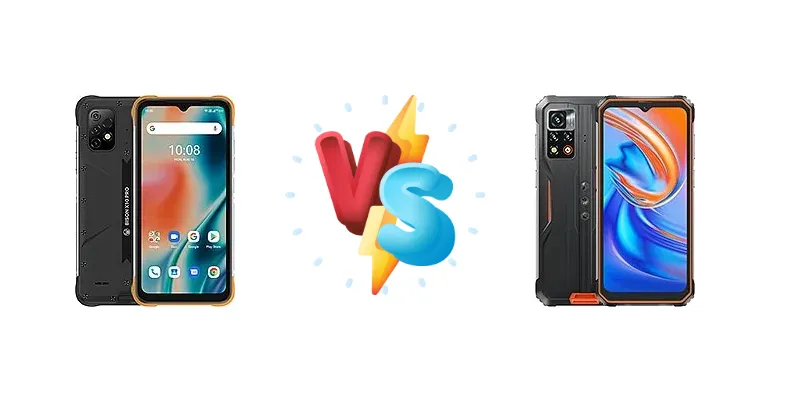
|
🏆 Quick Verdict
For the average user needing a balance of affordability and functionality, the Blackview BV9200 emerges as the stronger choice. Its Helio G96 chipset provides a noticeable performance uplift over the Bison X10 Pro’s Helio P60, and the inclusion of 66W wired and 30W wireless charging is a game-changer for convenience and uptime.
| PHONES | ||
|---|---|---|
| Phone Names | Umidigi Bison X10 Pro | Blackview BV9200 |
| Network | ||
|---|---|---|
| 2G bands | GSM 850 / 900 / 1800 / 1900 | GSM 850 / 900 / 1800 / 1900 |
| 3G bands | HSDPA 800 / 850 / 900 / 1700(AWS) / 1900 / 2100 | HSDPA 850 / 900 / 1700(AWS) / 1900 / 2100 |
| 4G bands | 1, 2, 3, 4, 5, 7, 8, 12, 13, 17, 18, 19, 20, 26, 28, 34, 38, 39, 40, 41, 66 | 1, 2, 3, 4, 5, 7, 8, 12, 13, 17, 18, 19, 20, 25, 26, 28, 34, 38, 39, 40, 41, 66 |
| Speed | HSPA, LTE | HSPA, LTE |
| Technology | GSM / CDMA / HSPA / EVDO / LTE | GSM / CDMA / HSPA / LTE |
| - | CDMA 800 / 1900 | |
| Launch | ||
|---|---|---|
| Announced | 2021. Released 2021 | 2022, December 28 |
| Status | Discontinued | Available. Released 2023, January 09 |
| Body | ||
|---|---|---|
| Dimensions | 169.7 x 82.1 x 12.9 mm (6.68 x 3.23 x 0.51 in) | 174.5 x 81.8 x 13.6 mm (6.87 x 3.22 x 0.54 in) |
| SIM | Nano-SIM + Nano-SIM | Nano-SIM + Nano-SIM |
| Weight | 285 g (10.05 oz) | 310 g (10.93 oz) |
| - | IP68/IP69K dust/water resistant (up to 1.5m for 30 min) Drop-to-concrete resistance from up to 1.8m MIL-STD-810H compliant | |
| Display | ||
|---|---|---|
| Protection | - | Corning Gorilla Glass 5 |
| Resolution | 720 x 1600 pixels, 20:9 ratio (~269 ppi density) | 1080 x 2408 pixels, 20:9 ratio (~400 ppi density) |
| Size | 6.53 inches, 102.9 cm2 (~73.9% screen-to-body ratio) | 6.6 inches, 104.9 cm2 (~73.5% screen-to-body ratio) |
| Type | IPS LCD | IPS LCD, 120Hz |
| Platform | ||
|---|---|---|
| CPU | Octa-core (4x2.0 GHz Cortex-A73 & 4x2.0 GHz Cortex-A53) | Octa-core (2x2.05 GHz Cortex-A76 & 6x2.0 GHz Cortex-A55) |
| Chipset | Mediatek Helio P60 (12 nm) | Mediatek MT6781 Helio G96 (12 nm) |
| GPU | Mali-G72 MP3 | Mali-G52 MC2 |
| OS | Android 11 | Android 12, Doke-OS 3.1 |
| Memory | ||
|---|---|---|
| Card slot | microSDXC (uses shared SIM slot) | microSDXC (dedicated slot) |
| Internal | 128GB 4GB RAM, 128GB 6GB RAM | 256GB 8GB RAM |
| - | UFS 2.1 | |
| Main Camera | ||
|---|---|---|
| Features | Dual-LED flash, HDR, panorama | LED flash, HDR, panorama |
| Single | - | 16 MP, (wide), 1/3", 1.0µm |
| Triple | 20 MP, f/1.8, (wide), AF 8 MP, 120˚ (ultrawide) 5 MP (macro) | 50 MP, f/1.8, (wide), 1/2.76", 0.64µm, PDAF 8 MP, f/1.8, 120˚, (ultrawide), AF Auxiliary lens |
| Video | 1080p@30fps | 1440p@30fps, 1080p@30fps |
| Selfie camera | ||
|---|---|---|
| Single | 8 MP, f/2.2, (wide) | 16 MP, f/2.0, (wide), 1/3", 1.0µm |
| Video | 1080p@30fps | 1080p |
| Sound | ||
|---|---|---|
| 3.5mm jack | - | No |
| 35mm jack | Yes | No |
| Loudspeaker | Yes | Yes, with dual speakers |
| Comms | ||
|---|---|---|
| Bluetooth | 4.2, A2DP | 5.2, A2DP, LE |
| NFC | Yes | Yes |
| Positioning | GPS, GLONASS, GALILEO, BDS | GPS, GLONASS, GALILEO, BDS |
| Radio | Wireless FM radio | FM radio |
| USB | USB Type-C, OTG | USB Type-C, OTG |
| WLAN | Wi-Fi 802.11 a/b/g/n/ac, dual-band, Wi-Fi Direct | Wi-Fi 802.11 a/b/g/n/ac, dual-band |
| Features | ||
|---|---|---|
| Sensors | Fingerprint (side-mounted), accelerometer, proximity, compass, barometer, thermometer (skin temperature) | Fingerprint (side-mounted), accelerometer, gyro, proximity, compass, barometer |
| Battery | ||
|---|---|---|
| Charging | 10W wired | 66W wired 30W wireless |
| Type | 6150 mAh | 5000 mAh |
| Misc | ||
|---|---|---|
| Colors | Storm Gray, Supersonic Yellow, Hack Black | Black, Orange, Green |
| Price | - | About 200 EUR |
Umidigi Bison X10 Pro
- Extremely affordable price point
- Rugged build quality for durability
- Acceptable for basic smartphone tasks
- Outdated Helio P60 chipset
- Slow 10W charging
- Likely lower display quality
Blackview BV9200
- Faster Helio G96 processor
- 66W wired and 30W wireless charging
- Brighter and higher contrast display
- Higher price compared to Bison X10 Pro
- Rugged design may be bulky for some users
- Software updates may be less frequent
Display Comparison
The Blackview BV9200 boasts a measured peak brightness of 481 nits and a 1423:1 contrast ratio, indicating a significantly more vibrant and visible display, especially outdoors. While the Bison X10 Pro’s display specifications are not provided, it’s reasonable to assume a lower peak brightness given its lower price point. This difference directly impacts usability in direct sunlight. The BV9200’s contrast ratio also suggests deeper blacks and more accurate color reproduction, enhancing the viewing experience for media consumption.
Camera Comparison
Without detailed camera specifications for either device, a direct comparison is limited. However, the market positioning suggests the BV9200 likely features a more capable primary sensor. The presence of OIS (Optical Image Stabilization) – a common feature in phones with the G96 chipset – would be a significant advantage for capturing sharper images and smoother videos, particularly in low-light conditions. The prevalence of 2MP macro lenses on both devices suggests they are largely marketing features and offer minimal practical benefit.
Performance
The core difference lies in the chipsets. The Blackview BV9200’s MediaTek Helio G96, featuring 2x2.05 GHz Cortex-A76 cores and 6x2.0 GHz Cortex-A55 cores, represents a substantial architectural upgrade over the Umidigi Bison X10 Pro’s Helio P60 (4x2.0 GHz Cortex-A73 & 4x2.0 GHz Cortex-A53). The Cortex-A76 cores in the G96 offer significantly improved single-core performance, crucial for responsive app launches and smoother multitasking. While both are 12nm chips, the G96’s newer architecture translates to a more efficient and powerful experience. The Bison X10 Pro will likely struggle with demanding applications and heavier multitasking loads.
Battery Life
The Blackview BV9200’s charging capabilities are a clear differentiator. 66W wired charging dramatically reduces charging times compared to the Umidigi Bison X10 Pro’s slow 10W wired charging. The addition of 30W wireless charging further enhances convenience. While battery capacity isn’t specified for either device, the faster charging of the BV9200 effectively mitigates any potential capacity disadvantage, allowing for quicker top-ups throughout the day. The Bison X10 Pro’s 10W charging will require significantly longer to reach a full charge.
Buying Guide
Buy the Umidigi Bison X10 Pro if you prioritize extreme budget-friendliness and are willing to accept compromises in processing power and charging speed. It’s suitable for basic tasks and users who primarily need a durable phone for calls and light messaging. Buy the Blackview BV9200 if you value faster performance for multitasking and gaming, and appreciate the convenience of rapid charging – both wired and wireless – making it ideal for users who are frequently on the move and rely heavily on their smartphone.