
Umidigi Bison GT2 vs GT2 Pro 5G: A Deep Dive into Performance and Value
| Phones Images | |||||
|---|---|---|---|---|---|
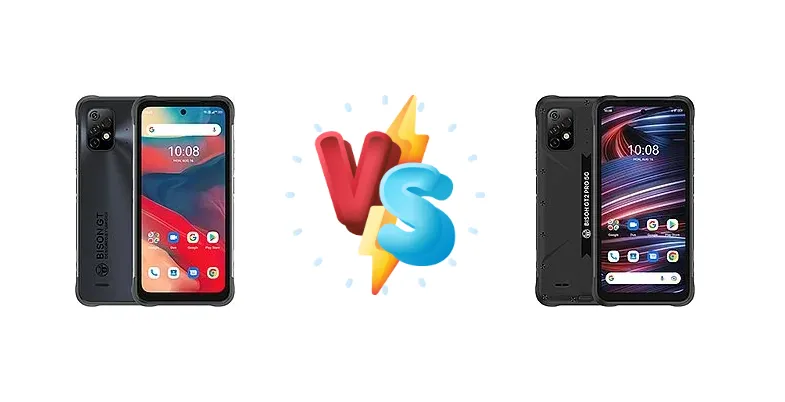
|
🏆 Quick Verdict
For most users, the Umidigi Bison GT2 Pro 5G is the superior choice. The Dimensity 900 chipset provides a noticeable performance uplift over the Helio G95, particularly in demanding tasks like gaming and multitasking. While both charge at the same speed, the Pro's more efficient processor translates to better sustained performance.
| PHONES | ||
|---|---|---|
| Phone Names | Umidigi Bison GT2 | Umidigi Bison GT2 Pro 5G |
| Network | ||
|---|---|---|
| 2G bands | GSM 850 / 900 / 1800 / 1900 | GSM 850 / 900 / 1800 / 1900 |
| 3G bands | HSDPA 800 / 850 / 900 / 1700(AWS) / 1900 / 2100 | HSDPA 800 / 850 / 900 / 1700(AWS) / 1900 / 2100 |
| 4G bands | 1, 2, 3, 4, 5, 7, 8, 12, 13, 17, 18, 19, 20, 25, 26, 28, 34, 38, 39, 40, 41, 66 | 1, 2, 3, 4, 5, 7, 8, 12, 13, 17, 18, 19, 20, 25, 26, 28, 34, 38, 39, 40, 41, 66 |
| 5G bands | - | 1, 2, 3, 5, 7, 8, 20, 25, 28, 38, 40, 41, 66, 77, 78, 79 SA/NSA |
| Speed | HSPA, LTE | HSPA, LTE, 5G |
| Technology | GSM / CDMA / HSPA / LTE | GSM / CDMA / HSPA / LTE / 5G |
| Launch | ||
|---|---|---|
| Announced | 2022 | 2022 |
| Status | Available. Released 2022 | Available. Released 2022 |
| Body | ||
|---|---|---|
| Dimensions | 172.2 x 83.9 x 12.9 mm (6.78 x 3.30 x 0.51 in) | 172.2 x 83.9 x 12.9 mm (6.78 x 3.30 x 0.51 in) |
| SIM | Nano-SIM + Nano-SIM | Nano-SIM + Nano-SIM |
| Weight | 280 g (9.88 oz) | 280 g (9.88 oz) |
| Display | ||
|---|---|---|
| Resolution | 1080 x 2400 pixels, 20:9 ratio (~405 ppi density) | 1080 x 2400 pixels, 20:9 ratio (~405 ppi density) |
| Size | 6.5 inches, 102.0 cm2 (~70.6% screen-to-body ratio) | 6.5 inches, 102.0 cm2 (~70.6% screen-to-body ratio) |
| Type | IPS LCD, 90Hz | IPS LCD, 90Hz |
| Platform | ||
|---|---|---|
| CPU | Octa-core (2x2.05 GHz Cortex-A76 & 6x2.0 GHz Cortex-A55) | Octa-core (2x2.4 GHz Cortex-A78 & 6x2.0 GHz Cortex-A55) |
| Chipset | Mediatek Helio G95 (12 nm) | Mediatek Dimensity 900 (6 nm) |
| GPU | Mali-G76 MC4 | Mali-G68 MC4 |
| OS | Android 12 | Android 12 |
| Memory | ||
|---|---|---|
| Card slot | microSDXC (uses shared SIM slot) | microSDXC (uses shared SIM slot) |
| Internal | 128GB 8GB RAM | 256GB 8GB RAM |
| Main Camera | ||
|---|---|---|
| Features | Dual-LED flash, HDR, panorama | Dual-LED flash, HDR, panorama |
| Triple | 64 MP, f/1.8, (wide), AF 8 MP, f/2.2, 117˚ (ultrawide) 5 MP (macro) | 64 MP, f/1.8, (wide), AF 8 MP, f/2.2, 117˚ (ultrawide) 5 MP (macro) |
| Video | 1080p@30fps | 4K@30fps, 1080p@30fps |
| Selfie camera | ||
|---|---|---|
| Single | 24 MP, f/2.0, (wide) | 24 MP, f/2.0, (wide) |
| Video | 1080p@30fps | 1080p@30fps |
| Sound | ||
|---|---|---|
| 35mm jack | Yes | Yes |
| Loudspeaker | Yes | Yes |
| Comms | ||
|---|---|---|
| Bluetooth | 5.0, A2DP, LE | 5.2, A2DP, LE |
| NFC | Yes | Yes |
| Positioning | GPS, GLONASS, GALILEO, BDS | GPS, GLONASS, GALILEO, BDS |
| Radio | Wireless FM radio | Wireless FM radio |
| USB | USB Type-C | USB Type-C |
| WLAN | Wi-Fi 802.11 a/b/g/n/ac, dual-band, Wi-Fi Direct | Wi-Fi 802.11 a/b/g/n/ac/6, dual-band, Wi-Fi Direct |
| Features | ||
|---|---|---|
| Sensors | Fingerprint (side-mounted), accelerometer, proximity, compass, barometer, thermometer (skin temperature) | Fingerprint (side-mounted), accelerometer, proximity, compass, barometer, thermometer (skin temperature) |
| Battery | ||
|---|---|---|
| Charging | 18W wired | 18W wired |
| Type | 6150 mAh | 6150 mAh |
| Misc | ||
|---|---|---|
| Colors | Storm Grey | Hack Black |
Umidigi Bison GT2
- More affordable price point
- Rugged design for durability
- Sufficient for basic smartphone tasks
- Less powerful processor
- Potential for thermal throttling during demanding tasks
- Less efficient power consumption
Umidigi Bison GT2 Pro 5G
- Significantly faster processor (Dimensity 900)
- More efficient power consumption (6nm process)
- 5G connectivity for faster data speeds
- Higher price compared to the Bison GT2
- Still utilizes relatively slow 18W charging
- Rugged design adds bulk
Display Comparison
Both devices are expected to feature similar LCD panels, given their market positioning. However, detailed display specs (resolution, brightness, color gamut) are not provided. The focus here is on the internal hardware. While display quality is important, the core difference lies in processing power, not screen technology.
Camera Comparison
Without detailed camera specifications beyond the chipsets, a direct comparison is limited. However, the more powerful ISP (Image Signal Processor) within the Dimensity 900 of the Pro model *could* lead to better image processing, particularly in low-light conditions. The chipset's ability to handle more complex algorithms could result in sharper images and improved dynamic range. It's reasonable to assume the Pro model benefits from more advanced computational photography features.
Performance
The core distinction between these phones is the chipset. The Bison GT2 utilizes the Mediatek Helio G95, a 12nm process node chip with an octa-core configuration featuring two 2.05 GHz Cortex-A76 cores and six 2.0 GHz Cortex-A55 cores. The Bison GT2 Pro 5G steps up to the Mediatek Dimensity 900, built on a more efficient 6nm process. Its CPU boasts two 2.4 GHz Cortex-A78 cores alongside the same six 2.0 GHz Cortex-A55 cores. This architectural shift, combined with the smaller node size, results in significantly improved CPU performance and power efficiency. The A78 cores in the Dimensity 900 offer a substantial performance advantage over the A76 cores in the Helio G95, translating to faster app loading times and smoother multitasking. The 6nm process also means less heat generation, potentially reducing thermal throttling during extended gaming sessions.
Battery Life
Both phones feature 18W wired charging. While the battery capacity isn't specified, the Dimensity 900's superior power efficiency in the Bison GT2 Pro 5G will likely translate to longer battery life despite potentially similar battery sizes. The 6nm process allows the Pro model to accomplish the same tasks using less power, extending usage between charges. The 18W charging speed, however, is relatively slow compared to some competitors, meaning a full charge will take a considerable amount of time on both devices.
Buying Guide
Buy the Umidigi Bison GT2 if you prioritize maximum affordability and only need a phone for basic tasks like calls, texts, and light social media. It's a solid option for those on a tight budget who still want a rugged device. Buy the Umidigi Bison GT2 Pro 5G if you value performance, especially for gaming or running multiple apps simultaneously. The 5G connectivity and more powerful processor justify the price difference for power users.