
Umidigi A9 Pro vs. Motorola Moto G Stylus (2021): A Detailed Comparison
| Phones Images | |||||
|---|---|---|---|---|---|
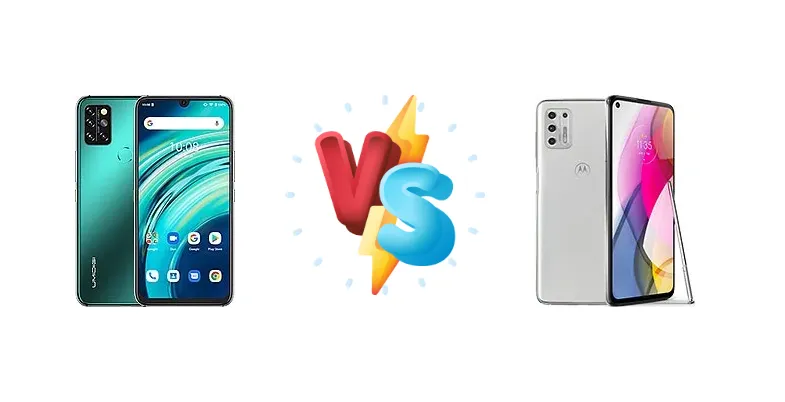
|
🏆 Quick Verdict
For the average user prioritizing consistent performance and long-term software support, the Motorola Moto G Stylus (2021) is the better choice. Its Snapdragon 678, built on an 11nm process, offers a noticeable efficiency advantage over the Umidigi A9 Pro’s Helio P60, translating to smoother multitasking and potentially better battery life despite both phones featuring 10W charging.
| PHONES | ||
|---|---|---|
| Phone Names | Umidigi A9 Pro | Motorola Moto G Stylus (2021) |
| Network | ||
|---|---|---|
| 2G bands | GSM 850 / 900 / 1800 / 1900 | GSM 850 / 900 / 1800 / 1900 |
| 3G bands | HSDPA 800 / 850 / 900 / 1700(AWS) / 1900 / 2100 | HSDPA 850 / 900 / 1700(AWS) / 1900 / 2100 |
| 4G bands | 1, 2, 3, 4, 5, 7, 8, 12, 13, 17, 18, 19, 20, 26, 28, 34, 38, 39, 40, 41, 66 | 1, 2, 3, 4, 5, 7, 8, 12, 13, 14, 17, 20, 25, 26, 29, 38, 40, 41, 66, 71 |
| Speed | HSPA, LTE | HSPA, LTE |
| Technology | GSM / HSPA / LTE | GSM / CDMA / HSPA / LTE |
| - | CDMA 800 / 1900 | |
| Launch | ||
|---|---|---|
| Announced | 2020. Released 2020 | 2021, January 08 |
| Status | Discontinued | Available. Released 2021, January 14 |
| Body | ||
|---|---|---|
| Build | Aluminum frame | Glass front, plastic frame, plastic back |
| Dimensions | 158.7 x 74.9 x 8.6 mm (6.25 x 2.95 x 0.34 in) | 169.8 x 77.9 x 9 mm (6.69 x 3.07 x 0.35 in) |
| SIM | Nano-SIM + Nano-SIM | Nano-SIM |
| Weight | 205 g (7.23 oz) | 213 g (7.51 oz) |
| - | Stylus Water-repellent coating | |
| Display | ||
|---|---|---|
| Resolution | 1080 x 2340 pixels, 19.5:9 ratio (~409 ppi density) | 1080 x 2400 pixels, 20:9 ratio (~386 ppi density) |
| Size | 6.3 inches, 97.4 cm2 (~82.0% screen-to-body ratio) | 6.8 inches, 112.2 cm2 (~84.8% screen-to-body ratio) |
| Type | IPS LCD | IPS LCD |
| Platform | ||
|---|---|---|
| CPU | Octa-core (4x2.0 GHz Cortex-A73 & 4x2.0 GHz Cortex-A53) | Octa-core (2x2.2 GHz Kryo 460 Gold & 6x1.7 GHz Kryo 460 Silver) |
| Chipset | Mediatek Helio P60 (12 nm) | Qualcomm SDM678 Snapdragon 678 (11 nm) |
| GPU | Mali-G72 MP3 | Adreno 612 |
| OS | Android 10 | Android 10 |
| Memory | ||
|---|---|---|
| Card slot | microSDXC (dedicated slot) | microSDXC (dedicated slot) |
| Internal | 64GB 4GB RAM, 128GB 4GB RAM, 128GB 6GB RAM | 128GB 4GB RAM |
| Main Camera | ||
|---|---|---|
| Features | Dual-LED flash, HDR, panorama | LED flash, HDR, panorama |
| Quad | 48 MP*, f/1.8, (wide), 1/2.0", AF 16 MP, f/2.2, 120˚ (ultrawide) 5 MP (macro) Auxiliary lens *32MP camera for the 64GB/4GB variant only | 48 MP, f/1.7, 26mm (wide), 1/2.0", 0.8µm, PDAF 8 MP, f/2.2, 118˚ (ultrawide), 1/4.0, 1.12µm 2 MP (macro) Auxiliary lens |
| Video | 1080p@30fps | 4K@30fps, 1080p@30/60fps; gyro-EIS |
| Selfie camera | ||
|---|---|---|
| Features | - | HDR |
| Single | 24 MP, f/2.0, (wide) | 16 MP, f/2.0, (wide), 1/3.06", 1.0µm |
| Video | 1080p@30fps | 1080p@30fps, gyro-EIS |
| Sound | ||
|---|---|---|
| 3.5mm jack | - | Yes |
| 35mm jack | Yes | Yes |
| Loudspeaker | Yes | Yes |
| Comms | ||
|---|---|---|
| Bluetooth | 4.2, A2DP | 5.0, A2DP, LE |
| NFC | No | No |
| Positioning | GPS, GLONASS, GALILEO | GPS, GLONASS, BDS, GALILEO |
| Radio | No | Unspecified |
| USB | USB Type-C, OTG | USB Type-C 2.0 |
| WLAN | Wi-Fi 802.11 a/b/g/n/ac, dual-band, Wi-Fi Direct | Wi-Fi 802.11 a/b/g/n/ac, dual-band, Wi-Fi Direct |
| Features | ||
|---|---|---|
| Sensors | Fingerprint (rear-mounted), accelerometer, proximity, compass, thermometer (skin temperature) | Fingerprint (side-mounted), accelerometer, gyro, proximity |
| Battery | ||
|---|---|---|
| Charging | 10W wired | 10W wired |
| Type | 4150 mAh | Li-Po 4000 mAh |
| Misc | ||
|---|---|---|
| Colors | Onyx Black, Forest Green | Aurora Black, Aurora White |
| Models | - | XT2115, XT2115-1 |
| Price | - | About 90 EUR |
Umidigi A9 Pro
- Potentially lower price point
- May offer more storage for the price
- Basic functionality for essential tasks
- Less efficient processor (Helio P60)
- Potentially slower app loading times
- Less refined software experience
Motorola Moto G Stylus (2021)
- More efficient processor (Snapdragon 678)
- Smoother multitasking and app performance
- Built-in stylus for added functionality
- Better image processing
- May be slightly more expensive
- 10W charging is slow
- Software updates may be limited
Display Comparison
Neither device boasts a standout display. Both likely utilize IPS LCD panels, common in this price bracket. The key difference lies under the hood: processing power impacts UI responsiveness. While neither spec sheet details display characteristics like peak brightness or color gamut, the smoother performance of the Moto G Stylus will make its display *feel* more responsive. Bezels are expected to be substantial on both, reflecting their budget positioning.
Camera Comparison
Both phones likely feature a multi-camera setup, but details are scarce. Focusing on the primary sensors is crucial. Without specific megapixel counts, it’s difficult to make a definitive statement. However, Qualcomm’s image signal processor (ISP) within the Snapdragon 678 generally offers superior image processing capabilities compared to MediaTek’s ISP in the Helio P60. This translates to better dynamic range, noise reduction, and overall image quality, particularly in challenging lighting conditions. The presence of a stylus on the Moto G Stylus also opens up possibilities for creative camera use, like annotating photos directly.
Performance
The core battleground is the chipset. The Motorola Moto G Stylus (2021) utilizes the Qualcomm Snapdragon 678 (11nm), featuring a Kryo 460 CPU with a 2x2.2 GHz Gold and 6x1.7 GHz Silver configuration. This 11nm process is more efficient than the 12nm process used in the Umidigi A9 Pro’s MediaTek Helio P60. The Helio P60’s CPU, with its 4x2.0 GHz Cortex-A73 and 4x2.0 GHz Cortex-A53 cores, is theoretically comparable in clock speed, but the Snapdragon 678’s architecture and manufacturing process provide a real-world advantage in sustained performance and power efficiency. This means less throttling during extended use and potentially longer battery life for the Motorola.
Battery Life
Both devices are limited to 10W wired charging, a significant drawback compared to faster charging solutions available on some competitors. While battery capacity isn’t specified, the Snapdragon 678’s superior power efficiency in the Moto G Stylus (2021) will likely result in longer real-world battery life despite potentially having a similar or even slightly smaller battery capacity than the Umidigi A9 Pro. Expect both phones to take several hours to fully charge from 0-100%.
Buying Guide
Buy the Umidigi A9 Pro if you need a phone primarily for basic tasks like calls, messaging, and light social media, and are comfortable with a potentially less refined software experience. Buy the Motorola Moto G Stylus (2021) if you prefer a more responsive user interface, better app performance, and the added utility of a built-in stylus for note-taking and quick sketches.