
Ulefone T2 vs. Power Armor 14 Pro: A Deep Dive into Rugged Smartphone Choices
| Phones Images | |||||
|---|---|---|---|---|---|
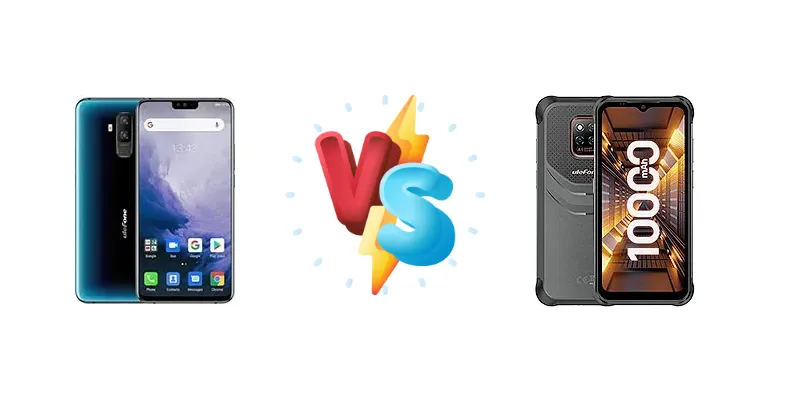
|
🏆 Quick Verdict
For the average user prioritizing a balance of cost and performance, the Ulefone T2 offers a compelling package. While the Power Armor 14 Pro’s Helio G85 provides a modest CPU performance edge, the T2’s overall value proposition and sufficient processing power make it the more sensible choice for everyday tasks and moderate usage.
| PHONES | ||
|---|---|---|
| Phone Names | Ulefone T2 | Ulefone Power Armor 14 Pro |
| Network | ||
|---|---|---|
| 2G bands | GSM 850 / 900 / 1800 / 1900 | GSM 850 / 900 / 1800 / 1900 |
| 3G bands | HSDPA 850 / 900 / 1700(AWS) / 1900 / 2100 | HSDPA 850 / 900 / 1700(AWS) / 1900 / 2100 |
| 4G bands | 1, 2, 3, 4, 5, 7, 8, 12, 17, 19, 20, 28, 34, 38, 39, 40, 41 | 1, 2, 3, 4, 5, 7, 8, 12, 13, 17, 18, 19, 20, 25, 26, 28, 38, 40 |
| Speed | HSPA 42.2/11.5 Mbps, LTE (2CA) Cat7 300/150 Mbps | HSPA, LTE |
| Technology | GSM / CDMA / HSPA / EVDO / LTE | GSM / HSPA / LTE |
| CDMA2000 1xEV-DO | - | |
| Launch | ||
|---|---|---|
| Announced | 2019, August. Released 2019, August | 2022, March 09 |
| Status | Discontinued | Available. Released 2022, March 09 |
| Body | ||
|---|---|---|
| Dimensions | 167.6 x 80.3 x 8.7 mm (6.60 x 3.16 x 0.34 in) | 175.6 x 82.5 x 17.2 mm (6.91 x 3.25 x 0.68 in) |
| SIM | Nano-SIM + Nano-SIM | Nano-SIM + Nano-SIM |
| Weight | 197.2 g (6.95 oz) | 358.2 g (12.63 oz) |
| - | IP68 dust/water resistant (up to 1.5m for 30 min) Drop-to-concrete resistance from up to 1.5m MIL-STD-810G compliant | |
| Display | ||
|---|---|---|
| Protection | - | Corning Gorilla Glass 3 |
| Resolution | 1080 x 2280 pixels, 19:9 ratio (~377 ppi density) | 720 x 1600 pixels, 20:9 ratio (~269 ppi density) |
| Size | 6.7 inches, 112.0 cm2 (~83.3% screen-to-body ratio) | 6.52 inches, 102.6 cm2 (~70.8% screen-to-body ratio) |
| Type | IPS LCD | IPS LCD |
| Platform | ||
|---|---|---|
| CPU | Octa-core (4x2.1 GHz Cortex-A73 & 4x2.1 GHz Cortex-A53) | Octa-core (2x2.0 GHz Cortex-A75 & 6x1.8 GHz Cortex-A55) |
| Chipset | Mediatek MT6771 Helio P70 (12 nm) | Mediatek MT6769Z Helio G85 (12 nm) |
| GPU | Mali-G72 MP3 | Mali-G52 MC2 |
| OS | Android 9.0 (Pie) | Android 12 |
| Memory | ||
|---|---|---|
| Card slot | microSDXC (uses shared SIM slot) | microSDXC (uses shared SIM slot) |
| Internal | 128GB 6GB RAM | 128GB 6GB RAM, 128GB 8GB RAM |
| eMMC 5.1 | eMMC 5.1 | |
| Main Camera | ||
|---|---|---|
| Features | Dual-LED dual-tone flash, HDR, panorama | LED flash, HDR, panorama |
| Single | 16 MP, f/1.8, (wide), AF 8 MP | 16 MP, f/2.2 |
| Triple | - | 20 MP, f/1.8, 26mm (wide), 1/2.78", 1.0µm, PDAF 2 MP (macro) Auxiliary lens |
| Video | 1080p@30fps | 1080p@30fps |
| Selfie camera | ||
|---|---|---|
| Features | - | HDR, panorama |
| Single | 8 MP | 16 MP, f/2.2 |
| Video | 1080p@30fps | 1080p@30fps |
| Sound | ||
|---|---|---|
| 3.5mm jack | No | Yes |
| 35mm jack | No | Yes |
| Loudspeaker | Yes | Yes |
| Comms | ||
|---|---|---|
| Bluetooth | 4.2, A2DP, LE | 5.0, A2DP, LE |
| NFC | Yes | Yes |
| Positioning | GPS, GLONASS, BDS | GPS, GLONASS, GALILEO, BDS |
| Radio | Stereo FM radio, RDS, recording | FM radio, RDS, recording |
| USB | USB Type-C 2.0, OTG | USB Type-C 2.0, OTG |
| WLAN | Wi-Fi 802.11 a/b/g/n/ac, dual-band, Wi-Fi Direct | Wi-Fi 802.11 a/b/g/n/ac, dual-band |
| Features | ||
|---|---|---|
| Sensors | Fingerprint (rear-mounted), accelerometer, gyro, proximity, compass | Fingerprint (side-mounted), accelerometer, proximity, compass |
| Battery | ||
|---|---|---|
| Charging | 18W wired 10W wireless | 18W wired 15W wireless |
| Type | Li-Po 4200 mAh | Li-Po 10000 mAh |
| Misc | ||
|---|---|---|
| Colors | Bordeaux Red, Glacier Blue | Black |
| Price | - | About 260 EUR |
Ulefone T2
- More affordable price point
- Solid performance for everyday tasks
- Reliable rugged build quality
- Older chipset compared to the 14 Pro
- Slower wireless charging
Ulefone Power Armor 14 Pro
- More powerful Helio G85 chipset
- Faster 15W wireless charging
- Potentially more robust build quality
- Higher price tag
- Performance gains may not be noticeable for basic users
Display Comparison
Neither Ulefone provides detailed display specifications in the provided data. However, given their market positioning, both likely utilize IPS LCD panels. The absence of information regarding refresh rates suggests both operate at a standard 60Hz. The focus here isn't display quality, but durability; both will likely feature reinforced glass, but the Power Armor 14 Pro, being a 'Pro' model, may benefit from Gorilla Glass or a similar protective layer. Bezels are expected to be moderate on both, prioritizing structural integrity over a modern edge-to-edge design.
Camera Comparison
Without detailed camera specs, a direct comparison is limited. Both phones likely feature multi-camera setups, but the quality will depend heavily on sensor size and image processing. Given the price point, expect primary sensors in the 13-20MP range. The Power Armor 14 Pro, as the higher-end model, *may* include a slightly larger sensor or better image stabilization. The inclusion of a 2MP macro lens on either device is largely a marketing tactic, offering minimal practical benefit. Image processing will likely be similar, focusing on enhancing colors and contrast for social media sharing.
Performance
The core difference lies in the chipsets. The Ulefone T2 utilizes the Mediatek MT6771 Helio P70, featuring a Cortex-A73/A53 configuration. The Power Armor 14 Pro steps up to the Helio G85, employing a more efficient Cortex-A75/A55 setup. While both are 12nm chips, the G85’s A75 cores offer a performance advantage in single-core tasks and responsiveness. However, the T2’s four A73 cores provide strong multi-core performance. The G85’s GPU is also a step up, offering a slightly better gaming experience, though neither phone is designed for demanding titles. The T2’s performance is adequate for daily tasks, while the 14 Pro offers a smoother experience for multitasking and light gaming.
Battery Life
Both devices offer 18W wired charging and support wireless charging, but with differing wattages (10W vs 15W). The 15W wireless charging on the Power Armor 14 Pro will result in a slightly faster wireless top-up. Battery capacity isn't specified, but rugged phones typically prioritize large batteries. The Power Armor 14 Pro, with its focus on outdoor use, likely has a larger capacity, offering longer battery life. However, the G85’s improved efficiency may partially offset any capacity difference, resulting in comparable real-world usage times.
Buying Guide
Buy the Ulefone T2 if you need a reliable, affordable rugged phone for general use, occasional outdoor activities, and aren't a demanding mobile gamer. It's ideal for construction workers, hikers, or anyone prone to dropping their phone. Buy the Ulefone Power Armor 14 Pro if you prioritize a slightly more powerful processor for smoother multitasking and light gaming, and require the added durability features like a more robust build and potentially enhanced drop protection – justifying the price premium.