
Ulefone Power Armor X11 vs. Blackview BV9200: A Rugged Performance Showdown
| Phones Images | |||||
|---|---|---|---|---|---|
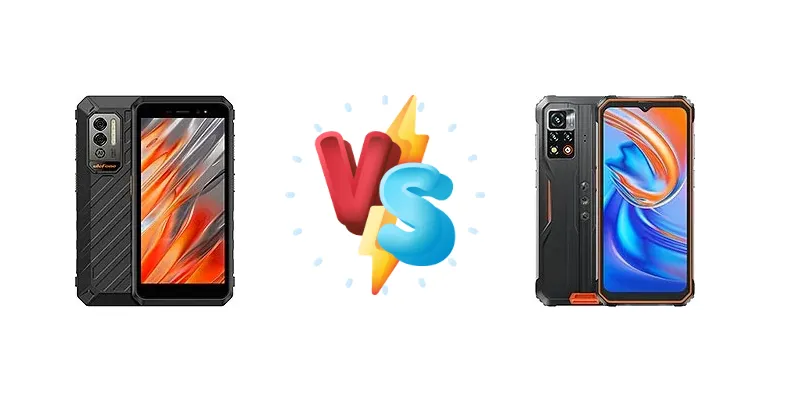
|
🏆 Quick Verdict
For most users, the Blackview BV9200 is the superior choice. Its Helio G96 chipset provides a substantial performance uplift over the X11’s Helio A22, and the inclusion of 66W wired and 30W wireless charging dramatically improves usability. While the X11 is cheaper, the BV9200’s speed and convenience justify the price difference.
| PHONES | ||
|---|---|---|
| Phone Names | Ulefone Power Armor X11 | Blackview BV9200 |
| Network | ||
|---|---|---|
| 2G bands | GSM 850 / 900 / 1800 / 1900 | GSM 850 / 900 / 1800 / 1900 |
| 3G bands | HSDPA 850 / 900 / 1700(AWS) / 1900 / 2100 | HSDPA 850 / 900 / 1700(AWS) / 1900 / 2100 |
| 4G bands | 1, 2, 3, 4, 5, 7, 8, 12, 13, 17, 18, 19, 20, 25, 26, 28 | 1, 2, 3, 4, 5, 7, 8, 12, 13, 17, 18, 19, 20, 25, 26, 28, 34, 38, 39, 40, 41, 66 |
| Speed | HSPA, LTE | HSPA, LTE |
| Technology | GSM / HSPA / LTE | GSM / CDMA / HSPA / LTE |
| - | CDMA 800 / 1900 | |
| Launch | ||
|---|---|---|
| Announced | 2023, June 18 | 2022, December 28 |
| Status | Available. Released 2023, June 18 | Available. Released 2023, January 09 |
| Body | ||
|---|---|---|
| Dimensions | 158.2 x 76.7 x 19.3 mm (6.23 x 3.02 x 0.76 in) | 174.5 x 81.8 x 13.6 mm (6.87 x 3.22 x 0.54 in) |
| SIM | Nano-SIM + Nano-SIM | Nano-SIM + Nano-SIM |
| Weight | 330 g (11.64 oz) | 310 g (10.93 oz) |
| - | IP68/IP69K dust/water resistant (up to 1.5m for 30 min) Drop-to-concrete resistance from up to 1.8m MIL-STD-810H compliant | |
| Display | ||
|---|---|---|
| Protection | - | Corning Gorilla Glass 5 |
| Resolution | 720 x 1440 pixels, 18:9 ratio (~295 ppi density) | 1080 x 2408 pixels, 20:9 ratio (~400 ppi density) |
| Size | 5.45 inches, 76.7 cm2 (~63.2% screen-to-body ratio) | 6.6 inches, 104.9 cm2 (~73.5% screen-to-body ratio) |
| Type | IPS LCD | IPS LCD, 120Hz |
| Platform | ||
|---|---|---|
| CPU | Quad-core 2.0 GHz Cortex-A53 | Octa-core (2x2.05 GHz Cortex-A76 & 6x2.0 GHz Cortex-A55) |
| Chipset | Mediatek MT6761 Helio A22 (12 nm) | Mediatek MT6781 Helio G96 (12 nm) |
| GPU | PowerVR GE8320 | Mali-G52 MC2 |
| OS | Android 13 | Android 12, Doke-OS 3.1 |
| Memory | ||
|---|---|---|
| Card slot | microSDXC (dedicated slot) | microSDXC (dedicated slot) |
| Internal | 32GB 4GB RAM | 256GB 8GB RAM |
| - | UFS 2.1 | |
| Main Camera | ||
|---|---|---|
| Dual | 16 MP, f/1.8, (wide), 1.12µm, PDAF Auxiliary lens | - |
| Features | Quad-LED flash, HDR, panorama | LED flash, HDR, panorama |
| Single | - | 16 MP, (wide), 1/3", 1.0µm |
| Triple | - | 50 MP, f/1.8, (wide), 1/2.76", 0.64µm, PDAF 8 MP, f/1.8, 120˚, (ultrawide), AF Auxiliary lens |
| Video | 1080p@30fps | 1440p@30fps, 1080p@30fps |
| Selfie camera | ||
|---|---|---|
| Single | 5 MP, f/2.2 | 16 MP, f/2.0, (wide), 1/3", 1.0µm |
| Video | 1080p@30fps | 1080p |
| Sound | ||
|---|---|---|
| 3.5mm jack | - | No |
| 35mm jack | Yes | No |
| Loudspeaker | Yes, with dual speakers | Yes, with dual speakers |
| Comms | ||
|---|---|---|
| Bluetooth | 5.0, A2DP, LE | 5.2, A2DP, LE |
| NFC | Yes | Yes |
| Positioning | GPS, GLONASS, GALILEO, BDS | GPS, GLONASS, GALILEO, BDS |
| Radio | Wireless FM radio, RDS, recording | FM radio |
| USB | USB Type-C 2.0, OTG | USB Type-C, OTG |
| WLAN | Wi-Fi 802.11 a/b/g/n/ac, dual-band | Wi-Fi 802.11 a/b/g/n/ac, dual-band |
| Features | ||
|---|---|---|
| Sensors | Accelerometer, proximity, compass | Fingerprint (side-mounted), accelerometer, gyro, proximity, compass, barometer |
| Battery | ||
|---|---|---|
| Charging | 10W | 66W wired 30W wireless |
| Type | Li-Po 8150 mAh | 5000 mAh |
| Misc | ||
|---|---|---|
| Colors | Black | Black, Orange, Green |
| Price | About 140 EUR | About 200 EUR |
Ulefone Power Armor X11
- Lowest possible price for a rugged phone
- Durable build quality (expected of the Power Armor series)
- Simple and easy-to-use interface
- Extremely slow performance
- Slow 10W charging
- Likely outdated display technology
Blackview BV9200
- Significantly faster performance with Helio G96
- 66W wired and 30W wireless charging
- Bright and high-contrast display
- Higher price point than the Ulefone X11
- May be slightly bulkier due to larger battery and charging components
- Software updates may be less frequent than mainstream brands
Display Comparison
The Blackview BV9200 boasts a significantly more refined display experience. While the Ulefone X11’s display specifications are not provided, the BV9200’s measured 481 nits of peak brightness ensures excellent visibility outdoors, a crucial feature for a rugged device. The 1423:1 contrast ratio further enhances image quality, providing deeper blacks and more vibrant colors. Without comparable data for the X11, it’s safe to assume the BV9200 offers a superior viewing experience, especially in bright sunlight.
Camera Comparison
Without detailed camera specifications for either device, a direct comparison is limited. However, the BV9200’s chipset includes a more powerful ISP (Image Signal Processor) capable of handling more complex image processing algorithms. This suggests better image quality, particularly in challenging lighting conditions. It’s reasonable to expect the BV9200 to offer superior camera performance, even if both phones feature similar megapixel counts. The prevalence of low-resolution macro lenses on both brands suggests these are largely marketing features and should not be a primary consideration.
Performance
The performance gap between these two devices is substantial. The Blackview BV9200’s Mediatek Helio G96, with its octa-core configuration (2x2.05 GHz Cortex-A76 & 6x2.0 GHz Cortex-A55), is a significant upgrade over the Ulefone X11’s quad-core 2.0 GHz Cortex-A53 based Helio A22. The G96’s Cortex-A76 cores provide a noticeable boost in single-core performance, while the increased core count and higher clock speeds deliver superior multi-core performance. This translates to faster app loading times, smoother multitasking, and a more responsive user interface on the BV9200. The X11 will struggle with anything beyond basic tasks.
Battery Life
While battery capacity isn’t specified for the Ulefone X11, the Blackview BV9200’s charging capabilities are a game-changer. The BV9200 supports 66W wired charging, allowing for a significantly faster 0-100% charge time compared to the X11’s 10W charging. Furthermore, the inclusion of 30W wireless charging adds a layer of convenience. Even if the X11 has a larger battery capacity, the BV9200’s faster charging mitigates the impact of a potentially smaller battery, ensuring less downtime.
Buying Guide
Buy the Ulefone Power Armor X11 if you absolutely need the lowest possible price point in a rugged phone and prioritize basic functionality over speed. It’s suitable for users who primarily make calls, send texts, and use simple apps. Buy the Blackview BV9200 if you demand a smoother, more responsive experience, faster charging, and are willing to spend a bit more for a phone that can handle demanding tasks and keep up with a modern workflow.