
Ulefone Power Armor X11 Pro vs. Armor X10: The Ultimate Rugged Phone Comparison
| Phones Images | |||||
|---|---|---|---|---|---|
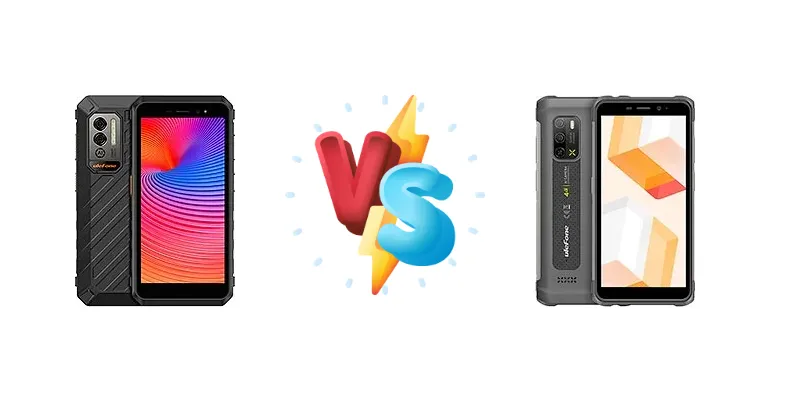
|
🏆 Quick Verdict
The Ulefone Power Armor X11 Pro offers a noticeable performance boost thanks to its more powerful chipset and octa-core CPU. While the Armor X10 remains a solid, budget-friendly option, the X11 Pro’s improved processing and likely camera capabilities make it the overall winner for most users.
| PHONES | ||
|---|---|---|
| Phone Names | Ulefone Power Armor X11 Pro | Ulefone Armor X10 |
| Network | ||
|---|---|---|
| 2G bands | GSM 850 / 900 / 1800 / 1900 | GSM 850 / 900 / 1800 / 1900 |
| 3G bands | HSDPA 850 / 900 / 1700(AWS) / 1900 / 2100 | HSDPA 850 / 900 / 1700(AWS) / 1900 / 2100 |
| 4G bands | 1, 2, 3, 4, 5, 7, 8, 12, 13, 17, 18, 19, 20, 25, 26, 28 | 1, 2, 3, 4, 5, 7, 8, 12, 13, 17, 18, 19, 20, 25, 26, 28 |
| Speed | HSPA, LTE | HSPA 21/5.76 Mbps, LTE Cat6 300/150 Mbps |
| Technology | GSM / HSPA / LTE | GSM / HSPA / LTE |
| eMMC 5.1 | - | |
| Launch | ||
|---|---|---|
| Announced | 2022, September 16 | 2021, December 24 |
| Status | Available. Released 2022, September 16 | Available. Released 2021, December 24 |
| Body | ||
|---|---|---|
| Dimensions | 158.2 x 76.7 x 19.3 mm (6.23 x 3.02 x 0.76 in) | 158.2 x 76.7 x 14.6 mm (6.23 x 3.02 x 0.57 in) |
| SIM | Nano-SIM + Nano-SIM | Nano-SIM + Nano-SIM |
| Weight | 330 g (11.64 oz) | 256 g (9.03 oz) |
| IP68 dust/water resistant (up to 1.5m for 30 min) Drop-to-concrete resistance from up to 1.5m MIL-STD-810G compliant | IP68/IP69K dust/water resistant (up to 1.5m for 30 min) Drop-to-concrete resistance from up to 1.2m MIL-STD-810G compliant | |
| Display | ||
|---|---|---|
| Resolution | 720 x 1440 pixels, 18:9 ratio (~295 ppi density) | 720 x 1440 pixels, 18:9 ratio (~295 ppi density) |
| Size | 5.45 inches, 76.7 cm2 (~63.2% screen-to-body ratio) | 5.45 inches, 76.7 cm2 (~63.2% screen-to-body ratio) |
| Type | IPS LCD | IPS LCD |
| Platform | ||
|---|---|---|
| CPU | Octa-core (4x2.0 GHz Cortex-A53 & 4x1.5 GHz Cortex-A53) | Quad-core 2.0 GHz Cortex-A53 |
| Chipset | Mediatek MT6762G Helio G25 (12 nm) | Mediatek MT6761 Helio A22 (12 nm) |
| GPU | PowerVR GE8320 | PowerVR GE8320 |
| OS | Android 12 | Android 11 |
| Memory | ||
|---|---|---|
| Card slot | microSDXC (dedicated slot) | microSDXC (dedicated slot) |
| Internal | 64GB 4GB RAM | 32GB 4GB RAM |
| - | eMMC 5.1 | |
| Main Camera | ||
|---|---|---|
| Dual | 16 MP, f/1.8, (wide), 1.12µm, PDAF Auxiliary lens | 13 MP, f/2.2, (wide), AF Auxiliary lens |
| Features | Dual-LED flash, HDR, panorama | Dual-LED flash |
| Single | 5 MP, f/2.2 | 5 MP, f/2.2 |
| Video | 1080p@30fps | 1080p@30fps |
| Selfie camera | ||
|---|---|---|
| Features | - | HDR |
| Single | 5 MP, f/2.2 | 5 MP, f/2.2 |
| Video | 1080p@30fps | 1080p@30fps |
| Sound | ||
|---|---|---|
| 3.5mm jack | Yes | Yes |
| 35mm jack | Yes | Yes |
| Loudspeaker | Yes | Yes |
| Comms | ||
|---|---|---|
| Bluetooth | 5.0, A2DP, LE | 5.0, A2DP, LE |
| NFC | Yes | Yes |
| Positioning | GPS, GLONASS, GALILEO, BDS | GPS, GLONASS, GALILEO, BDS |
| Radio | FM radio, RDS, recording | FM radio, RDS, recording |
| USB | USB Type-C 2.0, OTG | USB Type-C 2.0, OTG |
| WLAN | Wi-Fi 802.11 a/b/g/n/ac, dual-band | Wi-Fi 802.11 a/b/g/n/ac, Wi-Fi Direct |
| Features | ||
|---|---|---|
| Sensors | Accelerometer, proximity, compass | Accelerometer, proximity, compass |
| Battery | ||
|---|---|---|
| Charging | - | 10W wired |
| Type | Li-Po 8150 mAh | Li-Po 5180 mAh |
| Misc | ||
|---|---|---|
| Colors | Black | Black/Gray |
| Price | About 170 EUR | About 130 EUR |
Ulefone Power Armor X11 Pro
- More powerful chipset (Helio G25)
- Octa-core CPU for better performance
- Likely improved camera
- Rugged and durable design
- Large battery capacity
- Potentially higher price
- May still have limited storage options
- Display likely not high-end
Ulefone Armor X10
- More affordable
- Rugged and durable design
- Large battery capacity
- Decent for basic tasks
- Less powerful chipset (Helio A22)
- Quad-core CPU limits performance
- Likely inferior camera
- Slower app loading
Display Comparison
Both phones likely feature similar ruggedized displays, probably around 5.5-6 inches with a standard resolution (likely HD+). The X11 Pro *might* have slightly improved brightness or color accuracy due to its newer chipset, but don't expect a flagship-level display on either.
Camera Comparison
While specific camera specs are often limited in Ulefone's budget rugged phones, the X11 Pro's newer chipset *likely* translates to a better camera sensor and image processing capabilities. Expect improved low-light performance and potentially higher resolution photos on the X11 Pro. Both likely have a rear camera setup with a main sensor and possibly a depth sensor.
Performance
This is where the X11 Pro shines. The Helio G25 chipset with its octa-core CPU significantly outperforms the Armor X10's Helio A22 quad-core processor. Expect smoother multitasking, faster app loading, and better gaming performance on the X11 Pro. The X10 will handle basic tasks adequately, but will struggle with more demanding applications.
Battery Life
Both phones are designed for long battery life, a hallmark of the Power Armor series. While both likely have large capacity batteries (around 5000mAh), the X11 Pro's more efficient chipset *could* provide slightly better battery endurance, especially under load.
Buying Guide
The Ulefone Power Armor X11 Pro is ideal for outdoor enthusiasts, construction workers, or anyone needing a seriously durable phone with better performance. The Ulefone Armor X10 is a good choice for those on a tighter budget who still want a rugged device for basic tasks and occasional use.