
Ulefone Power Armor X11 Pro vs. Blackview BV9200: A Rugged Smartphone Face-Off
| Phones Images | |||||
|---|---|---|---|---|---|
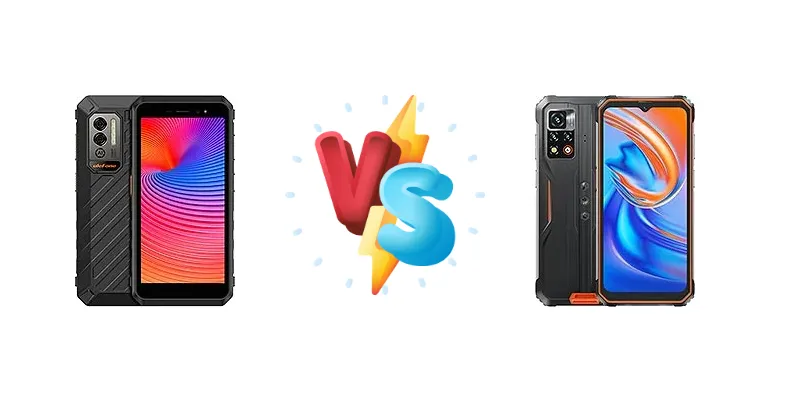
|
🏆 Quick Verdict
For the average user prioritizing value and basic functionality, the Ulefone Power Armor X11 Pro offers a solid, affordable entry point into the rugged phone world. However, the Blackview BV9200 is the clear winner for those needing more processing power for demanding tasks and appreciate the convenience of 66W wired and 30W wireless charging.
| PHONES | ||
|---|---|---|
| Phone Names | Ulefone Power Armor X11 Pro | Blackview BV9200 |
| Network | ||
|---|---|---|
| 2G bands | GSM 850 / 900 / 1800 / 1900 | GSM 850 / 900 / 1800 / 1900 |
| 3G bands | HSDPA 850 / 900 / 1700(AWS) / 1900 / 2100 | HSDPA 850 / 900 / 1700(AWS) / 1900 / 2100 |
| 4G bands | 1, 2, 3, 4, 5, 7, 8, 12, 13, 17, 18, 19, 20, 25, 26, 28 | 1, 2, 3, 4, 5, 7, 8, 12, 13, 17, 18, 19, 20, 25, 26, 28, 34, 38, 39, 40, 41, 66 |
| Speed | HSPA, LTE | HSPA, LTE |
| Technology | GSM / HSPA / LTE | GSM / CDMA / HSPA / LTE |
| eMMC 5.1 | CDMA 800 / 1900 | |
| Launch | ||
|---|---|---|
| Announced | 2022, September 16 | 2022, December 28 |
| Status | Available. Released 2022, September 16 | Available. Released 2023, January 09 |
| Body | ||
|---|---|---|
| Dimensions | 158.2 x 76.7 x 19.3 mm (6.23 x 3.02 x 0.76 in) | 174.5 x 81.8 x 13.6 mm (6.87 x 3.22 x 0.54 in) |
| SIM | Nano-SIM + Nano-SIM | Nano-SIM + Nano-SIM |
| Weight | 330 g (11.64 oz) | 310 g (10.93 oz) |
| IP68 dust/water resistant (up to 1.5m for 30 min) Drop-to-concrete resistance from up to 1.5m MIL-STD-810G compliant | IP68/IP69K dust/water resistant (up to 1.5m for 30 min) Drop-to-concrete resistance from up to 1.8m MIL-STD-810H compliant | |
| Display | ||
|---|---|---|
| Protection | - | Corning Gorilla Glass 5 |
| Resolution | 720 x 1440 pixels, 18:9 ratio (~295 ppi density) | 1080 x 2408 pixels, 20:9 ratio (~400 ppi density) |
| Size | 5.45 inches, 76.7 cm2 (~63.2% screen-to-body ratio) | 6.6 inches, 104.9 cm2 (~73.5% screen-to-body ratio) |
| Type | IPS LCD | IPS LCD, 120Hz |
| Platform | ||
|---|---|---|
| CPU | Octa-core (4x2.0 GHz Cortex-A53 & 4x1.5 GHz Cortex-A53) | Octa-core (2x2.05 GHz Cortex-A76 & 6x2.0 GHz Cortex-A55) |
| Chipset | Mediatek MT6762G Helio G25 (12 nm) | Mediatek MT6781 Helio G96 (12 nm) |
| GPU | PowerVR GE8320 | Mali-G52 MC2 |
| OS | Android 12 | Android 12, Doke-OS 3.1 |
| Memory | ||
|---|---|---|
| Card slot | microSDXC (dedicated slot) | microSDXC (dedicated slot) |
| Internal | 64GB 4GB RAM | 256GB 8GB RAM |
| - | UFS 2.1 | |
| Main Camera | ||
|---|---|---|
| Dual | 16 MP, f/1.8, (wide), 1.12µm, PDAF Auxiliary lens | - |
| Features | Dual-LED flash, HDR, panorama | LED flash, HDR, panorama |
| Single | 5 MP, f/2.2 | 16 MP, (wide), 1/3", 1.0µm |
| Triple | - | 50 MP, f/1.8, (wide), 1/2.76", 0.64µm, PDAF 8 MP, f/1.8, 120˚, (ultrawide), AF Auxiliary lens |
| Video | 1080p@30fps | 1440p@30fps, 1080p@30fps |
| Selfie camera | ||
|---|---|---|
| Single | 5 MP, f/2.2 | 16 MP, f/2.0, (wide), 1/3", 1.0µm |
| Video | 1080p@30fps | 1080p |
| Sound | ||
|---|---|---|
| 3.5mm jack | Yes | No |
| 35mm jack | Yes | No |
| Loudspeaker | Yes | Yes, with dual speakers |
| Comms | ||
|---|---|---|
| Bluetooth | 5.0, A2DP, LE | 5.2, A2DP, LE |
| NFC | Yes | Yes |
| Positioning | GPS, GLONASS, GALILEO, BDS | GPS, GLONASS, GALILEO, BDS |
| Radio | FM radio, RDS, recording | FM radio |
| USB | USB Type-C 2.0, OTG | USB Type-C, OTG |
| WLAN | Wi-Fi 802.11 a/b/g/n/ac, dual-band | Wi-Fi 802.11 a/b/g/n/ac, dual-band |
| Features | ||
|---|---|---|
| Sensors | Accelerometer, proximity, compass | Fingerprint (side-mounted), accelerometer, gyro, proximity, compass, barometer |
| Battery | ||
|---|---|---|
| Charging | - | 66W wired 30W wireless |
| Type | Li-Po 8150 mAh | 5000 mAh |
| Misc | ||
|---|---|---|
| Colors | Black | Black, Orange, Green |
| Price | About 170 EUR | About 200 EUR |
Ulefone Power Armor X11 Pro
- More affordable price point
- Rugged build quality for basic protection
- Suitable for essential communication tasks
- Significantly weaker processor
- Likely slower charging speeds
- Inferior display quality
Blackview BV9200
- Faster and more powerful Helio G96 chipset
- 66W wired and 30W wireless charging
- Brighter and higher contrast display
- Higher price tag
- May have slightly lower battery life due to increased power draw
- More complex software features may require more learning
Display Comparison
The Blackview BV9200 boasts a significant advantage in display quality, with a measured peak brightness of 481 nits compared to the Ulefone X11 Pro’s unspecified brightness. This higher brightness translates to better visibility in direct sunlight, crucial for outdoor use. The BV9200’s 1423:1 contrast ratio also suggests richer, more vibrant colors. While the X11 Pro’s display specs are unavailable, it’s reasonable to assume it falls behind in both brightness and contrast, potentially impacting the viewing experience in various lighting conditions.
Camera Comparison
Without detailed camera specifications for either device beyond the chipsets, a direct comparison is limited. However, the processing capabilities of the Helio G96 in the Blackview BV9200 likely translate to better image processing and potentially improved low-light performance. The X11 Pro’s G25 chipset will be less capable in handling complex image algorithms. It’s safe to assume the BV9200 will offer a more refined camera experience, though sensor size and lens quality (not provided) are also critical factors. We can expect both phones to include a 2MP macro camera, which, given its low resolution, will likely offer limited practical benefit.
Performance
The core difference lies in the chipsets. The Blackview BV9200’s MediaTek Helio G96, featuring two Cortex-A76 cores clocked at 2.05 GHz and six Cortex-A55 cores at 2.0 GHz, represents a substantial upgrade over the Ulefone X11 Pro’s Helio G25. The G96’s architecture, utilizing more powerful A76 cores, delivers significantly better CPU performance, particularly in multi-threaded tasks. This means faster app loading times, smoother multitasking, and improved gaming performance on the BV9200. The G25’s four Cortex-A53 cores at 2.0 GHz and four at 1.5 GHz are adequate for basic use but will struggle with demanding applications. The BV9200’s superior chipset will benefit users who frequently engage in gaming, video editing, or other resource-intensive activities.
Battery Life
While battery capacity isn’t specified for either device, the Blackview BV9200’s charging capabilities are a clear differentiator. Its 66W wired charging and 30W wireless charging significantly outperform the X11 Pro, which lacks wireless charging and likely has a slower wired charging speed. The BV9200 can achieve a full charge much faster, minimizing downtime. Even with a similar battery capacity, the faster charging of the BV9200 provides a real-world advantage for users who need to quickly top up their device. The convenience of 30W wireless charging is also a significant benefit for those who prefer a cable-free charging experience.
Buying Guide
Buy the Ulefone Power Armor X11 Pro if you need a dependable, budget-friendly rugged phone for essential communication and light tasks, prioritizing long-term cost savings. Buy the Blackview BV9200 if you prefer a more responsive user experience, faster charging speeds, and are willing to invest more for improved performance and convenience, especially if you frequently use power-intensive apps or games.