
Ulefone Power Armor 19 vs. Cat S62 Pro: A Head-to-Head Rugged Smartphone Showdown
| Phones Images | |||||
|---|---|---|---|---|---|
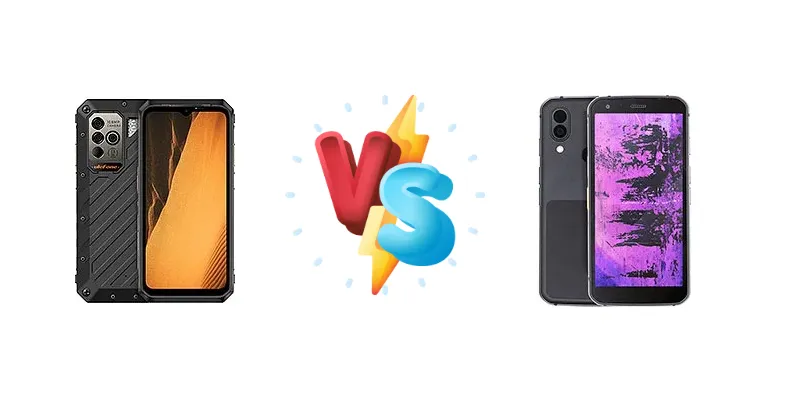
|
🏆 Quick Verdict
For the average user needing a robust phone with modern performance, the Ulefone Power Armor 19 emerges as the winner. Its Mediatek Helio G99 chipset offers a significant performance uplift over the Cat S62 Pro’s Snapdragon 660, and the 66W charging is a game-changer for minimizing downtime. However, the Cat S62 Pro remains a viable option for those prioritizing a well-established ecosystem and potentially longer software support.
| PHONES | ||
|---|---|---|
| Phone Names | Ulefone Power Armor 19 | Cat S62 Pro |
| Network | ||
|---|---|---|
| 2G bands | GSM 850 / 900 / 1800 / 1900 | GSM 850 / 900 / 1800 / 1900 |
| 3G bands | HSDPA 800 / 850 / 900 / 1700(AWS) / 1900 / 2100 | HSDPA 850 / 900 / 1700(AWS) / 1900 / 2100 |
| 4G bands | 1, 2, 3, 4, 5, 7, 8, 12, 13, 17, 18, 19, 20, 25, 26, 28, 34, 38, 39, 40, 41, 66, 71 | 1, 2, 3, 4, 5, 7, 8, 20, 28, 38, 40 |
| Speed | HSPA, LTE | HSPA 42.2/5.76 Mbps, LTE (2CA) Cat13 400/150 Mbps |
| Technology | GSM / CDMA / HSPA / CDMA2000 / LTE | GSM / HSPA / LTE |
| CDMA2000 1x | - | |
| Launch | ||
|---|---|---|
| Announced | 2022, December 27 | 2020, June 28. Released 2020, August 17 |
| Status | Available. Released 2022, December 27 | Discontinued |
| Body | ||
|---|---|---|
| Build | - | Glass front (Gorilla Glass 6), plastic back, aluminum frame |
| Dimensions | 175.2 x 83.4 x 18.8 mm (6.90 x 3.28 x 0.74 in) | 158.5 x 76.7 x 11.9 mm (6.24 x 3.02 x 0.47 in) |
| SIM | Nano-SIM + Nano-SIM | · Nano-SIM· Nano-SIM + Nano-SIM |
| Weight | 409 g (14.43 oz) | 248 g (8.75 oz) |
| IP68/IP69K dust/water resistant (up to 1.5m for 30 min) Drop-to-concrete resistance from up to 1.5m MIL-STD-810H compliant Accessory connector (ulefone endoscope, microscope) | IP68/IP69 dust/water resistant (up to 1.5m for 35 mins) Drop-to-concrete resistance from up to 1.8m MIL-STD-810H compliant | |
| Display | ||
|---|---|---|
| Protection | Corning Gorilla Glass 5 | Corning Gorilla Glass 6 |
| Resolution | 1080 x 2408 pixels, 20:9 ratio (~401 ppi density) | 1080 x 2160 pixels, 18:9 ratio (~424 ppi density) |
| Size | 6.58 inches, 104.3 cm2 (~71.4% screen-to-body ratio) | 5.7 inches, 83.8 cm2 (~69.0% screen-to-body ratio) |
| Type | IPS LCD, 120Hz | IPS LCD |
| Platform | ||
|---|---|---|
| CPU | Octa-core (2x2.2 GHz Cortex-A76 & 6x2.0 GHz Cortex-A55) | Octa-core (4x2.2 GHz Kryo 260 Gold & 4x1.8 GHz Kryo 260 Silver) |
| Chipset | Mediatek Helio G99 (6 nm) | Qualcomm SDM660 Snapdragon 660 (14 nm) |
| GPU | Mali-G57 MC2 | Adreno 512 |
| OS | Android 12 | Android 10 |
| Memory | ||
|---|---|---|
| Card slot | microSDXC (uses shared SIM slot) | microSDXC (dedicated slot) |
| Internal | 256GB 12GB RAM | 128GB 6GB RAM |
| Main Camera | ||
|---|---|---|
| Dual | - | 12 MP, f/1.8, (wide), 1/2.55", 1.4µm, dual pixel PDAF FLIR thermal camera (Lepton 3.5 module) |
| Features | Hexa-LED flash, HDR, panorama | Thermal imaging, heat palettes, temp. spot meter, LED flash |
| Single | 16 MP, f/2.0, (wide), 1.0µm | - |
| Triple | 108 MP, f/1.9, (wide), 1/1.52”, 0.7µm, PDAF 8 MP, f/2.2, (ultrawide), 1/4.0", 1.12µm 5 MP (macro) | - |
| Video | 1440p@30fps | 1080p@30fps, gyro-EIS |
| Selfie camera | ||
|---|---|---|
| Single | 16 MP, f/2.0, (wide), 1.0µm | 8 MP |
| Video | 1080p@30fps | 1080p@30fps |
| Sound | ||
|---|---|---|
| 3.5mm jack | Yes | No |
| 35mm jack | Yes | No |
| Loudspeaker | Yes | Yes |
| Comms | ||
|---|---|---|
| Bluetooth | 5.2, A2DP, LE | 5.0, A2DP, LE |
| NFC | Yes | Yes |
| Positioning | GPS, GLONASS, GALILEO, BDS | GPS, GLONASS, GALILEO, BDS |
| Radio | Wireless FM radio, RDS, recording | FM radio |
| USB | USB Type-C 2.0, OTG, magnetic connector | USB Type-C 2.0, OTG |
| WLAN | Wi-Fi 802.11 a/b/g/n/ac/6, dual-band | Wi-Fi 802.11 a/b/g/n/ac, dual-band, Wi-Fi Direct |
| Features | ||
|---|---|---|
| Sensors | Fingerprint (side-mounted), accelerometer, gyro, proximity, compass, barometer, thermometer | Fingerprint (rear-mounted), accelerometer, gyro, proximity, compass |
| Battery | ||
|---|---|---|
| Charging | 66W wired, 52% in 30 min 15W wireless 5W wireless reversed | - |
| Type | Li-Po 9600 mAh | Li-Ion 4000 mAh |
| Misc | ||
|---|---|---|
| Colors | Black | Black |
| Price | About 400 EUR | About 530 EUR |
Ulefone Power Armor 19
- Significantly faster processor (Helio G99)
- 66W fast charging for quick top-ups
- Likely more modern display technology
- Wireless charging and reverse wireless charging
- Potential for shorter software support lifecycle
- Brand recognition not as strong as Cat
Cat S62 Pro
- Established brand reputation in rugged devices
- Potential for longer software support from Cat
- Reliable performance for basic tasks
- Focus on durability and industrial use cases
- Outdated processor (Snapdragon 660)
- Slow charging speeds
- Less capable for demanding applications
- Older display technology
Display Comparison
Neither Ulefone nor Cat provide display specs beyond basic ruggedization. However, the age difference is telling. The Cat S62 Pro, released earlier, likely uses an older LCD panel with lower peak brightness and color accuracy compared to what Ulefone could source for the Power Armor 19. While both will prioritize visibility in direct sunlight, the Ulefone likely offers a more vibrant and modern viewing experience. Bezels are expected to be substantial on both, given the rugged design constraints.
Camera Comparison
Detailed camera specs are absent, but we can infer. Both phones will likely feature a primary camera suitable for basic documentation. However, the Ulefone, being a newer device, likely benefits from improved image processing algorithms and potentially a larger sensor. The Cat S62 Pro’s camera is likely tuned for accurate color reproduction in industrial settings, while the Ulefone may prioritize more vibrant, social media-friendly images. The inclusion of a 2MP macro lens on either device is largely a marketing gimmick and shouldn’t heavily influence purchasing decisions.
Performance
The core difference lies in the chipsets. The Ulefone Power Armor 19’s Mediatek Helio G99 (6nm) is a substantial upgrade over the Cat S62 Pro’s Qualcomm Snapdragon 660 (14nm). The G99’s newer architecture – Cortex-A76 cores versus the 660’s Kryo 260 – translates to significantly faster CPU performance. The 6nm process also provides better power efficiency, reducing heat and improving sustained performance. While both are octa-core, the G99’s cores are more capable, making it the clear winner for gaming and multitasking. The Snapdragon 660, while still functional, will show its age in demanding scenarios.
Battery Life
Battery capacity isn’t specified, but the charging speeds tell a story. The Ulefone Power Armor 19’s 66W wired charging is a massive advantage, promising a 52% charge in just 30 minutes. The Cat S62 Pro lacks such rapid charging capabilities. While a larger battery capacity on the Cat S62 Pro could offset this, the convenience of quickly topping up the Ulefone is a significant benefit for users on the go. The inclusion of 15W wireless and 5W reverse wireless charging on the Ulefone further enhances its versatility.
Buying Guide
Buy the Ulefone Power Armor 19 if you need a rugged phone that can handle demanding tasks like gaming or running multiple apps simultaneously, and if fast charging is a priority. You'll benefit from a more responsive experience and less time tethered to a wall. Buy the Cat S62 Pro if you prefer a device with a proven track record in industrial settings, potentially longer software support from Cat, and a focus on reliability over raw performance. It's ideal for field workers who need a dependable tool, not a pocket computer.