
Ulefone Power Armor 19 vs. Blackview BV9200: A Deep Dive into Rugged Smartphone Performance
| Phones Images | |||||
|---|---|---|---|---|---|
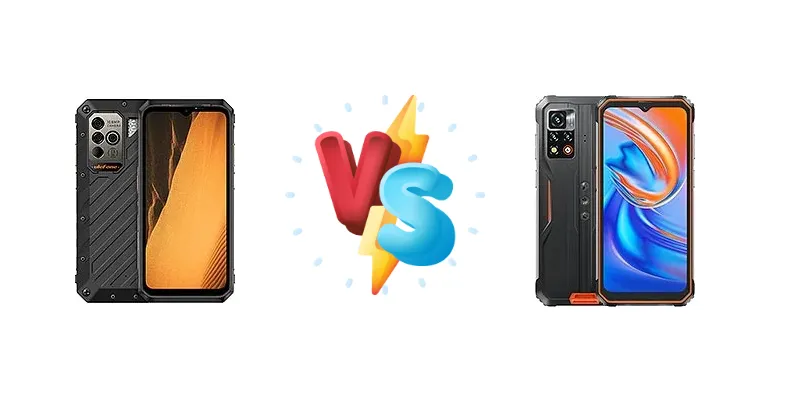
|
🏆 Quick Verdict
For most users prioritizing sustained performance and faster charging, the Ulefone Power Armor 19 emerges as the better choice. Its newer Helio G99 chipset, built on a 6nm process, offers improved efficiency and potentially less thermal throttling compared to the Blackview BV9200’s 12nm Helio G96, despite similar CPU core configurations.
| PHONES | ||
|---|---|---|
| Phone Names | Ulefone Power Armor 19 | Blackview BV9200 |
| Network | ||
|---|---|---|
| 2G bands | GSM 850 / 900 / 1800 / 1900 | GSM 850 / 900 / 1800 / 1900 |
| 3G bands | HSDPA 800 / 850 / 900 / 1700(AWS) / 1900 / 2100 | HSDPA 850 / 900 / 1700(AWS) / 1900 / 2100 |
| 4G bands | 1, 2, 3, 4, 5, 7, 8, 12, 13, 17, 18, 19, 20, 25, 26, 28, 34, 38, 39, 40, 41, 66, 71 | 1, 2, 3, 4, 5, 7, 8, 12, 13, 17, 18, 19, 20, 25, 26, 28, 34, 38, 39, 40, 41, 66 |
| Speed | HSPA, LTE | HSPA, LTE |
| Technology | GSM / CDMA / HSPA / CDMA2000 / LTE | GSM / CDMA / HSPA / LTE |
| CDMA2000 1x | CDMA 800 / 1900 | |
| Launch | ||
|---|---|---|
| Announced | 2022, December 27 | 2022, December 28 |
| Status | Available. Released 2022, December 27 | Available. Released 2023, January 09 |
| Body | ||
|---|---|---|
| Dimensions | 175.2 x 83.4 x 18.8 mm (6.90 x 3.28 x 0.74 in) | 174.5 x 81.8 x 13.6 mm (6.87 x 3.22 x 0.54 in) |
| SIM | Nano-SIM + Nano-SIM | Nano-SIM + Nano-SIM |
| Weight | 409 g (14.43 oz) | 310 g (10.93 oz) |
| IP68/IP69K dust/water resistant (up to 1.5m for 30 min) Drop-to-concrete resistance from up to 1.5m MIL-STD-810H compliant Accessory connector (ulefone endoscope, microscope) | IP68/IP69K dust/water resistant (up to 1.5m for 30 min) Drop-to-concrete resistance from up to 1.8m MIL-STD-810H compliant | |
| Display | ||
|---|---|---|
| Protection | Corning Gorilla Glass 5 | Corning Gorilla Glass 5 |
| Resolution | 1080 x 2408 pixels, 20:9 ratio (~401 ppi density) | 1080 x 2408 pixels, 20:9 ratio (~400 ppi density) |
| Size | 6.58 inches, 104.3 cm2 (~71.4% screen-to-body ratio) | 6.6 inches, 104.9 cm2 (~73.5% screen-to-body ratio) |
| Type | IPS LCD, 120Hz | IPS LCD, 120Hz |
| Platform | ||
|---|---|---|
| CPU | Octa-core (2x2.2 GHz Cortex-A76 & 6x2.0 GHz Cortex-A55) | Octa-core (2x2.05 GHz Cortex-A76 & 6x2.0 GHz Cortex-A55) |
| Chipset | Mediatek Helio G99 (6 nm) | Mediatek MT6781 Helio G96 (12 nm) |
| GPU | Mali-G57 MC2 | Mali-G52 MC2 |
| OS | Android 12 | Android 12, Doke-OS 3.1 |
| Memory | ||
|---|---|---|
| Card slot | microSDXC (uses shared SIM slot) | microSDXC (dedicated slot) |
| Internal | 256GB 12GB RAM | 256GB 8GB RAM |
| - | UFS 2.1 | |
| Main Camera | ||
|---|---|---|
| Features | Hexa-LED flash, HDR, panorama | LED flash, HDR, panorama |
| Single | 16 MP, f/2.0, (wide), 1.0µm | 16 MP, (wide), 1/3", 1.0µm |
| Triple | 108 MP, f/1.9, (wide), 1/1.52”, 0.7µm, PDAF 8 MP, f/2.2, (ultrawide), 1/4.0", 1.12µm 5 MP (macro) | 50 MP, f/1.8, (wide), 1/2.76", 0.64µm, PDAF 8 MP, f/1.8, 120˚, (ultrawide), AF Auxiliary lens |
| Video | 1440p@30fps | 1440p@30fps, 1080p@30fps |
| Selfie camera | ||
|---|---|---|
| Single | 16 MP, f/2.0, (wide), 1.0µm | 16 MP, f/2.0, (wide), 1/3", 1.0µm |
| Video | 1080p@30fps | 1080p |
| Sound | ||
|---|---|---|
| 3.5mm jack | Yes | No |
| 35mm jack | Yes | No |
| Loudspeaker | Yes | Yes, with dual speakers |
| Comms | ||
|---|---|---|
| Bluetooth | 5.2, A2DP, LE | 5.2, A2DP, LE |
| NFC | Yes | Yes |
| Positioning | GPS, GLONASS, GALILEO, BDS | GPS, GLONASS, GALILEO, BDS |
| Radio | Wireless FM radio, RDS, recording | FM radio |
| USB | USB Type-C 2.0, OTG, magnetic connector | USB Type-C, OTG |
| WLAN | Wi-Fi 802.11 a/b/g/n/ac/6, dual-band | Wi-Fi 802.11 a/b/g/n/ac, dual-band |
| Features | ||
|---|---|---|
| Sensors | Fingerprint (side-mounted), accelerometer, gyro, proximity, compass, barometer, thermometer | Fingerprint (side-mounted), accelerometer, gyro, proximity, compass, barometer |
| Battery | ||
|---|---|---|
| Charging | 66W wired, 52% in 30 min 15W wireless 5W wireless reversed | 66W wired 30W wireless |
| Type | Li-Po 9600 mAh | 5000 mAh |
| Misc | ||
|---|---|---|
| Colors | Black | Black, Orange, Green |
| Price | About 400 EUR | About 200 EUR |
Ulefone Power Armor 19
- More efficient 6nm Helio G99 chipset
- Faster charging with wireless options
- Potential for longer battery life
- Display specifications are unknown
- Rugged phone pricing can be high
Blackview BV9200
- Bright 481 nit display with 1423:1 contrast
- Competitive price point
- Robust build quality expected from Blackview
- Less efficient 12nm Helio G96 chipset
- No wireless charging
Display Comparison
The Blackview BV9200 boasts a measured peak brightness of 481 nits and a 1423:1 contrast ratio, suggesting a visually punchy display, particularly outdoors. While the Ulefone Power Armor 19’s display specifications aren’t provided, the BV9200’s numbers indicate a strong showing in visibility. However, without knowing the panel type (IPS vs AMOLED) or refresh rate of the Ulefone, a definitive judgment is difficult. The BV9200’s contrast ratio suggests a good level of black depth, enhancing media consumption.
Camera Comparison
Without detailed camera specifications beyond the main sensor, a direct comparison is limited. Both phones likely target the mid-range rugged phone segment, suggesting similar image processing capabilities. The absence of information regarding sensor size, OIS, or lens apertures makes it impossible to assess image quality differences. It’s reasonable to assume both phones will include standard features like HDR and night mode, but the Ulefone’s newer chipset *could* offer slightly faster image processing speeds.
Performance
The Ulefone Power Armor 19’s Mediatek Helio G99 (6nm) represents a significant architectural leap over the Blackview BV9200’s Helio G96 (12nm). While both chipsets feature the same octa-core configuration – 2x2.2 GHz Cortex-A76 and 6x2.0 GHz Cortex-A55 – the smaller 6nm node allows for greater transistor density and improved power efficiency. This translates to potentially lower temperatures under load and sustained performance. The G99’s improved efficiency is particularly beneficial for gaming and prolonged use of demanding applications. The Blackview’s G96, while capable, will likely exhibit more thermal throttling during extended intensive tasks.
Battery Life
Both devices support 66W wired charging, promising rapid replenishment. However, the Ulefone Power Armor 19 also includes 15W wireless and 5W reverse wireless charging, offering greater versatility. While battery capacity isn’t specified for either device, the Ulefone’s more efficient chipset could translate to longer real-world battery life despite potentially having a similar capacity. The 66W charging on both phones should deliver approximately 52% charge in 30 minutes (Ulefone) and a similar timeframe for the Blackview, though this is dependent on battery size.
Buying Guide
Buy the Ulefone Power Armor 19 if you need a rugged phone that can handle extended gaming sessions or demanding applications without significant performance drops. Its 66W charging and 6nm chipset provide a noticeable advantage. Buy the Blackview BV9200 if you prioritize display brightness and are looking for a slightly more affordable rugged option, accepting a potential trade-off in sustained performance and charging speed.