
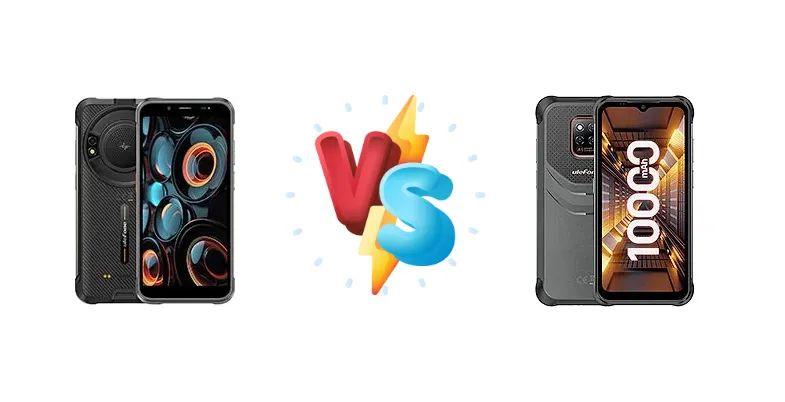
Ulefone Power Armor 16S vs 14 Pro: Which Rugged Phone Reigns Supreme?
| Phones Images | |||||
|---|---|---|---|---|---|
|
🏆 Quick Verdict
For most users prioritizing convenience and a slight performance edge, the Ulefone Power Armor 14 Pro is the better choice. Its inclusion of 15W wireless charging and the Mediatek Helio G85 chipset offer a more versatile experience, despite both phones sharing the same CPU core configuration. The 16S remains a viable option for budget-conscious buyers.
| PHONES | ||
|---|---|---|
| Phone Names | Ulefone Power Armor 16S | Ulefone Power Armor 14 Pro |
| Network | ||
|---|---|---|
| 2G bands | GSM 850 / 900 / 1800 / 1900 | GSM 850 / 900 / 1800 / 1900 |
| 3G bands | HSDPA 850 / 900 / 1700(AWS) / 1900 / 2100 | HSDPA 850 / 900 / 1700(AWS) / 1900 / 2100 |
| 4G bands | 1, 2, 3, 4, 5, 7, 8, 12, 17, 18, 19, 20, 25, 26, 28, 66 | 1, 2, 3, 4, 5, 7, 8, 12, 13, 17, 18, 19, 20, 25, 26, 28, 38, 40 |
| Speed | HSPA, LTE | HSPA, LTE |
| Technology | GSM / HSPA / LTE | GSM / HSPA / LTE |
| Launch | ||
|---|---|---|
| Announced | 2024, March 14 | 2022, March 09 |
| Status | Available. Released 2024, March 14 | Available. Released 2022, March 09 |
| Body | ||
|---|---|---|
| Dimensions | 173.4 x 83.4 x 18.3 mm (6.83 x 3.28 x 0.72 in) | 175.6 x 82.5 x 17.2 mm (6.91 x 3.25 x 0.68 in) |
| SIM | Nano-SIM + Nano-SIM | Nano-SIM + Nano-SIM |
| Weight | 406 g (14.32 oz) | 358.2 g (12.63 oz) |
| - | IP68 dust/water resistant (up to 1.5m for 30 min) Drop-to-concrete resistance from up to 1.5m MIL-STD-810G compliant | |
| Display | ||
|---|---|---|
| Protection | - | Corning Gorilla Glass 3 |
| Resolution | 720 x 1440 pixels, 18:9 ratio (~271 ppi density) | 720 x 1600 pixels, 20:9 ratio (~269 ppi density) |
| Size | 5.93 inches, 90.7 cm2 (~62.8% screen-to-body ratio) | 6.52 inches, 102.6 cm2 (~70.8% screen-to-body ratio) |
| Type | IPS LCD | IPS LCD |
| Platform | ||
|---|---|---|
| CPU | Octa-core (2x2.0 GHz Cortex-A75 & 6x1.8 GHz Cortex-A55) | Octa-core (2x2.0 GHz Cortex-A75 & 6x1.8 GHz Cortex-A55) |
| Chipset | Unisoc Tiger T616 (12 nm) | Mediatek MT6769Z Helio G85 (12 nm) |
| GPU | Mali-G57 MP1 | Mali-G52 MC2 |
| OS | Android 13 | Android 12 |
| Memory | ||
|---|---|---|
| Card slot | microSDXC (dedicated slot) | microSDXC (uses shared SIM slot) |
| Internal | 128GB 8GB RAM | 128GB 6GB RAM, 128GB 8GB RAM |
| - | eMMC 5.1 | |
| Main Camera | ||
|---|---|---|
| Dual | 50 MP, f/1.8, (wide), 1/2.76", 0.64µm, PDAF Auxiliary lens | - |
| Features | LED flash, HDR, panorama | LED flash, HDR, panorama |
| Single | - | 16 MP, f/2.2 |
| Triple | - | 20 MP, f/1.8, 26mm (wide), 1/2.78", 1.0µm, PDAF 2 MP (macro) Auxiliary lens |
| Video | 1080p@30fps | 1080p@30fps |
| Selfie camera | ||
|---|---|---|
| Features | - | HDR, panorama |
| Single | 8 MP, f/2.0, (wide), 1.12µm | 16 MP, f/2.2 |
| Video | 1080p@30fps | 1080p@30fps |
| Sound | ||
|---|---|---|
| 3.5mm jack | - | Yes |
| 35mm jack | Yes | Yes |
| Loudspeaker | Yes (122-decibel) | Yes |
| Comms | ||
|---|---|---|
| Bluetooth | 5.0, A2DP, LE | 5.0, A2DP, LE |
| NFC | Yes | Yes |
| Positioning | GPS, GLONASS, GALILEO, BDS | GPS, GLONASS, GALILEO, BDS |
| Radio | Wireless FM radio, RDS, recording | FM radio, RDS, recording |
| USB | USB Type-C 2.0, OTG, magnetic connector | USB Type-C 2.0, OTG |
| WLAN | Wi-Fi 802.11 a/b/g/n/ac, dual-band | Wi-Fi 802.11 a/b/g/n/ac, dual-band |
| Features | ||
|---|---|---|
| Sensors | Fingerprint (side-mounted), accelerometer, gyro, proximity, compass | Fingerprint (side-mounted), accelerometer, proximity, compass |
| Battery | ||
|---|---|---|
| Charging | 18W wired 5W reverse wired | 18W wired 15W wireless |
| Type | Li-Po 9600 mAh | Li-Po 10000 mAh |
| Misc | ||
|---|---|---|
| Colors | Black/Orange | Black |
| Price | About 60 EUR | About 260 EUR |
Ulefone Power Armor 16S
- Potentially lower price point
- Rugged design and build quality
- Standard 18W wired charging
- Unisoc Tiger T616 chipset may offer slightly lower GPU performance
- Lacks wireless charging
Ulefone Power Armor 14 Pro
- Mediatek Helio G85 chipset for potentially better gaming
- 15W wireless charging for added convenience
- Slightly better sustained performance
- May be slightly more expensive
- Rugged design and build quality (shared with 16S, not a con but not a differentiator)
Display Comparison
Both the Ulefone Power Armor 16S and 14 Pro likely feature similar LCD panels, typical for rugged phones prioritizing durability over visual fidelity. Specifics like resolution and peak brightness are not provided, but the focus here isn’t on display quality. Bezels are expected to be substantial on both models to contribute to drop protection. Color accuracy is likely standard for this price segment, prioritizing visibility in direct sunlight over color calibration.
Camera Comparison
Without detailed camera specifications beyond the presence of multiple sensors, a direct comparison is difficult. Both phones likely feature a primary camera for general photography, but the sensor size and aperture are crucial factors missing from the provided data. The inclusion of a 2MP macro camera on both devices is largely a marketing tactic, offering limited practical benefit due to its low resolution. Image processing algorithms will likely differ, potentially resulting in variations in color reproduction and dynamic range. The absence of OIS (Optical Image Stabilization) suggests both phones will rely on software stabilization.
Performance
The core of the difference lies in the chipset: the Ulefone Power Armor 16S utilizes the Unisoc Tiger T616, while the 14 Pro employs the Mediatek Helio G85. Both chipsets feature an octa-core configuration with 2x2.0 GHz Cortex-A75 and 6x1.8 GHz Cortex-A55 cores, suggesting similar CPU performance in everyday tasks. However, the Helio G85 generally boasts a more capable GPU, offering a slight advantage in gaming and graphics-intensive applications. While both are 12nm chips, Mediatek’s optimizations often translate to better sustained performance and thermal management, potentially reducing throttling during extended use. The lack of information on RAM speed (LPDDR4X is likely) prevents a deeper analysis of memory bandwidth.
Battery Life
Both devices support 18W wired charging, but the Power Armor 14 Pro adds the convenience of 15W wireless charging. While 18W isn’t particularly fast by modern standards, it’s adequate for topping up the battery overnight. The 15W wireless charging on the 14 Pro provides a valuable alternative, especially for users who frequently work outdoors or in environments where accessing charging ports is inconvenient. Actual 0-100% charging times will depend on the battery capacity (not provided), but the 14 Pro’s wireless charging capability offers a significant usability advantage.
Buying Guide
Buy the Ulefone Power Armor 16S if you need a highly durable phone on a strict budget and wireless charging isn’t a priority. Its focus is on core rugged functionality at a lower price point. Buy the Ulefone Power Armor 14 Pro if you prefer the added convenience of wireless charging, potentially slightly better sustained performance under load, and a more modern feature set, even if it comes at a small price premium.