
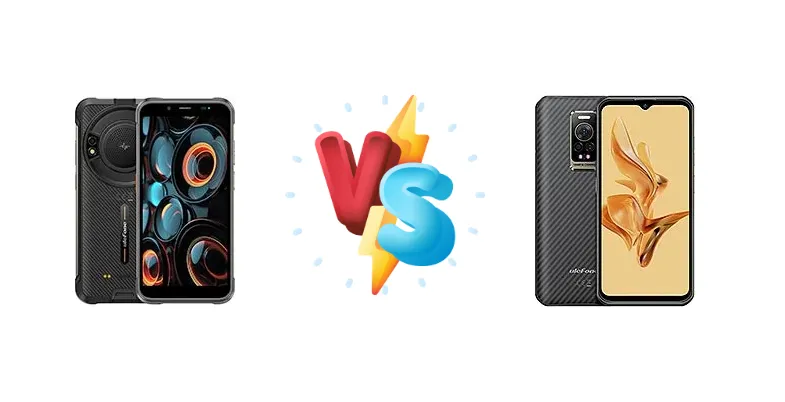
Ulefone Power Armor 16S vs. Armor 17 Pro: Which Rugged Phone Reigns Supreme?
| Phones Images | |||||
|---|---|---|---|---|---|
|
🏆 Quick Verdict
For most users, the Ulefone Armor 17 Pro is the superior choice. Its Mediatek Helio G99 chipset, built on a 6nm process, delivers noticeably improved performance and efficiency compared to the 12nm Unisoc Tiger T616 in the 16S. The 66W charging is a game-changer for a rugged device, offsetting the slightly smaller battery capacity.
| PHONES | ||
|---|---|---|
| Phone Names | Ulefone Power Armor 16S | Ulefone Armor 17 Pro |
| Network | ||
|---|---|---|
| 2G bands | GSM 850 / 900 / 1800 / 1900 | GSM 850 / 900 / 1800 / 1900 |
| 3G bands | HSDPA 850 / 900 / 1700(AWS) / 1900 / 2100 | HSDPA 800 / 850 / 900 / 1700(AWS) / 1900 / 2100 |
| 4G bands | 1, 2, 3, 4, 5, 7, 8, 12, 17, 18, 19, 20, 25, 26, 28, 66 | 1, 2, 3, 4, 5, 7, 8, 12, 13, 17, 18, 19, 20, 25, 26, 28, 34, 38, 39, 40, 41, 66 |
| Speed | HSPA, LTE | HSPA, LTE |
| Technology | GSM / HSPA / LTE | GSM / HSPA / LTE |
| Launch | ||
|---|---|---|
| Announced | 2024, March 14 | 2022, October 31 |
| Status | Available. Released 2024, March 14 | Available. Released 2022, October 31 |
| Body | ||
|---|---|---|
| Dimensions | 173.4 x 83.4 x 18.3 mm (6.83 x 3.28 x 0.72 in) | 172.7 x 80.4 x 12.5 mm (6.80 x 3.17 x 0.49 in) |
| SIM | Nano-SIM + Nano-SIM | Nano-SIM + Nano-SIM |
| Weight | 406 g (14.32 oz) | 290 g (10.23 oz) |
| - | IP68/IP69K dust/water resistant (up to 1.5m for 30 min) Drop-to-concrete resistance from up to 1.5m MIL-STD-810G compliant | |
| Display | ||
|---|---|---|
| Protection | - | Corning Gorilla Glass 5 |
| Resolution | 720 x 1440 pixels, 18:9 ratio (~271 ppi density) | 1080 x 2408 pixels, 20:9 ratio (~401 ppi density) |
| Size | 5.93 inches, 90.7 cm2 (~62.8% screen-to-body ratio) | 6.58 inches, 104.3 cm2 (~75.1% screen-to-body ratio) |
| Type | IPS LCD | IPS LCD, 120Hz |
| Platform | ||
|---|---|---|
| CPU | Octa-core (2x2.0 GHz Cortex-A75 & 6x1.8 GHz Cortex-A55) | Octa-core (2x2.2 GHz Cortex-A76 & 6x2.0 GHz Cortex-A55) |
| Chipset | Unisoc Tiger T616 (12 nm) | Mediatek Helio G99 (6 nm) |
| GPU | Mali-G57 MP1 | Mali-G57 MC2 |
| OS | Android 13 | Android 12 |
| Memory | ||
|---|---|---|
| Card slot | microSDXC (dedicated slot) | microSDXC (dedicated slot) |
| Internal | 128GB 8GB RAM | 256GB 8GB RAM |
| Main Camera | ||
|---|---|---|
| Dual | 50 MP, f/1.8, (wide), 1/2.76", 0.64µm, PDAF Auxiliary lens | - |
| Features | LED flash, HDR, panorama | Triple-LED flash, HDR, panorama |
| Single | - | 16 MP, f/2.2, (wide), 1.0µm |
| Triple | - | 108 MP, f/1.9, (wide), 1/1.52”, 0.7µm, PDAF 8 MP, f/2.2, 119˚, (ultrawide), 1/4.0", 1.12µm 8 MP, (night vision), 2 infrared night vision lights |
| Video | 1080p@30fps | 1440p@30fps, 1080p@30fps |
| Selfie camera | ||
|---|---|---|
| Single | 8 MP, f/2.0, (wide), 1.12µm | 16 MP, f/2.2, (wide), 1.0µm |
| Video | 1080p@30fps | 1080p@30fps |
| Sound | ||
|---|---|---|
| 3.5mm jack | - | Yes |
| 35mm jack | Yes | Yes |
| Loudspeaker | Yes (122-decibel) | Yes |
| Comms | ||
|---|---|---|
| Bluetooth | 5.0, A2DP, LE | 5.2, A2DP, LE |
| NFC | Yes | Yes |
| Positioning | GPS, GLONASS, GALILEO, BDS | GPS, GLONASS, GALILEO, BDS |
| Radio | Wireless FM radio, RDS, recording | Wireless FM radio, RDS, recording |
| USB | USB Type-C 2.0, OTG, magnetic connector | USB Type-C 2.0, OTG |
| WLAN | Wi-Fi 802.11 a/b/g/n/ac, dual-band | Wi-Fi 802.11 a/b/g/n/ac, dual-band |
| Features | ||
|---|---|---|
| Sensors | Fingerprint (side-mounted), accelerometer, gyro, proximity, compass | Fingerprint (side-mounted), accelerometer, gyro, proximity, compass |
| - | MagSafe compatible accessories | |
| Battery | ||
|---|---|---|
| Charging | 18W wired 5W reverse wired | 66W wired, 53% in 15 min 15W wireless Wireless reversed |
| Type | Li-Po 9600 mAh | Li-Po 5380 mAh |
| Misc | ||
|---|---|---|
| Colors | Black/Orange | Black |
| Price | About 60 EUR | About 260 EUR |
Ulefone Power Armor 16S
- More affordable price point
- Solid build quality for basic use
- Acceptable performance for everyday tasks
- Slower charging speeds (18W)
- Less powerful chipset (Unisoc T616)
- Limited gaming capabilities
Ulefone Armor 17 Pro
- Significantly faster charging (66W)
- More powerful chipset (Helio G99)
- Wireless charging and reverse wireless charging
- Improved performance for gaming and multitasking
- Higher price tag
- Potentially slightly lower battery capacity (unconfirmed)
Display Comparison
Neither Ulefone provides detailed display specifications beyond basic resolution. However, the focus here isn't display quality, but durability. Both will likely feature IPS LCD panels, prioritizing visibility in direct sunlight over color accuracy. The absence of high refresh rates is typical for this segment, conserving battery life. The real difference lies in the processing power driving the display; the G99 in the 17 Pro will handle UI animations and transitions more fluidly.
Camera Comparison
Ulefone doesn’t emphasize camera prowess in this segment. Both phones likely feature similar camera setups, with the main sensor being the most important factor. Without specific sensor details, it’s difficult to make a definitive judgment. However, the improved image signal processor (ISP) within the Helio G99 will likely result in better image processing, particularly in low-light conditions, on the Armor 17 Pro. The inclusion of a 2MP macro camera on both is largely a marketing tactic, offering limited practical benefit.
Performance
The core difference between these phones is the chipset. The Armor 17 Pro’s Mediatek Helio G99 (6nm) represents a substantial upgrade over the Power Armor 16S’s Unisoc Tiger T616 (12nm). The 6nm process inherently offers better power efficiency, translating to less heat generation and sustained performance. The G99’s CPU, with 2x2.2 GHz Cortex-A76 cores, outperforms the 16S’s 2x2.0 GHz Cortex-A75 cores in both single-core and multi-core tasks. This means faster app loading times, smoother multitasking, and a more enjoyable gaming experience on the 17 Pro. While both utilize 6x2.0 GHz Cortex-A55 cores for efficiency, the G99’s architecture is more modern.
Battery Life
The Armor 17 Pro’s 66W wired charging is a standout feature, capable of charging the battery to 53% in just 15 minutes. This is a significant advantage over the 16S’s 18W charging. The 17 Pro also adds 15W wireless charging and reverse wireless charging, offering greater convenience. While battery capacity isn’t specified, the G99’s superior efficiency means the 17 Pro will likely deliver comparable, if not better, real-world battery life despite potentially having a slightly smaller battery than the 16S.
Buying Guide
Buy the Ulefone Power Armor 16S if you need a highly affordable, dependable rugged phone for basic tasks like communication, navigation, and light productivity. It’s ideal for users who prioritize cost-effectiveness over raw power. Buy the Ulefone Armor 17 Pro if you prefer a smoother, more responsive experience for demanding apps, occasional gaming, and appreciate the convenience of incredibly fast 66W charging and wireless charging capabilities.