
Ulefone Power Armor 16S vs Oukitel WP17: A Deep Dive into Rugged Performance
| Phones Images | |||||
|---|---|---|---|---|---|
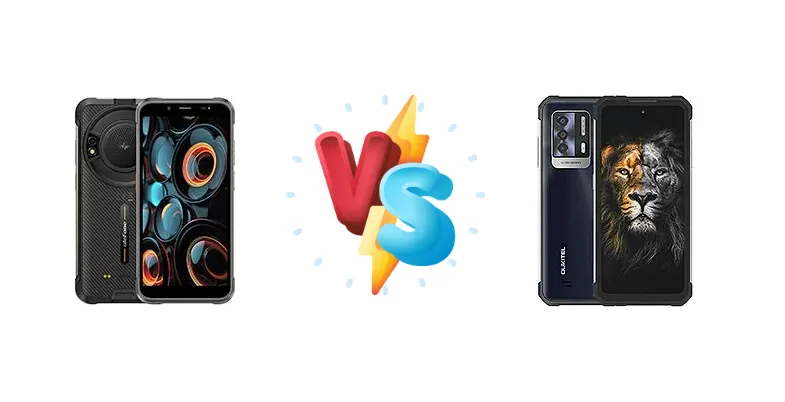
|
🏆 Quick Verdict
For the average user prioritizing raw performance and responsiveness, the Oukitel WP17 emerges as the winner. Its Helio G95 chipset provides a noticeable edge in processing power compared to the Ulefone’s Tiger T616. However, the 16S remains a compelling option for those on a tighter budget or prioritizing a slightly more conservative power draw.
| PHONES | ||
|---|---|---|
| Phone Names | Ulefone Power Armor 16S | Oukitel WP17 |
| Network | ||
|---|---|---|
| 2G bands | GSM 850 / 900 / 1800 / 1900 | GSM 850 / 900 / 1800 / 1900 |
| 3G bands | HSDPA 850 / 900 / 1700(AWS) / 1900 / 2100 | HSDPA 850 / 900 / 1700(AWS) / 1900 / 2100 |
| 4G bands | 1, 2, 3, 4, 5, 7, 8, 12, 17, 18, 19, 20, 25, 26, 28, 66 | 1, 2, 3, 4, 5, 7, 8, 12, 13, 17, 18, 19, 20, 25, 26, 28, 66 |
| Speed | HSPA, LTE | HSPA, LTE |
| Technology | GSM / HSPA / LTE | GSM / HSPA / LTE |
| Launch | ||
|---|---|---|
| Announced | 2024, March 14 | 2021, October |
| Status | Available. Released 2024, March 14 | Available. Released 2021, October |
| Body | ||
|---|---|---|
| Dimensions | 173.4 x 83.4 x 18.3 mm (6.83 x 3.28 x 0.72 in) | - |
| SIM | Nano-SIM + Nano-SIM | Nano-SIM + Nano-SIM |
| Weight | 406 g (14.32 oz) | - |
| Display | ||
|---|---|---|
| Resolution | 720 x 1440 pixels, 18:9 ratio (~271 ppi density) | 1080 x 2400 pixels, 20:9 ratio (~388 ppi density) |
| Size | 5.93 inches, 90.7 cm2 (~62.8% screen-to-body ratio) | 6.78 inches, 111.0 cm2 |
| Type | IPS LCD | IPS LCD, 90Hz |
| Platform | ||
|---|---|---|
| CPU | Octa-core (2x2.0 GHz Cortex-A75 & 6x1.8 GHz Cortex-A55) | Octa-core (2x2.05 GHz Cortex-A76 & 6x2.0 GHz Cortex-A55) |
| Chipset | Unisoc Tiger T616 (12 nm) | Mediatek MT6785V/CD Helio G95 (12 nm) |
| GPU | Mali-G57 MP1 | Mali-G76 MC4 |
| OS | Android 13 | Android 11 |
| Memory | ||
|---|---|---|
| Card slot | microSDXC (dedicated slot) | microSDXC |
| Internal | 128GB 8GB RAM | 128GB 8GB RAM |
| Main Camera | ||
|---|---|---|
| Dual | 50 MP, f/1.8, (wide), 1/2.76", 0.64µm, PDAF Auxiliary lens | - |
| Features | LED flash, HDR, panorama | LED flash, panorama |
| Triple | - | 64 MP, f/1.8, (wide), PDAF 20 MP, f/2.0, (night vision), 4 infrared night vision lights 2 MP (macro) |
| Video | 1080p@30fps | 4K@30fps, 1080p@30fps |
| Selfie camera | ||
|---|---|---|
| Single | 8 MP, f/2.0, (wide), 1.12µm | 16 MP |
| Video | 1080p@30fps | Yes |
| Sound | ||
|---|---|---|
| 35mm jack | Yes | Unspecified |
| Loudspeaker | Yes (122-decibel) | Yes |
| Comms | ||
|---|---|---|
| Bluetooth | 5.0, A2DP, LE | Yes |
| NFC | Yes | Yes |
| Positioning | GPS, GLONASS, GALILEO, BDS | GPS, GLONASS, GALILEO, BDS |
| Radio | Wireless FM radio, RDS, recording | Unspecified |
| USB | USB Type-C 2.0, OTG, magnetic connector | USB Type-C 2.0, OTG |
| WLAN | Wi-Fi 802.11 a/b/g/n/ac, dual-band | Yes |
| Features | ||
|---|---|---|
| Sensors | Fingerprint (side-mounted), accelerometer, gyro, proximity, compass | Unspecified |
| Battery | ||
|---|---|---|
| Charging | 18W wired 5W reverse wired | - |
| Type | Li-Po 9600 mAh | Li-Po 8300 mAh |
| Misc | ||
|---|---|---|
| Colors | Black/Orange | Blue, Camo, Camouflage |
| Price | About 60 EUR | About 240 EUR |
Ulefone Power Armor 16S
- Potentially longer battery life due to the less demanding chipset.
- More affordable price point.
- Rugged design provides excellent protection.
- Slower performance compared to the Oukitel WP17.
- Limited gaming capabilities.
- May struggle with demanding multitasking.
Oukitel WP17
- Superior performance thanks to the Helio G95 chipset.
- Smoother multitasking and gaming experience.
- More responsive user interface.
- Potentially shorter battery life compared to the Ulefone 16S.
- Likely a higher price tag.
- May run warmer under heavy load.
Display Comparison
Neither device boasts a standout display. Both likely utilize IPS LCD panels, common in this price bracket. The focus here isn't on visual fidelity, but durability. While specific display specs are missing, the rugged nature of both phones suggests a focus on scratch resistance and visibility in direct sunlight. Bezels are likely to be substantial on both, prioritizing protection over a modern, edge-to-edge design.
Camera Comparison
Without detailed camera specifications, a direct comparison is difficult. However, the market segment suggests both phones will prioritize practicality over photographic excellence. The presence of a 2MP macro camera on either device is largely a marketing tactic, offering limited real-world benefit. The primary sensor’s size and aperture will be the key determinants of image quality, but this information is unavailable. Image processing will likely be geared towards producing vibrant, shareable photos rather than accurate color reproduction.
Performance
The core difference lies in the chipsets. The Oukitel WP17’s MediaTek Helio G95 (12nm) is a significant step up from the Ulefone Power Armor 16S’s Unisoc Tiger T616 (12nm). The G95 features Cortex-A76 cores clocked at 2.05 GHz, offering superior single-core performance compared to the T616’s Cortex-A75 cores at 2.0 GHz. This translates to snappier app launches, smoother multitasking, and a more enjoyable gaming experience. While both are 12nm chips, the architectural improvements in the G95 provide a tangible performance advantage. The WP17 will likely handle graphically intensive games with higher frame rates and fewer stutters.
Battery Life
Both phones are likely equipped with large batteries, typical of rugged devices. While specific capacities are unknown, the Ulefone Power Armor 16S’s 18W wired charging and 5W reverse wired charging suggest a focus on maximizing battery life and offering limited emergency power output. The Oukitel WP17’s charging speed is not specified, but a faster charging rate would be beneficial given the increased power demands of the Helio G95 chipset. Real-world battery life will depend heavily on usage patterns, but the 16S is likely to offer longer runtimes under light load due to its less power-hungry processor.
Buying Guide
Buy the Ulefone Power Armor 16S if you need a dependable, budget-friendly rugged phone for basic tasks like communication, navigation, and light media consumption. It’s ideal for users who prioritize battery life and don’t require demanding gaming or multitasking capabilities. Buy the Oukitel WP17 if you prefer a more responsive experience, capable of handling moderate gaming and multitasking without significant slowdowns. This phone is better suited for users who need a rugged device that can also function as a daily driver for a wider range of applications.