
Ulefone Power Armor 16S vs. Doogee S98 Pro: A Rugged Showdown
| Phones Images | |||||
|---|---|---|---|---|---|
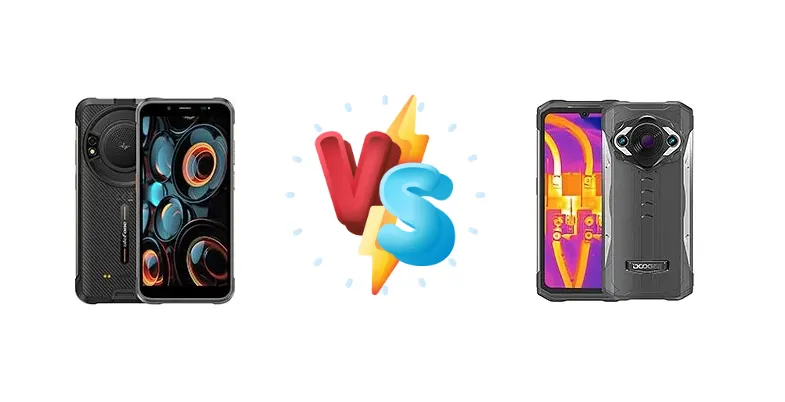
|
🏆 Quick Verdict
For the average user prioritizing a balance of performance and affordability, the Doogee S98 Pro emerges as the stronger contender. Its Mediatek Helio G96 chipset offers a noticeable performance edge over the Ulefone’s Unisoc Tiger T616, and the inclusion of 33W wired and 15W wireless charging provides significantly faster power replenishment.
| PHONES | ||
|---|---|---|
| Phone Names | Ulefone Power Armor 16S | Doogee S98 Pro |
| Network | ||
|---|---|---|
| 2G bands | GSM 850 / 900 / 1800 / 1900 | GSM 850 / 900 / 1800 / 1900 |
| 3G bands | HSDPA 850 / 900 / 1700(AWS) / 1900 / 2100 | HSDPA 800 / 850 / 900 / 1700(AWS) / 1900 / 2100 |
| 4G bands | 1, 2, 3, 4, 5, 7, 8, 12, 17, 18, 19, 20, 25, 26, 28, 66 | 1, 2, 3, 4, 5, 7, 8, 12, 13, 17, 18, 19, 20, 25, 26, 28, 34, 38, 39, 40, 41, 66 |
| Speed | HSPA, LTE | HSPA, LTE |
| Technology | GSM / HSPA / LTE | GSM / CDMA / HSPA / LTE |
| Launch | ||
|---|---|---|
| Announced | 2024, March 14 | 2022, May 27 |
| Status | Available. Released 2024, March 14 | Available. Released 2022, June 06 |
| Body | ||
|---|---|---|
| Dimensions | 173.4 x 83.4 x 18.3 mm (6.83 x 3.28 x 0.72 in) | 172 x 82 x 15.5 mm (6.77 x 3.23 x 0.61 in) |
| SIM | Nano-SIM + Nano-SIM | Nano-SIM + Nano-SIM |
| Weight | 406 g (14.32 oz) | 320 g (11.29 oz) |
| Display | ||
|---|---|---|
| Protection | - | Corning Gorilla Glass |
| Resolution | 720 x 1440 pixels, 18:9 ratio (~271 ppi density) | 1080 x 2340 pixels, 19.5:9 ratio (~409 ppi density) |
| Size | 5.93 inches, 90.7 cm2 (~62.8% screen-to-body ratio) | 6.3 inches, 97.4 cm2 (~69.1% screen-to-body ratio) |
| Type | IPS LCD | IPS LCD, 500 nits (peak) |
| Platform | ||
|---|---|---|
| CPU | Octa-core (2x2.0 GHz Cortex-A75 & 6x1.8 GHz Cortex-A55) | Octa-core (2x2.05 GHz Cortex-A76 & 6x2.0 GHz Cortex-A55) |
| Chipset | Unisoc Tiger T616 (12 nm) | Mediatek MT6781 Helio G96 (12 nm) |
| GPU | Mali-G57 MP1 | Mali-G57 MC2 |
| OS | Android 13 | Android 12 |
| Memory | ||
|---|---|---|
| Card slot | microSDXC (dedicated slot) | microSDXC (dedicated slot) |
| Internal | 128GB 8GB RAM | 256GB 8GB RAM |
| Main Camera | ||
|---|---|---|
| Dual | 50 MP, f/1.8, (wide), 1/2.76", 0.64µm, PDAF Auxiliary lens | - |
| Features | LED flash, HDR, panorama | Dual-LED flash, HDR, panorama |
| Triple | - | 48 MP, f/1.8, (wide), PDAF 20 MP, f/1.8, (night vision), 2 infrared night vision lights Thermal imaging camera |
| Video | 1080p@30fps | 1440p, 1080p |
| Selfie camera | ||
|---|---|---|
| Single | 8 MP, f/2.0, (wide), 1.12µm | 16 MP, f/2.0, (wide) |
| Video | 1080p@30fps | 1080p |
| Sound | ||
|---|---|---|
| 35mm jack | Yes | Unspecified |
| Loudspeaker | Yes (122-decibel) | Yes |
| Comms | ||
|---|---|---|
| Bluetooth | 5.0, A2DP, LE | 5.1, A2DP, LE |
| NFC | Yes | Yes |
| Positioning | GPS, GLONASS, GALILEO, BDS | GPS, GLONASS, BDS, GALILEO |
| Radio | Wireless FM radio, RDS, recording | FM radio |
| USB | USB Type-C 2.0, OTG, magnetic connector | USB Type-C 2.0, OTG |
| WLAN | Wi-Fi 802.11 a/b/g/n/ac, dual-band | Wi-Fi 802.11 a/b/g/n/ac, dual-band |
| Features | ||
|---|---|---|
| Sensors | Fingerprint (side-mounted), accelerometer, gyro, proximity, compass | Fingerprint (side-mounted), accelerometer, gyro, proximity, compass |
| Battery | ||
|---|---|---|
| Charging | 18W wired 5W reverse wired | 33W wired 15W wireless |
| Type | Li-Po 9600 mAh | 6000 mAh |
| Misc | ||
|---|---|---|
| Colors | Black/Orange | Black |
| Price | About 60 EUR | About 470 EUR |
Ulefone Power Armor 16S
- Potentially longer battery life due to efficient chipset.
- More affordable price point.
- Rugged design for durability.
- Slower processor performance.
- Slower charging speeds (18W wired, 5W reverse).
Doogee S98 Pro
- Faster and more responsive performance with Helio G96.
- Faster charging: 33W wired and 15W wireless.
- Likely better camera performance.
- Potentially shorter battery life compared to the Ulefone.
- Higher price tag.
Display Comparison
Neither device boasts a standout display. Both likely utilize IPS LCD panels, common in this price bracket. However, detailed specs like resolution and peak brightness are missing. The focus here is on durability, not visual fidelity. Bezels are expected to be substantial on both to contribute to drop protection. Color accuracy is likely standard for budget-midrange devices, prioritizing visibility in direct sunlight over color science perfection.
Camera Comparison
Without detailed sensor information, a direct comparison is difficult. However, the market segment suggests both will feature a multi-camera setup with a primary sensor, ultrawide, and potentially macro/depth sensors. The Doogee S98 Pro, being the higher-tier device, likely has a larger primary sensor and better image processing algorithms. The presence of Optical Image Stabilization (OIS) on the S98 Pro, while unconfirmed, is more probable given its positioning. The 2MP macro cameras often found on both are largely marketing filler and offer limited practical benefit.
Performance
The core difference lies in the chipsets. The Doogee S98 Pro’s Mediatek Helio G96, built on a 12nm process, features two Cortex-A76 cores clocked at 2.05 GHz, offering a clear architectural advantage over the Ulefone’s Unisoc Tiger T616. The T616 uses two Cortex-A75 cores at 2.0 GHz. While both are 12nm, the A76 cores in the G96 deliver superior single-core performance, translating to snappier app launches and smoother multitasking. The G96 also has a more capable GPU, making it the better choice for casual gaming. The Ulefone will be adequate for basic tasks, but will struggle with demanding applications.
Battery Life
Both phones prioritize battery life, a key requirement for rugged devices. While specific capacities are not provided, the Ulefone Power Armor 16S likely has a larger battery to compensate for the less efficient Unisoc chipset. However, the Doogee S98 Pro’s 33W wired charging and 15W wireless charging are significant advantages. The Ulefone is limited to 18W wired and 5W reverse wired charging. This means the S98 Pro can replenish its battery much faster, reducing downtime – a crucial factor for users relying on their phone throughout the day.
Buying Guide
Buy the Ulefone Power Armor 16S if you need a highly durable, budget-friendly rugged phone for basic tasks and extended battery life where absolute performance isn't critical. Buy the Doogee S98 Pro if you prefer a more responsive user experience, faster charging speeds, and are willing to spend a bit more for a more capable chipset suited for moderate gaming and multitasking.