
Ulefone Power Armor 14 vs OnePlus 10 Pro: A Clash of Titans
| Phones Images | |||||
|---|---|---|---|---|---|
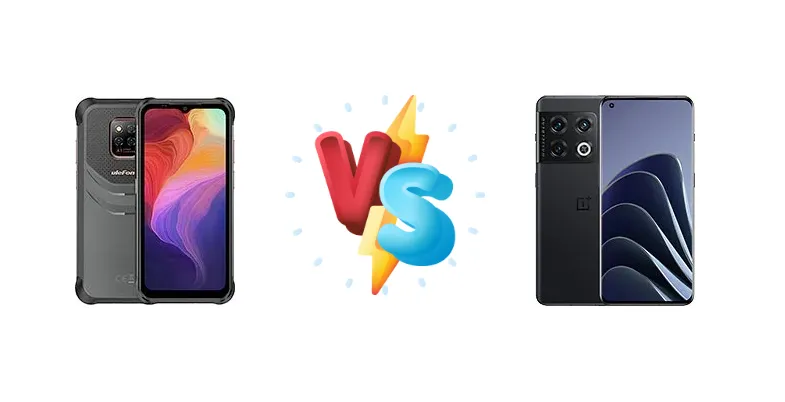
|
🏆 Quick Verdict
The OnePlus 10 Pro is the clear winner for most users, offering superior performance, a stunning display, and a versatile camera system. However, the Ulefone Power Armor 14 excels in durability and battery life, making it ideal for those who need a phone that can withstand harsh conditions. It's a trade-off between premium features and rugged reliability.
| PHONES | ||
|---|---|---|
| Phone Names | Ulefone Power Armor 14 | OnePlus 10 Pro |
| Network | ||
|---|---|---|
| 2G bands | GSM 850 / 900 / 1800 / 1900 | GSM 850 / 900 / 1800 / 1900 |
| 3G bands | HSDPA 850 / 900 / 1700(AWS) / 1900 / 2100 | HSDPA 800 / 850 / 900 / 1700(AWS) / 1900 / 2100 |
| 4G bands | 1, 2, 3, 4, 5, 7, 8, 12, 13, 17, 18, 19, 20, 25, 26, 28, 38, 40 | 1, 2, 3, 4, 5, 7, 8, 12, 13, 17, 18, 19, 20, 25, 26, 28, 30, 32, 38, 39, 40, 41, 46, 48, 66, 71 - International |
| 5G bands | - | 1, 2, 3, 5, 7, 8, 20, 25, 28, 30, 38, 40, 41, 48, 66, 71, 77, 78 SA/NSA - International |
| Speed | HSPA, LTE | HSPA 42.2/5.76 Mbps, LTE (4CA) Cat18 1200/200 Mbps, 5G |
| Technology | GSM / HSPA / LTE | GSM / CDMA / HSPA / EVDO / LTE / 5G |
| - | 1, 3, 5, 8, 28, 40, 41, 78, 79 SA/NSA - India | |
| Launch | ||
|---|---|---|
| Announced | 2021, October 15 | 2022, January 11 |
| Status | Available. Released 2021, October 15 | Available. Released 2022, January 13 |
| Body | ||
|---|---|---|
| Build | - | Glass front (Gorilla Glass Victus), glass back (Gorilla Glass 5), aluminum frame |
| Dimensions | 175.6 x 82.5 x 17.2 mm (6.91 x 3.25 x 0.68 in) | 163 x 73.9 x 8.6 mm (6.42 x 2.91 x 0.34 in) |
| SIM | Nano-SIM + Nano-SIM | · Nano-SIM· Nano-SIM + Nano-SIM |
| Weight | 358.2 g (12.63 oz) | 201 g (7.09 oz) |
| IP68 dust/water resistant (up to 1.5m for 30 min) Drop-to-concrete resistance from up to 1.5m MIL-STD-810G compliant | IP68 dust/water resistant - T-Mobile only (not for use underwater, liquid damage is not covered under warranty) | |
| Display | ||
|---|---|---|
| Protection | Corning Gorilla Glass 3 | Corning Gorilla Glass Victus |
| Resolution | 720 x 1600 pixels, 20:9 ratio (~269 ppi density) | 1440 x 3216 pixels, 20:9 ratio (~525 ppi density) |
| Size | 6.52 inches, 102.6 cm2 (~70.8% screen-to-body ratio) | 6.7 inches, 108.4 cm2 (~90.0% screen-to-body ratio) |
| Type | IPS LCD | LTPO2 Fluid AMOLED, 1B colors, 120Hz, HDR10+, 500 nits (typ), 800 nits (HBM), 1300 nits (peak) |
| - | Always-on display | |
| Platform | ||
|---|---|---|
| CPU | Octa-core (4x2.3 GHz Cortex-A53 & 4x1.8 GHz Cortex-A53) | Octa-core (1x3.00 GHz Cortex-X2 & 3x2.50 GHz Cortex-A710 & 4x1.80 GHz Cortex-A510) |
| Chipset | Mediatek MT6765G Helio G35 (12 nm) | Qualcomm SM8450 Snapdragon 8 Gen 1 (4 nm) |
| GPU | PowerVR GE8320 | Adreno 730 |
| OS | Android 11 | Android 12, upgradable to Android 14, OxygenOS 14 (International), ColorOS (China) |
| Memory | ||
|---|---|---|
| Card slot | microSDXC (uses shared SIM slot) | No |
| Internal | 64GB 4GB RAM | 128GB 8GB RAM, 256GB 8GB RAM, 256GB 12GB RAM, 512GB 12GB RAM |
| eMMC 5.1 | UFS 3.1 | |
| Main Camera | ||
|---|---|---|
| Features | LED flash, HDR, panorama | Laser AF, color spectrum sensor, Hasselblad Color Calibration, Dual-LED dual-tone flash, HDR, panorama |
| Single | 16 MP, f/2.2 | 32 MP, f/2.2, (wide), 1/2.74", 0.8µm |
| Triple | 20 MP, f/1.8, 26mm (wide), 1/2.78", 1.0µm, PDAF 2 MP (macro) Auxiliary lens | 48 MP, f/1.8, 23mm (wide), 1/1.43", 1.12µm, multi-directional PDAF, OIS 8 MP, f/2.4, 77mm (telephoto), 1.0µm, PDAF, OIS, 3.3x optical zoom 50 MP, f/2.2, 14mm, 150˚ (ultrawide), 1/2.76", 0.64µm |
| Video | 1080p@30fps | 8K@24fps, 4K@30/60/120fps, 1080p@30/60/240fps, Auto HDR, gyro-EIS |
| Selfie camera | ||
|---|---|---|
| Features | HDR, panorama | HDR |
| Single | 16 MP, f/2.2 | 32 MP, f/2.2, (wide), 1/2.74", 0.8µm |
| Video | 1080p@30fps | 1080p@30fps, gyro-EIS |
| Sound | ||
|---|---|---|
| 3.5mm jack | Yes | No |
| 35mm jack | Yes | No |
| Loudspeaker | Yes | Yes, with stereo speakers |
| - | 24-bit/192kHz audio | |
| Comms | ||
|---|---|---|
| Bluetooth | 5.0, A2DP, LE | 5.2, A2DP, LE, aptX HD |
| NFC | Yes | Yes |
| Positioning | GPS, GLONASS, GALILEO, BDS | GPS (L1+L5), GLONASS (G1), BDS (B1), GALILEO (E1+E5a) |
| Radio | FM radio, RDS, recording | No |
| USB | USB Type-C 2.0, OTG | USB Type-C 3.1, OTG |
| WLAN | Wi-Fi 802.11 a/b/g/n/ac, dual-band | Wi-Fi 802.11 a/b/g/n/ac/6, dual-band, Wi-Fi Direct |
| Features | ||
|---|---|---|
| Sensors | Fingerprint (side-mounted), accelerometer, proximity, compass | Fingerprint (under display, optical), accelerometer, gyro, proximity, compass, barometer |
| Battery | ||
|---|---|---|
| Charging | 18W wired 15W wireless | 80W wired, PD, 100% in 32 min (International) 65W wired, PD, 58% in 15 min (North America) 50W wireless Reverse wireless |
| Type | Li-Po 10000 mAh | Li-Po 5000 mAh |
| Misc | ||
|---|---|---|
| Colors | Black | Volcanic Black, Emerald Forest, Panda White (Extreme Edition) |
| Models | - | NE2210, NE2211, NE2213, NE2215, NE2217 |
| Price | About 230 EUR | $ 264.39 / C$ 349.99 / £ 360.00 / € 399.99 |
| SAR | - | 1.16 W/kg (head) 0.70 W/kg (body) |
| Tests | ||
|---|---|---|
| Battery life | - | Endurance rating 107h |
| Camera | - | Photo / Video |
| Display | - | Contrast ratio: Infinite (nominal) |
| Loudspeaker | - | -25.2 LUFS (Very good) |
| Performance | - | AnTuTu: 886248 (v9) GeekBench: 3447 (v5.1) GFXBench: 48fps (ES 3.1 onscreen) |
Ulefone Power Armor 14
- Extremely durable and rugged
- Long battery life
- Water and dust resistant
- Affordable
- Lower performance
- Basic display
- Less impressive camera
- Outdated chipset
OnePlus 10 Pro
- Flagship performance
- Stunning display
- Excellent camera system
- Fast charging
- Premium design
- Less durable than the Ulefone
- Higher price
- Potential overheating issues (Snapdragon 8 Gen 1)
- Battery life, while good, not as exceptional as the Ulefone
Display Comparison
The OnePlus 10 Pro boasts a significantly brighter and more vibrant display with a near-infinite contrast ratio. Its 780 nits brightness ensures excellent visibility even in direct sunlight. The Ulefone Power Armor 14 likely has a more basic display, prioritizing durability over visual fidelity. Expect lower brightness and potentially less accurate colors.
Camera Comparison
The OnePlus 10 Pro's camera system is a major highlight, offering excellent image quality and versatile shooting modes. It likely features a high-resolution main sensor, ultrawide lens, and telephoto lens. The Ulefone Power Armor 14's camera is likely more basic, prioritizing functionality over image quality. Expect less detail and dynamic range.
Performance
The OnePlus 10 Pro's Snapdragon 8 Gen 1 chipset is a powerhouse, delivering blazing-fast performance for gaming, multitasking, and demanding applications. The Ulefone Power Armor 14's Helio G35 is a budget-friendly chipset, adequate for everyday tasks but will struggle with intensive workloads. Expect noticeable lag and slower app loading times on the Ulefone.
Battery Life
Both phones offer impressive battery life, with the OnePlus 10 Pro achieving an endurance rating of 107h. The Ulefone Power Armor 14, with its larger battery capacity, is likely to match or exceed this, especially given its less power-hungry processor. The OnePlus 10 Pro's incredibly fast charging (80W wired) is a significant advantage.
Buying Guide
The Ulefone Power Armor 14 is perfect for construction workers, outdoor enthusiasts, or anyone who needs a phone that can survive drops, dust, and water. The OnePlus 10 Pro is best suited for users who prioritize performance, camera quality, and a premium user experience, and don't need extreme durability.