
Ulefone Power Armor 14 vs Cubot KingKong 7: A Head-to-Head Rugged Phone Showdown
| Phones Images | |||||
|---|---|---|---|---|---|
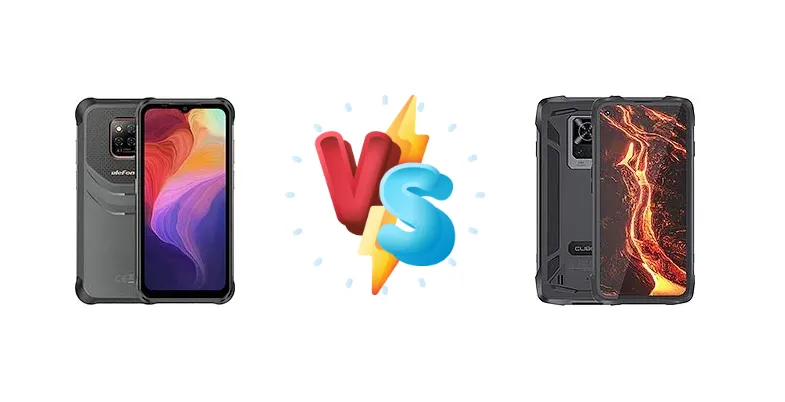
|
🏆 Quick Verdict
For most users prioritizing a smoother overall experience, the Cubot KingKong 7 emerges as the better choice. While the Ulefone Power Armor 14 offers wireless charging, the KingKong 7’s Helio P60 chipset, featuring Cortex-A73 cores, provides a noticeable performance advantage in everyday tasks and light gaming.
| PHONES | ||
|---|---|---|
| Phone Names | Ulefone Power Armor 14 | Cubot KingKong 7 |
| Network | ||
|---|---|---|
| 2G bands | GSM 850 / 900 / 1800 / 1900 | GSM 850 / 900 / 1800 / 1900 |
| 3G bands | HSDPA 850 / 900 / 1700(AWS) / 1900 / 2100 | HSDPA 850 / 900 / 1700(AWS) / 1900 / 2100 |
| 4G bands | 1, 2, 3, 4, 5, 7, 8, 12, 13, 17, 18, 19, 20, 25, 26, 28, 38, 40 | 1, 2, 3, 4, 5, 7, 8, 12, 13, 17, 18, 19, 20, 25, 26, 28, 38, 40, 41, 66 |
| Speed | HSPA, LTE | HSPA, LTE |
| Technology | GSM / HSPA / LTE | GSM / CDMA / HSPA / LTE |
| Launch | ||
|---|---|---|
| Announced | 2021, October 15 | 2022 |
| Status | Available. Released 2021, October 15 | Available. Released 2022 |
| Body | ||
|---|---|---|
| Dimensions | 175.6 x 82.5 x 17.2 mm (6.91 x 3.25 x 0.68 in) | 166.8 x 83.5 x 14 mm (6.57 x 3.29 x 0.55 in) |
| SIM | Nano-SIM + Nano-SIM | Nano-SIM + Nano-SIM |
| Weight | 358.2 g (12.63 oz) | 267 g (9.42 oz) |
| IP68 dust/water resistant (up to 1.5m for 30 min) Drop-to-concrete resistance from up to 1.5m MIL-STD-810G compliant | - | |
| Display | ||
|---|---|---|
| Protection | Corning Gorilla Glass 3 | - |
| Resolution | 720 x 1600 pixels, 20:9 ratio (~269 ppi density) | 1080 x 2300 pixels (~400 ppi density) |
| Size | 6.52 inches, 102.6 cm2 (~70.8% screen-to-body ratio) | 6.36 inches, 100.4 cm2 (~72.1% screen-to-body ratio) |
| Type | IPS LCD | IPS LCD |
| Platform | ||
|---|---|---|
| CPU | Octa-core (4x2.3 GHz Cortex-A53 & 4x1.8 GHz Cortex-A53) | Octa-core (4x2.0 GHz Cortex-A73 & 4x2.0 GHz Cortex-A53) |
| Chipset | Mediatek MT6765G Helio G35 (12 nm) | Mediatek MT6771V/CA Helio P60 (12 nm) |
| GPU | PowerVR GE8320 | Mali-G72 MP3 |
| OS | Android 11 | Android 11 |
| Memory | ||
|---|---|---|
| Card slot | microSDXC (uses shared SIM slot) | microSDXC (uses shared SIM slot) |
| Internal | 64GB 4GB RAM | 128GB 8GB RAM |
| eMMC 5.1 | - | |
| Main Camera | ||
|---|---|---|
| Features | LED flash, HDR, panorama | LED flash |
| Single | 16 MP, f/2.2 | - |
| Triple | 20 MP, f/1.8, 26mm (wide), 1/2.78", 1.0µm, PDAF 2 MP (macro) Auxiliary lens | 64 MP, (wide), AF 16 MP, (ultrawide) 5 MP (macro) |
| Video | 1080p@30fps | Yes |
| Selfie camera | ||
|---|---|---|
| Features | HDR, panorama | - |
| Single | 16 MP, f/2.2 | 32 MP |
| Video | 1080p@30fps | Yes |
| Sound | ||
|---|---|---|
| 3.5mm jack | Yes | - |
| 35mm jack | Yes | Unspecified |
| Loudspeaker | Yes | Yes |
| Comms | ||
|---|---|---|
| Bluetooth | 5.0, A2DP, LE | 4.2, A2DP |
| NFC | Yes | Yes |
| Positioning | GPS, GLONASS, GALILEO, BDS | GPS, GLONASS, BDS |
| Radio | FM radio, RDS, recording | Unspecified |
| USB | USB Type-C 2.0, OTG | USB Type-C, OTG |
| WLAN | Wi-Fi 802.11 a/b/g/n/ac, dual-band | Wi-Fi 802.11 a/b/g/n |
| Features | ||
|---|---|---|
| Sensors | Fingerprint (side-mounted), accelerometer, proximity, compass | Fingerprint (rear-mounted), accelerometer, gyro, proximity, compass |
| Battery | ||
|---|---|---|
| Charging | 18W wired 15W wireless | - |
| Type | Li-Po 10000 mAh | 5000 mAh |
| Misc | ||
|---|---|---|
| Colors | Black | Black |
| Price | About 230 EUR | - |
Ulefone Power Armor 14
- Wireless charging offers added convenience.
- Rugged design provides excellent drop and water resistance.
- Potentially longer battery life due to efficient chipset.
- Helio G35 chipset offers lower performance than the P60.
- Limited multitasking capabilities.
- Camera performance likely to be average.
Cubot KingKong 7
- Helio P60 chipset delivers smoother performance.
- More responsive user experience.
- Better suited for light gaming and multitasking.
- Lacks wireless charging.
- Camera performance likely to be average.
- May not have the same level of battery optimization as the Ulefone.
Display Comparison
Neither Ulefone nor Cubot provide detailed display specifications beyond the basic panel type. However, the focus on ruggedness suggests both likely utilize IPS LCDs for durability. The absence of high refresh rates or advanced features like LTPO is typical in this segment. The real-world impact is similar viewing experiences, but the lack of detailed specs makes precise color accuracy or brightness comparisons impossible. Bezels are likely substantial on both to contribute to drop protection.
Camera Comparison
Detailed camera specs are unavailable, making a direct comparison challenging. However, given the price point and target market, both phones likely feature modest camera setups. The focus is on functionality rather than photographic excellence. It’s safe to assume both will include a primary sensor, potentially a wide-angle lens, and a depth sensor. The inclusion of a 2MP macro lens on either device is largely a marketing tactic, offering limited practical benefit due to the low resolution and lack of optical image stabilization (OIS). Image processing will likely prioritize contrast and saturation over natural color reproduction.
Performance
The core difference lies in the chipsets. The Cubot KingKong 7’s MediaTek Helio P60 (MT6771V/CA) utilizes four Cortex-A73 cores clocked at 2.0 GHz alongside four Cortex-A53 cores. This architecture is demonstrably more powerful than the Ulefone Power Armor 14’s Helio G35 (MT6765G), which features four Cortex-A53 cores at 2.3 GHz and another four at 1.8 GHz. While the G35 has a higher clock speed on some cores, the A73 cores in the P60 offer significantly better single-core performance, translating to snappier app launches and smoother multitasking. The P60 also benefits from a more mature process node, potentially leading to better thermal management under sustained load. Users will notice the difference in app responsiveness and gaming performance.
Battery Life
Both phones likely feature large batteries, typical of rugged devices. While specific capacities aren’t provided, the Ulefone Power Armor 14 distinguishes itself with both 18W wired and 15W wireless charging. The Cubot KingKong 7 is limited to wired charging. The convenience of wireless charging is a significant advantage for the Ulefone, but the P60’s more efficient chipset may offset the difference in battery capacity, resulting in comparable real-world battery life. A full charge time on the Ulefone will be faster with wired charging, but the wireless option provides added flexibility.
Buying Guide
Buy the Ulefone Power Armor 14 if you absolutely require wireless charging in a rugged package and are willing to trade some processing power for that convenience. It’s ideal for users who primarily use their phone for basic communication and media consumption. Buy the Cubot KingKong 7 if you prioritize responsiveness and a more fluid user experience, especially if you occasionally engage in gaming or multitasking. This phone is better suited for users who demand more from their device beyond basic functionality.