
Ulefone Note 14 vs OnePlus Nord N30 SE: A Deep Dive into Budget Smartphone Performance
| Phones Images | |||||
|---|---|---|---|---|---|
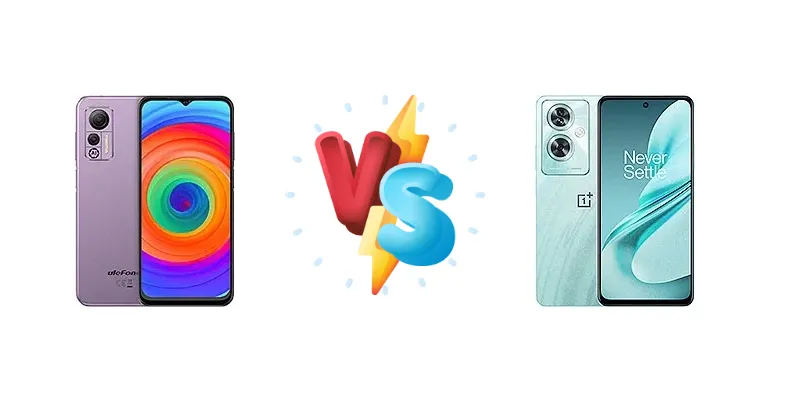
|
🏆 Quick Verdict
For the average user prioritizing responsiveness and future-proofing, the OnePlus Nord N30 SE is the clear winner. Its Dimensity 6020 chipset provides a significantly more powerful and efficient experience than the Ulefone Note 14’s Helio A22, justifying the slight price premium. The 33W charging is a substantial benefit.
| PHONES | ||
|---|---|---|
| Phone Names | Ulefone Note 14 | OnePlus Nord N30 SE |
| Network | ||
|---|---|---|
| 2G bands | GSM 850 / 900 / 1800 / 1900 | GSM 850 / 900 / 1800 / 1900 |
| 3G bands | HSDPA 850 / 900 / 1700(AWS) / 1900 / 2100 | HSDPA 850 / 900 / 1700(AWS) / 1900 / 2100 |
| 4G bands | 1, 2, 3, 4, 5, 7, 8, 12, 17, 19, 20, 28 | 1, 2, 3, 4, 5, 7, 8, 12, 13, 17, 18, 19, 20, 26, 28, 38, 39, 40, 41, 66 |
| 5G bands | - | 1, 3, 5, 7, 8, 20, 28, 38, 40, 41, 66, 77, 78 SA/NSA |
| Speed | HSPA, LTE | HSPA, LTE, 5G |
| Technology | GSM / HSPA / LTE | GSM / HSPA / LTE / 5G |
| eMMC 5.1 | - | |
| Launch | ||
|---|---|---|
| Announced | 2022, September 29 | 2024, January 29 |
| Status | Available. Released 2022, September 29 | Available. Released 2024, January 31 |
| Body | ||
|---|---|---|
| Build | - | Glass front, plastic frame, plastic back |
| Dimensions | 164.8 x 76 x 9 mm (6.49 x 2.99 x 0.35 in) | 165.6 x 76 x 8 mm (6.52 x 2.99 x 0.31 in) |
| SIM | Nano-SIM + Nano-SIM | Nano-SIM + Nano-SIM |
| Weight | 189 g (6.67 oz) | 193 g (6.81 oz) |
| Display | ||
|---|---|---|
| Resolution | 720 x 1600 pixels, 20:9 ratio (~269 ppi density) | 1080 x 2400 pixels, 20:9 ratio (~392 ppi density) |
| Size | 6.52 inches, 102.6 cm2 (~81.9% screen-to-body ratio) | 6.72 inches, 109.0 cm2 (~86.6% screen-to-body ratio) |
| Type | IPS LCD | IPS LCD |
| Platform | ||
|---|---|---|
| CPU | Quad-core 2.0 GHz Cortex-A53 | Octa-core (2x2.2 GHz Cortex-A76 & 6x2.0 GHz Cortex-A55) |
| Chipset | Mediatek MT6761 Helio A22 (12 nm) | Mediatek Dimensity 6020 (7 nm) |
| GPU | PowerVR GE8300 | Mali-G57 MC2 |
| OS | Android 12 | Android 13, OxygenOS 13.1 |
| Memory | ||
|---|---|---|
| Card slot | microSDXC (dedicated slot) | No |
| Internal | 16GB 3GB RAM, 64GB 4GB RAM | 128GB 4GB RAM |
| Main Camera | ||
|---|---|---|
| Dual | 13 MP, f/2.0, (wide), 1.12µm, AF (64/4 model) 8 MP, f/1.8, (wide), 1.12µm, AF (16/3 model) Depth camera | 50 MP, f/1.8, (wide), 1/2.76", 0.64µm, PDAF Auxiliary lens |
| Features | LED flash, HDR, panorama | LED flash, HDR, panorama |
| Single | 5 MP, f/2.0, (wide) | - |
| Video | 1080p@30fps | 1080p@30fps |
| Selfie camera | ||
|---|---|---|
| Single | 5 MP, f/2.0, (wide) | 8 MP, f/2.0, (wide), 1/4.0", 1.12µm |
| Video | 1080p@30fps | 1080p@30fps |
| Sound | ||
|---|---|---|
| 3.5mm jack | Yes | - |
| 35mm jack | Yes | Yes |
| Loudspeaker | Yes | Yes, with stereo speakers |
| Comms | ||
|---|---|---|
| Bluetooth | 5.0, A2DP, LE | 5.3, A2DP, LE |
| NFC | No | Yes |
| Positioning | GPS, GLONASS, GALILEO, BDS | GPS, GALILEO, GLONASS, BDS |
| Radio | Stereo FM radio, RDS, recording | No |
| USB | USB Type-C 2.0 | USB Type-C 2.0, OTG |
| WLAN | Wi-Fi 802.11 a/b/g/n/ac, dual-band | Wi-Fi 802.11 a/b/g/n/ac, dual-band |
| Features | ||
|---|---|---|
| Sensors | Fingerprint (side-mounted), accelerometer, proximity | Fingerprint (side-mounted), accelerometer, gyro, proximity, compass |
| Battery | ||
|---|---|---|
| Charging | - | 33W wired, 51% in 30 min |
| Type | Li-Po 4500 mAh | 5000 mAh |
| Misc | ||
|---|---|---|
| Colors | Midnight Black, Mint Green, Lavender Purple | Black Satin, Cyan |
| Models | - | CPH2605 |
| Price | About 100 EUR | About 510 EUR |
Ulefone Note 14
- Lowest possible price point
- Functional for basic tasks
- Potentially longer battery life (depending on capacity)
- Significantly slower performance
- Slower charging speeds
- Likely inferior display quality
OnePlus Nord N30 SE
- Much faster and more responsive performance
- 33W fast charging
- Likely better software experience
- Higher price than Ulefone Note 14
- Camera performance likely still limited
- Battery life may be shorter than Note 14 (depending on capacity)
Display Comparison
Neither device boasts a standout display. Given the context data focuses on processing power, we can infer both likely utilize LCD panels. The Ulefone Note 14, given its price point, likely features lower brightness and narrower color gamut coverage. The N30 SE, benefiting from OnePlus’s brand reputation, likely has a slightly more refined display experience, though specifics like resolution and refresh rate are unknown. Bezels are likely comparable, reflecting the budget nature of both devices.
Camera Comparison
Without detailed camera specifications, it’s safe to assume both phones feature modest camera systems. The Ulefone Note 14 likely relies on a simpler image processing pipeline. The OnePlus Nord N30 SE, while still budget-focused, likely benefits from OnePlus’s software optimizations, potentially delivering better dynamic range and color accuracy. The presence of a 2MP macro camera on either device is largely a marketing gimmick, offering limited practical benefit due to the small sensor size and lack of optical image stabilization (OIS).
Performance
The performance disparity is the most significant difference. The Ulefone Note 14’s MediaTek Helio A22, a quad-core processor built on a 12nm process, is designed for extremely basic tasks. The OnePlus Nord N30 SE’s MediaTek Dimensity 6020, an octa-core chip fabricated on a more efficient 7nm process, represents a substantial leap forward. The Dimensity 6020’s Cortex-A76 cores provide significantly higher single-core performance, crucial for app launch speeds and general responsiveness, while the six Cortex-A55 cores handle background tasks efficiently. This translates to a smoother, more enjoyable user experience on the N30 SE, especially when multitasking or running demanding applications.
Battery Life
Battery capacity is not specified for either device, but the OnePlus Nord N30 SE’s 33W wired charging is a major advantage. This allows for a 51% charge in just 30 minutes, significantly reducing downtime. The Ulefone Note 14 likely supports slower charging speeds, meaning longer periods tethered to a power outlet. While a larger battery capacity on the Ulefone Note 14 could partially offset this, the convenience of faster charging is a compelling benefit for the N30 SE.
Buying Guide
Buy the Ulefone Note 14 if you absolutely need the lowest possible price and only require basic smartphone functionality like calls, texts, and light social media use. It’s a viable option for first-time smartphone users or as a backup device. Buy the OnePlus Nord N30 SE if you prioritize smoother multitasking, occasional gaming, faster charging, and a more refined software experience – even on a tight budget.