
Ulefone Note 12 vs. Motorola Moto G Power (2022): A Deep Dive into Budget Smartphone Performance
| Phones Images | |||||
|---|---|---|---|---|---|
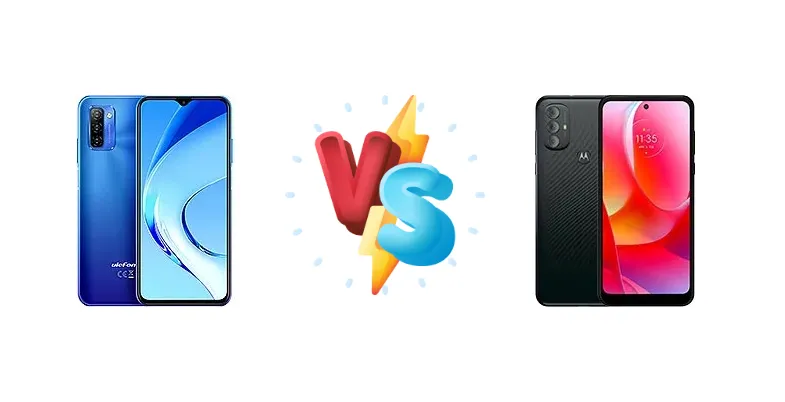
|
🏆 Quick Verdict
For the average user prioritizing a slightly smoother, more optimized experience, the Motorola Moto G Power (2022) is the better choice. While both phones offer similar battery life due to their 10W charging, the Helio G37 chipset generally provides a more responsive user interface and slightly better application performance than the Unisoc Tiger T310.
| PHONES | ||
|---|---|---|
| Phone Names | Ulefone Note 12 | Motorola Moto G Power (2022) |
| Network | ||
|---|---|---|
| 2G bands | GSM 850 / 900 / 1800 / 1900 | GSM 850 / 900 / 1800 / 1900 |
| 3G bands | HSDPA 850 / 900 / 1700(AWS) / 1900 / 2100 | HSDPA 850 / 900 / 1700(AWS) / 1900 / 2100 |
| 4G bands | 1, 2, 3, 4, 5, 7, 8, 12, 17, 19, 20, 26, 66 | 1, 2, 3, 4, 5, 7, 8, 12, 13, 14, 17, 25, 26, 29, 30, 38, 41, 66, 71 - USA |
| Speed | HSPA, LTE | HSPA, LTE |
| Technology | GSM / HSPA / LTE | GSM / HSPA / LTE |
| Launch | ||
|---|---|---|
| Announced | 2022, July | 2021, November 17 |
| Status | Available. Released 2022, July | Available. Released 2022, February 22 |
| Body | ||
|---|---|---|
| Build | - | Glass front, plastic back, plastic frame |
| Dimensions | 173.6 x 79.1 x 10.2 mm (6.83 x 3.11 x 0.40 in) | 167.2 x 76.5 x 9.4 mm (6.58 x 3.01 x 0.37 in) |
| SIM | Nano-SIM + Nano-SIM | Nano-SIM |
| Weight | 237 g (8.36 oz) | 203 g (7.16 oz) |
| - | Water-repellent coating | |
| Display | ||
|---|---|---|
| Resolution | 720 x 1640 pixels (~263 ppi density) | 720 x 1600 pixels, 20:9 ratio (~270 ppi density) |
| Size | 6.82 inches, 110.5 cm2 (~80.4% screen-to-body ratio) | 6.5 inches, 102.0 cm2 (~79.7% screen-to-body ratio) |
| Type | IPS LCD | IPS LCD, 90Hz |
| Platform | ||
|---|---|---|
| CPU | Quad-core (1x2.0 GHz Cortex-A75 & 3x1.8 GHz Cortex-A55) | - |
| Chipset | Unisoc Tiger T310 (12 nm) | Mediatek MT6765 Helio G37 (12 nm) |
| GPU | PowerVR GE8300 | - |
| OS | Android 11 | Android 11 |
| Memory | ||
|---|---|---|
| Card slot | microSDXC (dedicated slot) | microSDXC (dedicated slot) |
| Internal | 128GB 4GB RAM | 64GB 4GB RAM, 128GB 4GB RAM |
| - | eMMC 5.1 | |
| Main Camera | ||
|---|---|---|
| Features | LED flash, HDR, panorama | LED flash, HDR |
| Single | 8 MP | - |
| Triple | 13 MP, (wide), AF 2 MP (macro) Auxiliary lens | 50 MP, f/1.8, (wide), 0.65µm, PDAF 2 MP (macro) Auxiliary lens |
| Video | 1080p@30fps | 1080p@30fps, gyro-EIS |
| Selfie camera | ||
|---|---|---|
| Features | HDR | - |
| Single | 8 MP | 8 MP, f/2.0, 1.12µm |
| Video | Yes | 1080p@30fps |
| Sound | ||
|---|---|---|
| 3.5mm jack | Yes | Yes |
| 35mm jack | Yes | Yes |
| Loudspeaker | Yes | Yes |
| Comms | ||
|---|---|---|
| Bluetooth | 4.2, A2DP | 5.0, A2DP, LE |
| NFC | No | No |
| Positioning | GPS, GLONASS, BDS | GPS, GLONASS, GALILEO |
| Radio | Stereo FM radio, RDS, recording | Unspecified |
| USB | USB Type-C 2.0 | USB Type-C 2.0 |
| WLAN | Wi-Fi 802.11 b/g/n | Wi-Fi 802.11 a/b/g/n/ac, dual-band, Wi-Fi Direct |
| Features | ||
|---|---|---|
| Sensors | Fingerprint (side-mounted), accelerometer, proximity | Fingerprint (side-mounted), accelerometer, gyro, proximity, compass, barometer |
| Battery | ||
|---|---|---|
| Charging | 10W wired | 10W wired |
| Type | Li-Po 7700 mAh | Li-Po 5000 mAh |
| Misc | ||
|---|---|---|
| Colors | Black, Red, Blue | Black |
| Price | - | About 70 EUR |
Ulefone Note 12
- Potentially lower price point
- More powerful single core (Cortex-A75)
- May offer unique software features
- Quad-core processor limits multitasking
- Unisoc chipset has less software support
- Likely slower app loading times
Motorola Moto G Power (2022)
- Octa-core processor for better multitasking
- MediaTek chipset with wider software compatibility
- Generally more refined user experience
- May be slightly more expensive
- 10W charging is slow
- Potentially less RAM than competitors
Display Comparison
Neither Ulefone nor Motorola provide display specifications beyond size in their marketing materials. Given the price point, both likely utilize IPS LCD panels. The absence of high refresh rates or advanced features like LTPO is expected. Bezels are likely to be substantial on both devices, contributing to a larger overall footprint. Color accuracy will likely be standard for this segment, prioritizing power efficiency over color fidelity.
Camera Comparison
Detailed camera specifications are scarce for both devices. It’s safe to assume both feature a primary camera and potentially a depth or macro sensor. The image processing capabilities of both phones will likely be basic, relying heavily on software algorithms to enhance image quality. Without knowing sensor sizes or lens apertures, it’s difficult to definitively say which phone will produce better photos. However, Motorola generally invests more in camera software optimization, potentially giving the Moto G Power a slight edge in image quality.
Performance
The core difference lies in the chipsets. The Motorola Moto G Power (2022) utilizes the MediaTek Helio G37, a 12nm chip with an octa-core configuration. The Ulefone Note 12 features the Unisoc Tiger T310, also a 12nm process, but with a quad-core setup – a single Cortex-A75 at 2.0 GHz and three Cortex-A55 cores at 1.8 GHz. The Helio G37’s octa-core design provides a theoretical advantage in multi-threaded tasks and gaming, despite both being built on the same 12nm node. The Cortex-A75 in the Ulefone Note 12 is a more powerful core than the A55s used in the G37, but the lack of additional cores limits its overall throughput. Both phones will likely struggle with demanding games, but the G37 should offer a slightly smoother experience. RAM configurations are not specified, but both will likely be limited to 3-4GB, further impacting multitasking performance.
Battery Life
Both the Ulefone Note 12 and the Motorola Moto G Power (2022) are equipped with 10W wired charging. This is a significant limitation in 2024, resulting in lengthy charge times – likely exceeding 3 hours for a full charge. Battery capacity is not specified for either device, but given their focus on affordability, both likely feature batteries in the 5000mAh range. The efficiency of the respective chipsets will play a role in real-world battery life, but both should comfortably last a full day with moderate usage. The slow charging speed is a major drawback for both devices.
Buying Guide
Buy the Ulefone Note 12 if you need a phone primarily for basic communication – calls, texts, and light social media – and are comfortable with potentially slower app loading times. Buy the Motorola Moto G Power (2022) if you prefer a more fluid user experience, occasionally play mobile games, or value a brand with a stronger track record of software updates and support.