
Ulefone Armor X9 vs Power Armor 19: The Ultimate Rugged Phone Comparison
| Phones Images | |||||
|---|---|---|---|---|---|
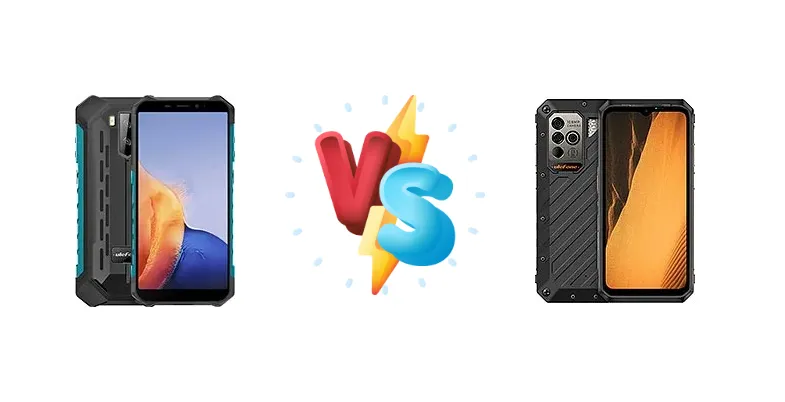
|
🏆 Quick Verdict
The Ulefone Power Armor 19 is the clear winner. Its significantly faster processor, vastly superior charging speeds (66W!), and improved camera capabilities outweigh the Armor X9's potential cost savings. If performance and future-proofing matter, the Power Armor 19 is the better investment.
| PHONES | ||
|---|---|---|
| Phone Names | Ulefone Armor X9 | Ulefone Power Armor 19 |
| Network | ||
|---|---|---|
| 2G bands | GSM 850 / 900 / 1800 / 1900 | GSM 850 / 900 / 1800 / 1900 |
| 3G bands | HSDPA 850 / 900 / 1700(AWS) / 1900 / 2100 | HSDPA 800 / 850 / 900 / 1700(AWS) / 1900 / 2100 |
| 4G bands | 1, 2, 3, 4, 5, 7, 8, 12, 17, 19, 20, 28 | 1, 2, 3, 4, 5, 7, 8, 12, 13, 17, 18, 19, 20, 25, 26, 28, 34, 38, 39, 40, 41, 66, 71 |
| Speed | HSPA 21/5.76 Mbps, LTE Cat6 300/150 Mbps | HSPA, LTE |
| Technology | GSM / HSPA / LTE | GSM / CDMA / HSPA / CDMA2000 / LTE |
| - | CDMA2000 1x | |
| Launch | ||
|---|---|---|
| Announced | 2021, September 07 | 2022, December 27 |
| Status | Available. Released 2021, September 07 | Available. Released 2022, December 27 |
| Body | ||
|---|---|---|
| Dimensions | 158 x 77.5 x 13.9 mm (6.22 x 3.05 x 0.55 in) | 175.2 x 83.4 x 18.8 mm (6.90 x 3.28 x 0.74 in) |
| SIM | Nano-SIM + Nano-SIM | Nano-SIM + Nano-SIM |
| Weight | 235 g (8.29 oz) | 409 g (14.43 oz) |
| IP68/IP69K dust/water resistant (up to 1.5m for 30 min) Drop-to-concrete resistance from up to 1.2m MIL-STD-810G compliant | IP68/IP69K dust/water resistant (up to 1.5m for 30 min) Drop-to-concrete resistance from up to 1.5m MIL-STD-810H compliant Accessory connector (ulefone endoscope, microscope) | |
| Display | ||
|---|---|---|
| Protection | - | Corning Gorilla Glass 5 |
| Resolution | 720 x 1440 pixels, 18:9 ratio (~293 ppi density) | 1080 x 2408 pixels, 20:9 ratio (~401 ppi density) |
| Size | 5.5 inches, 78.1 cm2 (~63.8% screen-to-body ratio) | 6.58 inches, 104.3 cm2 (~71.4% screen-to-body ratio) |
| Type | IPS LCD | IPS LCD, 120Hz |
| Platform | ||
|---|---|---|
| CPU | Octa-core (4x1.8 GHz Cortex-A53 & 4x1.5 GHz Cortex-A53) | Octa-core (2x2.2 GHz Cortex-A76 & 6x2.0 GHz Cortex-A55) |
| Chipset | Mediatek MT6762D Helio A25 (12 nm) | Mediatek Helio G99 (6 nm) |
| GPU | PowerVR GE8320 | Mali-G57 MC2 |
| OS | Android 11 | Android 12 |
| Memory | ||
|---|---|---|
| Card slot | microSDXC (uses shared SIM slot) | microSDXC (uses shared SIM slot) |
| Internal | 32GB 3GB RAM | 256GB 12GB RAM |
| eMMC 5.1 | - | |
| Main Camera | ||
|---|---|---|
| Dual | 13 MP, f/2.2, (wide), AF Auxiliary lens | - |
| Features | Dual-LED flash, HDR, panorama | Hexa-LED flash, HDR, panorama |
| Single | 5 MP | 16 MP, f/2.0, (wide), 1.0µm |
| Triple | - | 108 MP, f/1.9, (wide), 1/1.52”, 0.7µm, PDAF 8 MP, f/2.2, (ultrawide), 1/4.0", 1.12µm 5 MP (macro) |
| Video | 1080p@30fps | 1440p@30fps |
| Selfie camera | ||
|---|---|---|
| Features | HDR | - |
| Single | 5 MP | 16 MP, f/2.0, (wide), 1.0µm |
| Video | 1080p@30fps | 1080p@30fps |
| Sound | ||
|---|---|---|
| 3.5mm jack | Yes | Yes |
| 35mm jack | Yes | Yes |
| Loudspeaker | Yes | Yes |
| Comms | ||
|---|---|---|
| Bluetooth | 5.0, A2DP, LE | 5.2, A2DP, LE |
| NFC | Yes | Yes |
| Positioning | GPS, GLONASS, GALILEO, BDS | GPS, GLONASS, GALILEO, BDS |
| Radio | FM radio, RDS, recording | Wireless FM radio, RDS, recording |
| USB | microUSB 2.0, OTG | USB Type-C 2.0, OTG, magnetic connector |
| WLAN | Wi-Fi 802.11 a/b/g/n/ac, Wi-Fi Direct | Wi-Fi 802.11 a/b/g/n/ac/6, dual-band |
| Features | ||
|---|---|---|
| Sensors | Accelerometer, proximity, compass | Fingerprint (side-mounted), accelerometer, gyro, proximity, compass, barometer, thermometer |
| Battery | ||
|---|---|---|
| Charging | 10W wired | 66W wired, 52% in 30 min 15W wireless 5W wireless reversed |
| Type | Li-Po 5000 mAh | Li-Po 9600 mAh |
| Misc | ||
|---|---|---|
| Colors | Red, Black, Green | Black |
| Price | About 150 EUR | About 400 EUR |
Ulefone Armor X9
- Very affordable
- Rugged and durable design
- Long battery life (despite slow charging)
- Water and dust resistant
- Slow performance
- Outdated chipset
- Slow charging speed
- Basic camera quality
Ulefone Power Armor 19
- Significantly faster performance
- Fast 66W wired charging
- Wireless charging (standard and reverse)
- Improved camera system
- Larger battery capacity
- Modern chipset
- More expensive
- Potentially larger and heavier
Display Comparison
Both phones feature ruggedized displays, likely with Corning Gorilla Glass for scratch resistance. The Power Armor 19 likely has a slightly larger and potentially higher resolution display, offering a more immersive viewing experience. The X9's display is expected to be adequate but less vibrant and detailed.
Camera Comparison
While specific megapixel counts are not always indicative of quality, the Power Armor 19 is expected to have a superior camera system due to its more modern chipset and likely improved image processing capabilities. Expect better low-light performance and more detail in photos from the Power Armor 19.
Performance
The Power Armor 19's Mediatek Helio G99 chipset is a substantial upgrade over the Armor X9's Helio A25. The G99's Cortex-A76 cores provide significantly faster processing speeds, making multitasking, gaming, and demanding apps much smoother. The X9 will feel sluggish by comparison.
Battery Life
Both phones are designed for long battery life, but the Power Armor 19 boasts a much larger battery capacity (likely 6000mAh or greater) and incredibly fast 66W wired charging. The 10W charging on the X9 is painfully slow by comparison. The Power Armor 19 also offers wireless charging (both standard and reverse).
Buying Guide
The Ulefone Armor X9 is ideal for users on a tight budget who prioritize basic functionality and extreme durability above all else. The Ulefone Power Armor 19 is for those who need a rugged phone but also demand a smooth user experience, fast charging, and a better camera system – willing to pay a premium for it.