
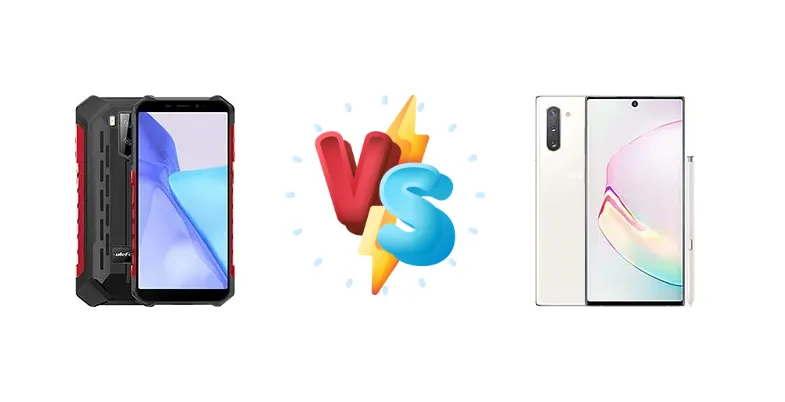
Ulefone Armor X9 Pro vs. Samsung Galaxy Note10: A Clash of Titans
| Phones Images | |||||
|---|---|---|---|---|---|
|
🏆 Quick Verdict
The Samsung Galaxy Note10 is the clear winner in almost every category, boasting superior performance, a stunning display, and a versatile camera system. However, the Ulefone Armor X9 Pro excels in durability and affordability, making it a compelling choice for those needing a tough phone on a budget.
| PHONES | ||
|---|---|---|
| Phone Names | Ulefone Armor X9 Pro | Samsung Galaxy Note10 |
| Network | ||
|---|---|---|
| 2G bands | GSM 850 / 900 / 1800 / 1900 | GSM 850 / 900 / 1800 / 1900 |
| 3G bands | HSDPA 850 / 900 / 1700(AWS) / 1900 / 2100 | HSDPA 850 / 900 / 1700(AWS) / 1900 / 2100 |
| 4G bands | 1, 2, 3, 4, 5, 7, 8, 12, 17, 19, 20, 28 | 1, 2, 3, 4, 5, 7, 8, 12, 13, 17, 18, 19, 20, 25, 26, 28, 32, 38, 39, 40, 41, 66 - Global, LATAM |
| Speed | HSPA 21/5.76 Mbps, LTE Cat6 300/150 Mbps | HSPA 42.2/5.76 Mbps, LTE (7CA) Cat20 2000/150 Mbps |
| Technology | GSM / HSPA / LTE | GSM / CDMA / HSPA / EVDO / LTE |
| - | 1, 2, 3, 4, 5, 7, 8, 12, 13, 18, 19, 20, 25, 29, 30, 38, 39, 40, 41, 46, 66, 71 - Canada | |
| Launch | ||
|---|---|---|
| Announced | 2021, September 07 | 2019, August 07. Released 2019, August 23 |
| Status | Available. Released 2021, September 07 | Discontinued |
| Body | ||
|---|---|---|
| Build | - | Glass front (Gorilla Glass 6), glass back (Gorilla Glass 6), aluminum frame |
| Dimensions | 158 x 77.5 x 13.9 mm (6.22 x 3.05 x 0.55 in) | 151 x 71.8 x 7.9 mm (5.94 x 2.83 x 0.31 in) |
| SIM | Nano-SIM + Nano-SIM | · Nano-SIM· Nano-SIM + Nano-SIM |
| Weight | 235 g (8.29 oz) | 168 g (5.93 oz) |
| IP68/IP69K dust/water resistant (up to 1.5m for 30 min) Drop-to-concrete resistance from up to 1.2m MIL-STD-810G compliant | IP68 dust/water resistant (up to 1.5m for 30 min) Stylus, 42ms latency (Bluetooth integration, accelerometer, gyro) | |
| Display | ||
|---|---|---|
| Protection | - | Corning Gorilla Glass 6 |
| Resolution | 720 x 1440 pixels, 18:9 ratio (~293 ppi density) | 1080 x 2280 pixels, 19:9 ratio (~401 ppi density) |
| Size | 5.5 inches, 78.1 cm2 (~63.8% screen-to-body ratio) | 6.3 inches, 98.6 cm2 (~90.9% screen-to-body ratio) |
| Type | IPS LCD | Dynamic AMOLED, HDR10+ |
| - | Always-on display | |
| Platform | ||
|---|---|---|
| CPU | Octa-core (4x1.8 GHz Cortex-A53 & 4x1.5 GHz Cortex-A53) | Octa-core (2x2.73 GHz Mongoose M4 & 2x2.4 GHz Cortex-A75 & 4x1.9 GHz Cortex-A55) - EMEA/LATAMOcta-core (1x2.84 GHz Kryo 485 & 3x2.42 GHz Kryo 485 & 4x1.78 GHz Kryo 485) - USA/China |
| Chipset | Mediatek MT6762D Helio A25 (12 nm) | Exynos 9825 (7 nm) - EMEA/LATAMQualcomm SM8150 Snapdragon 855 (7 nm) - USA/China |
| GPU | PowerVR GE8320 | Mali-G76 MP12 - EMEA/LATAMAdreno 640 - USA/China |
| OS | Android 11 | Android 9.0 (Pie), upgradable to Android 12, One UI 4 |
| Memory | ||
|---|---|---|
| Card slot | microSDXC (uses shared SIM slot) | No |
| Internal | 64GB 4GB RAM | 256GB 8GB RAM |
| eMMC 5.1 | UFS 3.0 | |
| Main Camera | ||
|---|---|---|
| Dual | 13 MP, f/2.2, (wide), AF Auxiliary lens | - |
| Features | Dual-LED flash, HDR, panorama | LED flash, auto-HDR, panorama |
| Single | 5 MP | - |
| Triple | - | 12 MP, f/1.5-2.4, 27mm (wide), 1/2.55", 1.4µm, dual pixel PDAF, OIS 12 MP, f/2.1, 52mm (telephoto), 1/3.6", 1.0µm, PDAF, OIS, 2x optical zoom 16 MP, f/2.2, 12mm (ultrawide), 1/3.1", 1.0µm, Super Steady video |
| Video | 1080p@30fps | 4K@30/60fps, 1080p@30/60/240fps, 720p@960fps, HDR10+, stereo sound rec., gyro-EIS & OIS |
| Selfie camera | ||
|---|---|---|
| Features | HDR | HDR |
| Single | 5 MP | 10 MP, f/2.2, 26mm (wide), 1/3", 1.22µm, dual pixel PDAF |
| Video | 1080p@30fps | 4K@30/60fps, 1080p@30fps |
| Sound | ||
|---|---|---|
| 3.5mm jack | Yes | No |
| 35mm jack | Yes | No |
| Loudspeaker | Yes | Yes, with stereo speakers |
| - | 32-bit/384kHz audio Tuned by AKG | |
| Comms | ||
|---|---|---|
| Bluetooth | 5.0, A2DP, LE | 5.0, A2DP, LE, aptX |
| NFC | Yes | Yes |
| Positioning | GPS, GLONASS, GALILEO, BDS | GPS, GLONASS, BDS, GALILEO |
| Radio | FM radio, RDS, recording | FM radio (USA & Canada only) |
| USB | microUSB 2.0, OTG | USB Type-C 3.1 |
| WLAN | Wi-Fi 802.11 a/b/g/n/ac, Wi-Fi Direct | Wi-Fi 802.11 a/b/g/n/ac/6, dual-band, Wi-Fi Direct |
| Features | ||
|---|---|---|
| Sensors | Accelerometer, proximity, compass | Fingerprint (under display, ultrasonic), accelerometer, gyro, proximity, compass, barometer |
| - | Samsung DeX, Samsung Wireless DeX (desktop experience support) ANT+ Bixby natural language commands and dictation Samsung Pay (Visa, MasterCard certified) | |
| Battery | ||
|---|---|---|
| Charging | 10W wired | 25W wired, PD3.0 12W wireless (Qi) 4.5W reverse wireless |
| Type | Li-Po 5000 mAh | Li-Ion 3500 mAh, non-removable |
| Misc | ||
|---|---|---|
| Colors | Red, Black, Green | Aura Glow, Aura White, Aura Black, Aura Pink, Aura Red |
| Models | - | SM-N970F, SM-N970U, SM-N970U1, SM-N9700, SM-N970W, SM-N9700, SM-N970N, SM-N970X |
| Price | About 160 EUR | About 590 EUR |
| SAR | - | 0.85 W/kg (head) 1.08 W/kg (body) |
| SAR EU | - | 0.21 W/kg (head) 1.52 W/kg (body) |
| Tests | ||
|---|---|---|
| Audio quality | - | Noise -92.8dB / Crosstalk -94.0dB |
| Battery life | - | Endurance rating 92h |
| Camera | - | Photo / Video |
| Display | - | Contrast ratio: Infinite (nominal) |
| Loudspeaker | - | -26.2 LUFS (Good) |
| Performance | - | AnTuTu: 344442 (v7), 452400 (v8) GeekBench: 10353 (v4.4), 2241 (v5.1) GFXBench: 28fps (ES 3.1 onscreen) |
Ulefone Armor X9 Pro
- Extremely durable and rugged
- Affordable price
- Decent battery life
- Water and dust resistant (IP68/IP69K)
- Loudspeaker
- Low performance
- Mediocre camera
- Slow charging
- Basic display
- Outdated chipset
Samsung Galaxy Note10
- Exceptional performance
- Stunning display
- Excellent camera system
- Fast charging (wired & wireless)
- Premium design and build quality
- S Pen functionality
- Expensive
- Battery life could be better (though still good)
- No microSD card slot
- Large size
Display Comparison
The Samsung Galaxy Note10's display is a significant advantage. Its 789 nits brightness and infinite contrast ratio provide vibrant colors and excellent visibility, even in direct sunlight. The Armor X9 Pro's display is adequate but lacks the Note10's clarity and vibrancy. The Note10 also supports HDR10+ for enhanced dynamic range.
Camera Comparison
The Galaxy Note10's camera system is far more advanced, offering superior image quality, more features (like optical zoom), and better video recording capabilities. The Armor X9 Pro's camera is functional but produces noticeably lower-quality photos, especially in low light. The Note10's software processing is also significantly better.
Performance
The Note10's Exynos 9825 or Snapdragon 855 chipset (depending on region) blows the Armor X9 Pro's Helio A25 out of the water. Expect significantly faster app loading, smoother multitasking, and better gaming performance on the Note10. The Armor X9 Pro is sufficient for basic tasks but struggles with demanding applications.
Battery Life
While both phones boast impressive endurance ratings (92h for the Note10), the Note10's faster charging (25W wired, 12W wireless, 4.5W reverse wireless) provides a considerable advantage. The Armor X9 Pro's 10W wired charging is considerably slower.
Buying Guide
The Ulefone Armor X9 Pro is ideal for outdoor enthusiasts, construction workers, or anyone needing a phone that can withstand harsh conditions. The Samsung Galaxy Note10 is perfect for users who prioritize performance, camera quality, and a premium experience, and who don't need extreme durability.