
Ulefone Armor X31 vs. Armor 9E: Which Rugged Phone Reigns Supreme?
| Phones Images | |||||
|---|---|---|---|---|---|
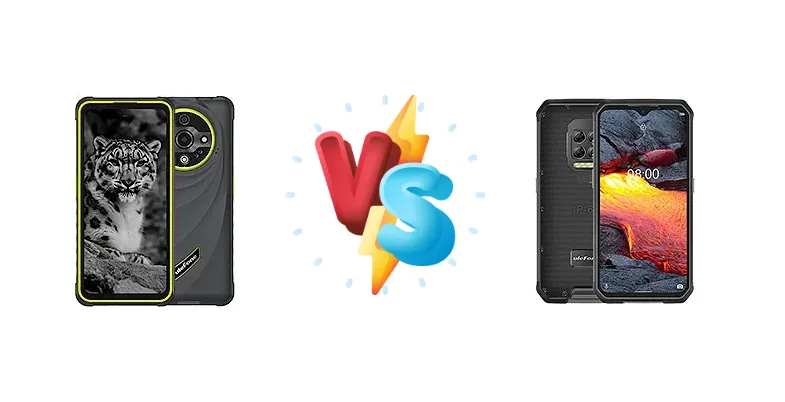
|
🏆 Quick Verdict
For most users prioritizing all-day battery life and a modern chipset, the Ulefone Armor X31 is the better choice. Its Helio G91 offers a slight performance edge and boasts an impressive 81-hour endurance rating. However, users who prioritize raw CPU power, even at a slight battery cost, may find the Armor 9E appealing.
| PHONES | ||
|---|---|---|
| Phone Names | Ulefone Armor X31 | Ulefone Armor 9E |
| Network | ||
|---|---|---|
| 2G bands | GSM 850 / 900 / 1800 / 1900 | GSM 850 / 900 / 1800 / 1900 |
| 3G bands | HSDPA 800 / 850 / 900 / 1700(AWS) / 1900 / 2100 | HSDPA 850 / 900 / 1700(AWS) / 1900 / 2100 |
| 4G bands | 1, 2, 3, 4, 5, 7, 8, 12, 13, 17, 18, 19, 20, 25, 26, 28, 34, 38, 39, 40, 41, 66, 71 | 1, 2, 3, 4, 5, 7, 8, 12, 13, 17, 18, 19, 20, 25, 26, 28, 34, 38, 39, 40, 41, 66 |
| Speed | HSPA, LTE | HSPA 42.2/11.5 Mbps, LTE Cat12 600/150 Mbps |
| Technology | GSM / CDMA / HSPA / LTE | GSM / CDMA / HSPA / EVDO / LTE |
| - | CDMA2000 1xEV-DO | |
| Launch | ||
|---|---|---|
| Announced | 2025, April | 2020, September 08. Released 2020, September 08 |
| Status | Available. Released 2025, April | Discontinued |
| Body | ||
|---|---|---|
| Build | - | Front glass, aluminum back with rubber, aluminum frame |
| Dimensions | 173.8 x 82 x 13.7 mm (6.84 x 3.23 x 0.54 in) | 168.2 x 82 x 15 mm (6.62 x 3.23 x 0.59 in) |
| SIM | Nano-SIM + Nano-SIM | Nano-SIM + Nano-SIM |
| Weight | 305.5 g (10.79 oz) | 324 g (11.43 oz) |
| - | IP68/IP69K dust/water resistant (up to 1.5m for 30 min) Drop-to-concrete resistance from up to 1.2m MIL-STD-810G compliant | |
| Display | ||
|---|---|---|
| Protection | Corning Gorilla Glass 5, Mohs level 4 | Scratch-resistant glass, oleophobic coating |
| Resolution | 720 x 1612 pixels, 20:9 ratio (~269 ppi density) | 1080 x 2340 pixels, 19.5:9 ratio (~409 ppi density) |
| Size | 6.56 inches, 103.4 cm2 (~72.5% screen-to-body ratio) | 6.3 inches, 97.4 cm2 (~70.6% screen-to-body ratio) |
| Type | IPS LCD, 90Hz, 600 nits | IPS LCD |
| Platform | ||
|---|---|---|
| CPU | Octa-core (2x2.0 GHz Cortex-A75 & 6x1.8 GHz Cortex-A55) | Octa-core (2x2.2 GHz Cortex-A75 & 6x2.0 GHz Cortex-A55) |
| Chipset | Mediatek Helio G91 (12 nm) | Mediatek MT6779 Helio P90 (12 nm) |
| GPU | Mali-G52 MC2 | PowerVR GM9446 |
| OS | Android 14 | Android 10 |
| Memory | ||
|---|---|---|
| Card slot | microSDXC (dedicated slot) | microSDXC (uses shared SIM slot) |
| Internal | 128GB 6GB RAM | 128GB 8GB RAM |
| - | UFS 2.1 | |
| Main Camera | ||
|---|---|---|
| Features | LED flash, HDR, panorama | Quad-LED flash, HDR, panorama |
| Quad | - | 64 MP, f/1.9, 26mm (wide), 1/1.72", 0.8µm, PDAF 8 MP, f/2.4, 100˚ (ultrawide), 1/4.0", 1.12µm 2 MP (macro) Auxiliary lens |
| Triple | 48 MP, f/1.8, (wide), 0.8µm, PDAF 20 MP, f/1.8, (night vision), 2 infrared lights 2 MP (macro) | - |
| Video | 1440p@30fps, 1080p@30fps | 4K@30fps, 1080p@30fps |
| Selfie camera | ||
|---|---|---|
| Features | - | HDR, panorama |
| Single | 16 MP, f/2.3, (wide), 1.0µm | 8 MP, f/2.2 |
| Video | 1080p@30fps | 1080p@30fps |
| Sound | ||
|---|---|---|
| 3.5mm jack | - | Yes |
| 35mm jack | Yes | Yes |
| Loudspeaker | Yes | Yes |
| Comms | ||
|---|---|---|
| Bluetooth | 5.2, A2DP, LE | 5.0, A2DP, LE |
| Infrared port | Yes | - |
| NFC | Yes | Yes |
| Positioning | GPS, GLONASS, GALILEO, BDS | GPS, GLONASS, GALILEO, BDS |
| Radio | Wireless FM radio | FM radio, RDS, recording |
| USB | USB Type-C 2.0, OTG | USB Type-C 2.0, OTG, accessory connector |
| WLAN | Wi-Fi 802.11 a/b/g/n/ac, dual-band | Wi-Fi 802.11 a/b/g/n/ac, Wi-Fi Direct |
| Features | ||
|---|---|---|
| Sensors | Fingerprint (side-mounted), accelerometer, gyro, proximity, compass, barometer | Fingerprint (side-mounted), accelerometer, gyro, proximity, compass, coulombmeter |
| - | Endoscope mount (camera sold separately) | |
| Battery | ||
|---|---|---|
| Charging | 18W wired | 18W wired |
| Type | Li-Po 6050 mAh | Li-Po 6600 mAh |
| Misc | ||
|---|---|---|
| Colors | Black, Black/Orange, Black/Green | Black |
| Price | About 130 EUR | About 290 EUR |
| EU LABEL | ||
|---|---|---|
| Battery | 81:03h endurance, 1000 cycles | - |
| Energy | Class A | - |
| Free fall | Class A (270 falls) | - |
| Repairability | Class C | - |
Ulefone Armor X31
- Exceptional 81+ hour battery life
- Modern Mediatek Helio G91 chipset
- Long battery lifespan (1000 cycles)
- Slightly lower CPU clock speeds compared to Armor 9E
- Camera specs are unknown
Ulefone Armor 9E
- Higher CPU clock speeds (2.2 GHz)
- Potentially smoother performance in CPU-intensive tasks
- Established Helio P90 platform
- Shorter battery life compared to Armor X31
- May experience more battery degradation over time
Display Comparison
Both devices utilize 12nm chipsets, suggesting similar power efficiency considerations impacting display choices. While specific display specs (resolution, panel type) are missing, the focus here is on the processing power available to drive the display. The Armor 9E’s Helio P90, with its slightly higher CPU clock speeds, *could* translate to marginally smoother animations, but this is unlikely to be noticeable in everyday use. Without knowing the panel technology, it’s difficult to assess color accuracy or brightness.
Camera Comparison
Without detailed camera specifications, a direct comparison is limited. Both phones likely feature multi-camera setups geared towards outdoor photography. The absence of information regarding sensor size and aperture makes it impossible to determine which device captures better images in low light. It’s reasonable to assume both phones include standard features like HDR and scene recognition, but image processing quality will be a key differentiator. The inclusion of a 2MP macro lens on either device is likely a marketing feature with limited practical benefit.
Performance
The core difference lies in the chipsets: the Armor X31 features the Mediatek Helio G91, while the Armor 9E uses the Helio P90. Both are octa-core CPUs with a 2x Cortex-A75 and 6x Cortex-A55 configuration. However, the Armor 9E’s A75 cores are clocked slightly higher at 2.2 GHz versus 2.0 GHz on the X31. This translates to a theoretical performance advantage for the 9E in CPU-intensive tasks. However, the G91 benefits from newer architecture and optimizations, potentially closing the gap. The impact on real-world performance will be most noticeable in sustained workloads.
Battery Life
The Ulefone Armor X31 truly shines in battery endurance, boasting an impressive 81 hours and 3 minutes of usage. While both phones share the same 18W wired charging, the X31’s more efficient Helio G91 and potentially optimized software contribute to its significantly longer runtime. The Armor 9E, while still offering respectable battery life, will require more frequent charging, especially with heavier usage. The X31’s stated 1000 charge cycles also suggest a longer lifespan for the battery itself.
Buying Guide
Buy the Ulefone Armor X31 if you need exceptional battery life for extended outdoor use, frequent travel, or simply dislike frequent charging. It’s ideal for construction workers, hikers, or anyone needing a reliable phone that won’t quit before the day does. Buy the Ulefone Armor 9E if you prefer a slightly more powerful processor for demanding tasks like video editing or gaming, and are willing to accept a potentially shorter battery life. This phone suits users who need a bit more processing headroom for work or entertainment.