
Ulefone Armor X31 vs. Armor 8 Pro: Which Rugged Phone Reigns Supreme?
| Phones Images | |||||
|---|---|---|---|---|---|
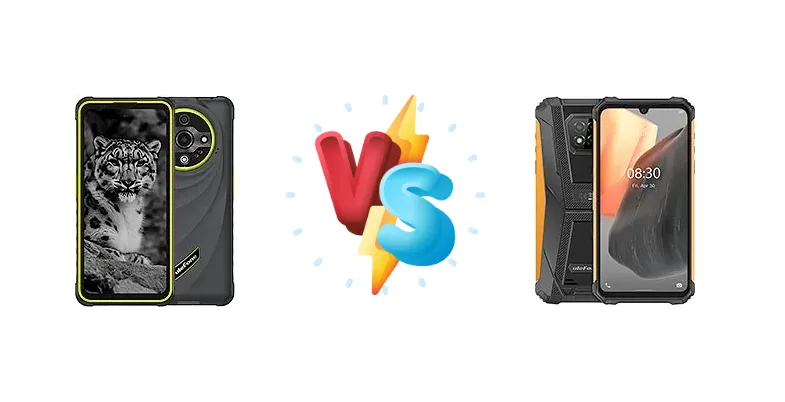
|
🏆 Quick Verdict
For most users prioritizing longevity and sustained performance, the Ulefone Armor X31 emerges as the better choice. Its Helio G91 chipset and exceptional 81-hour battery endurance significantly outperform the Armor 8 Pro, making it ideal for extended fieldwork or off-grid adventures. However, the Armor 8 Pro remains a viable option for those on a tighter budget.
| PHONES | ||
|---|---|---|
| Phone Names | Ulefone Armor X31 | Ulefone Armor 8 Pro |
| Network | ||
|---|---|---|
| 2G bands | GSM 850 / 900 / 1800 / 1900 | GSM 850 / 900 / 1800 / 1900 |
| 3G bands | HSDPA 800 / 850 / 900 / 1700(AWS) / 1900 / 2100 | HSDPA 850 / 900 / 1700(AWS) / 1900 / 2100 |
| 4G bands | 1, 2, 3, 4, 5, 7, 8, 12, 13, 17, 18, 19, 20, 25, 26, 28, 34, 38, 39, 40, 41, 66, 71 | 1, 2, 3, 4, 5, 7, 8, 12, 13, 17, 18, 19, 20, 25, 26, 28, 66 |
| Speed | HSPA, LTE | HSPA 42.2/11.5 Mbps, LTE Cat7 300/150 Mbps |
| Technology | GSM / CDMA / HSPA / LTE | GSM / HSPA / LTE |
| Launch | ||
|---|---|---|
| Announced | 2025, April | 2021, April 28 |
| Status | Available. Released 2025, April | Available. Released 2021, April 28 |
| Body | ||
|---|---|---|
| Build | - | Front glass, aluminum back with rubber, aluminum frame |
| Dimensions | 173.8 x 82 x 13.7 mm (6.84 x 3.23 x 0.54 in) | 166 x 81.8 x 15 mm (6.54 x 3.22 x 0.59 in) |
| SIM | Nano-SIM + Nano-SIM | Nano-SIM + Nano-SIM |
| Weight | 305.5 g (10.79 oz) | 282 g (9.95 oz) |
| - | IP68 dust/water resistant (up to 1.5m for 30 min) Drop-to-concrete resistance from up to 1.2m MIL-STD-810G compliant | |
| Display | ||
|---|---|---|
| Protection | Corning Gorilla Glass 5, Mohs level 4 | Scratch-resistant glass, oleophobic coating |
| Resolution | 720 x 1612 pixels, 20:9 ratio (~269 ppi density) | 720 x 1560 pixels, 19.5:9 ratio (~282 ppi density) |
| Size | 6.56 inches, 103.4 cm2 (~72.5% screen-to-body ratio) | 6.1 inches, 91.3 cm2 (~67.3% screen-to-body ratio) |
| Type | IPS LCD, 90Hz, 600 nits | IPS LCD |
| Platform | ||
|---|---|---|
| CPU | Octa-core (2x2.0 GHz Cortex-A75 & 6x1.8 GHz Cortex-A55) | Octa-core (4x2.0 GHz Cortex-A73 & 4x2.0 GHz Cortex-A53) |
| Chipset | Mediatek Helio G91 (12 nm) | Mediatek MT6771 Helio P60 (12 nm) |
| GPU | Mali-G52 MC2 | Mali-G72 MP3 |
| OS | Android 14 | Android 11 |
| Memory | ||
|---|---|---|
| Card slot | microSDXC (dedicated slot) | microSDXC (uses shared SIM slot) |
| Internal | 128GB 6GB RAM | 128GB 6GB RAM, 128GB 8GB RAM |
| Main Camera | ||
|---|---|---|
| Features | LED flash, HDR, panorama | LED flash, Panorama, HDR |
| Single | - | 8 MP, f/2.2 |
| Triple | 48 MP, f/1.8, (wide), 0.8µm, PDAF 20 MP, f/1.8, (night vision), 2 infrared lights 2 MP (macro) | 16 MP, f/2.2, (wide), PDAF 5 MP (macro) Auxiliary lens |
| Video | 1440p@30fps, 1080p@30fps | 1080p@30fps |
| Selfie camera | ||
|---|---|---|
| Single | 16 MP, f/2.3, (wide), 1.0µm | 8 MP, f/2.2 |
| Video | 1080p@30fps | 1080p@30fps |
| Sound | ||
|---|---|---|
| 3.5mm jack | - | Yes |
| 35mm jack | Yes | Yes |
| Loudspeaker | Yes | Yes |
| Comms | ||
|---|---|---|
| Bluetooth | 5.2, A2DP, LE | 4.2, A2DP, LE |
| Infrared port | Yes | - |
| NFC | Yes | Yes |
| Positioning | GPS, GLONASS, GALILEO, BDS | GPS, GLONASS, GALILEO, BDS |
| Radio | Wireless FM radio | FM radio, RDS, recording |
| USB | USB Type-C 2.0, OTG | USB Type-C 2.0, OTG |
| WLAN | Wi-Fi 802.11 a/b/g/n/ac, dual-band | Wi-Fi 802.11 a/b/g/n/ac, Wi-Fi Direct |
| Features | ||
|---|---|---|
| Sensors | Fingerprint (side-mounted), accelerometer, gyro, proximity, compass, barometer | Fingerprint (side-mounted), accelerometer, gyro, proximity, compass |
| Battery | ||
|---|---|---|
| Charging | 18W wired | 15W wired |
| Type | Li-Po 6050 mAh | Li-Po 5580 mAh |
| Misc | ||
|---|---|---|
| Colors | Black, Black/Orange, Black/Green | Black, Orange, Red |
| Price | About 130 EUR | About 190 EUR |
| EU LABEL | ||
|---|---|---|
| Battery | 81:03h endurance, 1000 cycles | - |
| Energy | Class A | - |
| Free fall | Class A (270 falls) | - |
| Repairability | Class C | - |
Ulefone Armor X31
- Superior battery life (81+ hours)
- More powerful and efficient Helio G91 chipset
- Longer battery lifespan (1000 charge cycles)
- Potentially higher price point
- Limited detailed display specifications
Ulefone Armor 8 Pro
- Lower initial cost
- Decent performance for basic tasks
- Rugged design and durability
- Significantly shorter battery life
- Older Helio P60 chipset
- Slower charging speed
Display Comparison
Neither Ulefone provides detailed display specifications beyond the basic panel type. However, the focus here isn't on display fidelity, but durability. Both likely utilize hardened glass for scratch resistance. The absence of high refresh rates or advanced panel technologies like LTPO suggests a cost-conscious approach to the display, prioritizing robustness over visual extravagance. Bezels are expected to be substantial on both models, reflecting the rugged design philosophy.
Camera Comparison
Detailed camera specs are absent, but the focus on these rugged phones isn't typically high-end photography. Both likely feature a primary sensor and potentially auxiliary lenses for depth or macro shots. Given the market segment, image processing will prioritize practicality and reliability over artistic flair. The absence of OIS (Optical Image Stabilization) is expected on both models. The usefulness of any included 2MP macro camera is questionable, offering limited detail and serving primarily as a marketing feature.
Performance
The core difference lies in the chipsets. The Ulefone Armor X31’s MediaTek Helio G91 (12nm) utilizes a more modern CPU architecture – Cortex-A75 cores – compared to the Armor 8 Pro’s Helio P60 (12nm) with its Cortex-A73 cores. The A75 cores in the G91 offer a noticeable performance uplift in single-core tasks and improved efficiency. While both are octa-core, the G91’s configuration (2x2.0 GHz A75 & 6x1.8 GHz A55) is optimized for gaming and demanding applications. The Armor 8 Pro’s 4x2.0 GHz A73 & 4x2.0 GHz A53 configuration, while capable, will show its age in more intensive workloads. The G91’s newer process node also suggests better thermal management, potentially reducing throttling during prolonged use.
Battery Life
The Ulefone Armor X31 truly shines in battery endurance, boasting an impressive 81 hours and 3 minutes of usage time. This is a significant advantage over the Armor 8 Pro, which lacks published endurance data but is expected to fall considerably short. The X31’s 18W wired charging is slightly faster than the 8 Pro’s 15W, but the real benefit is the ability to go days on a single charge. The X31’s stated 1000 charge cycles also suggest a longer lifespan for the battery itself, a crucial factor for long-term reliability.
Buying Guide
Buy the Ulefone Armor X31 if you need a phone that can truly go the distance – long battery life is paramount for your work or hobbies, and you value a more modern chipset for smoother multitasking. Buy the Ulefone Armor 8 Pro if you prioritize a lower initial cost and are willing to trade some performance and battery endurance for a more affordable rugged device. It's a good fit for basic use cases where extreme performance isn't critical.