
Ulefone Armor X10 vs Oukitel WP18 Pro: A Deep Dive into Rugged Performance
| Phones Images | |||||
|---|---|---|---|---|---|
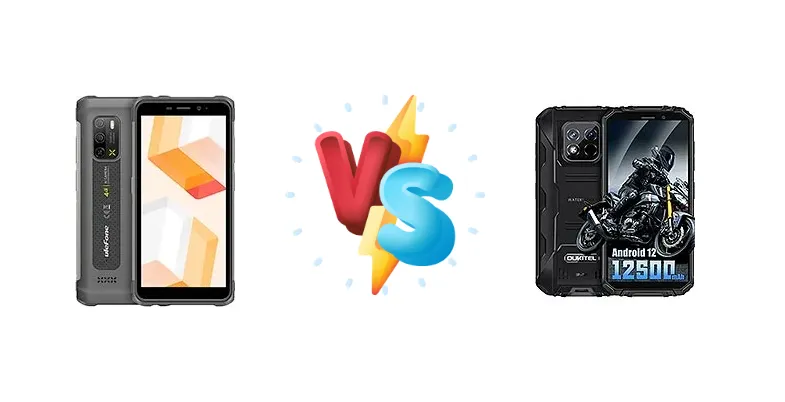
|
🏆 Quick Verdict
For most users, the Oukitel WP18 Pro is the better choice. While both phones offer rugged durability, the WP18 Pro’s Helio P22 chipset, featuring an octa-core CPU, provides a noticeable performance boost over the X10’s quad-core Helio A22. The faster 18W charging also reduces downtime, making the WP18 Pro a more practical daily driver.
| PHONES | ||
|---|---|---|
| Phone Names | Ulefone Armor X10 | Oukitel WP18 Pro |
| Network | ||
|---|---|---|
| 2G bands | GSM 850 / 900 / 1800 / 1900 | GSM 850 / 900 / 1800 / 1900 |
| 3G bands | HSDPA 850 / 900 / 1700(AWS) / 1900 / 2100 | HSDPA 850 / 900 / 1700(AWS) / 1900 / 2100 |
| 4G bands | 1, 2, 3, 4, 5, 7, 8, 12, 13, 17, 18, 19, 20, 25, 26, 28 | 1, 2, 3, 4, 5, 7, 8, 12, 17, 18, 19, 20, 25, 26, 28, 66 |
| Speed | HSPA 21/5.76 Mbps, LTE Cat6 300/150 Mbps | HSPA, LTE |
| Technology | GSM / HSPA / LTE | GSM / HSPA / LTE |
| Launch | ||
|---|---|---|
| Announced | 2021, December 24 | 2022, October |
| Status | Available. Released 2021, December 24 | Available. Released 2022, October |
| Body | ||
|---|---|---|
| Dimensions | 158.2 x 76.7 x 14.6 mm (6.23 x 3.02 x 0.57 in) | - |
| SIM | Nano-SIM + Nano-SIM | Nano-SIM + Nano-SIM |
| Weight | 256 g (9.03 oz) | - |
| IP68/IP69K dust/water resistant (up to 1.5m for 30 min) Drop-to-concrete resistance from up to 1.2m MIL-STD-810G compliant | - | |
| Display | ||
|---|---|---|
| Resolution | 720 x 1440 pixels, 18:9 ratio (~295 ppi density) | 720 x 1440 pixels, 18:9 ratio (~271 ppi density) |
| Size | 5.45 inches, 76.7 cm2 (~63.2% screen-to-body ratio) | 5.93 inches, 90.7 cm2 |
| Type | IPS LCD | IPS LCD |
| Platform | ||
|---|---|---|
| CPU | Quad-core 2.0 GHz Cortex-A53 | Octa-core 2.0 GHz Cortex-A53 |
| Chipset | Mediatek MT6761 Helio A22 (12 nm) | Mediatek MT6762 Helio P22 (12 nm) |
| GPU | PowerVR GE8320 | PowerVR GE8320 |
| OS | Android 11 | Android 12 |
| Memory | ||
|---|---|---|
| Card slot | microSDXC (dedicated slot) | microSDXC (uses shared SIM slot) |
| Internal | 32GB 4GB RAM | 64GB 4GB RAM |
| eMMC 5.1 | - | |
| Main Camera | ||
|---|---|---|
| Dual | 13 MP, f/2.2, (wide), AF Auxiliary lens | 13 MP, (wide), AF Secondary unspecified camera |
| Features | Dual-LED flash | LED flash |
| Single | 5 MP, f/2.2 | - |
| Video | 1080p@30fps | 1080p@30fps |
| Selfie camera | ||
|---|---|---|
| Features | HDR | - |
| Single | 5 MP, f/2.2 | 5 MP |
| Video | 1080p@30fps | Yes |
| Sound | ||
|---|---|---|
| 3.5mm jack | Yes | - |
| 35mm jack | Yes | Unspecified |
| Loudspeaker | Yes | Yes |
| Comms | ||
|---|---|---|
| Bluetooth | 5.0, A2DP, LE | Yes |
| NFC | Yes | No |
| Positioning | GPS, GLONASS, GALILEO, BDS | GPS, GLONASS, GALILEO, BDS |
| Radio | FM radio, RDS, recording | Unspecified |
| USB | USB Type-C 2.0, OTG | Yes |
| WLAN | Wi-Fi 802.11 a/b/g/n/ac, Wi-Fi Direct | Yes |
| Features | ||
|---|---|---|
| Sensors | Accelerometer, proximity, compass | Fingerprint (rear-mounted), accelerometer, compass |
| Battery | ||
|---|---|---|
| Charging | 10W wired | 18W wired |
| Type | Li-Po 5180 mAh | Li-Po 12500 mAh |
| Misc | ||
|---|---|---|
| Colors | Black/Gray | Orange |
| Price | About 130 EUR | About 190 EUR |
Ulefone Armor X10
- Potentially lower price point.
- Rugged design for durability.
- Basic functionality for essential tasks.
- Significantly slower processor.
- Slower 10W charging.
- Limited multitasking capabilities.
Oukitel WP18 Pro
- Faster octa-core processor for smoother performance.
- Faster 18W wired charging.
- Improved multitasking capabilities.
- Likely a slightly higher price.
- Rugged design may add bulk.
- Camera performance likely remains basic.
Display Comparison
Neither Ulefone nor Oukitel provide detailed display specifications for these models. Given their price point, expect both to utilize IPS LCD panels with 720p+ resolutions. The focus here isn't on display quality, but durability. Bezels are likely to be substantial on both, maximizing the protective surface area around the screen. Color accuracy and peak brightness are expected to be average, prioritizing visibility in direct sunlight over color fidelity.
Camera Comparison
Detailed camera specs are unavailable, but it’s safe to assume both phones feature basic camera setups geared towards functional photography rather than high-quality imaging. The emphasis on ruggedness often comes at the expense of camera performance in this price bracket. Expect a primary sensor on both, likely around 8-13MP, and potentially a secondary depth or macro sensor (often 2MP, and of limited practical use). Image processing will be basic, prioritizing speed over detail. The WP18 Pro *may* benefit from slightly better image signal processing capabilities due to the more advanced chipset, but the difference will likely be marginal.
Performance
The core difference lies in the chipset. The Oukitel WP18 Pro’s MediaTek Helio P22 (MT6762) is a significant upgrade over the Ulefone Armor X10’s Helio A22 (MT6761). The P22’s octa-core Cortex-A53 CPU, clocked at 2.0 GHz, offers substantially improved multi-tasking and application responsiveness compared to the X10’s quad-core configuration. While both are based on a 12nm process, the increased core count translates to a smoother experience when running multiple apps or moderately demanding games. The X10 will likely struggle with heavier tasks, exhibiting noticeable lag. Neither chipset is a gaming powerhouse, but the P22 will handle less intensive titles more comfortably.
Battery Life
Battery capacity is not specified in the provided data. However, the Oukitel WP18 Pro’s 18W wired charging is a clear advantage over the Ulefone Armor X10’s 10W charging. Even with a similar battery capacity, the WP18 Pro will significantly reduce charging times. This is crucial for a device intended for outdoor use where access to power may be limited. While a larger battery capacity on the X10 could partially offset the slower charging, the faster charging of the WP18 Pro provides a more convenient user experience.
Buying Guide
Buy the Ulefone Armor X10 if your primary need is absolute minimal cost and basic functionality – think a secondary phone for emergencies or extremely demanding work environments where replacement cost is a major concern. Buy the Oukitel WP18 Pro if you prioritize a smoother user experience, faster app loading times, and quicker charging, even within the rugged phone category. The WP18 Pro is better suited for users who intend to use their phone for more than just calls and texts.