
Ulefone Armor X10 Pro vs. Apple iPhone 8: A Clash of Titans
| Phones Images | |||||
|---|---|---|---|---|---|
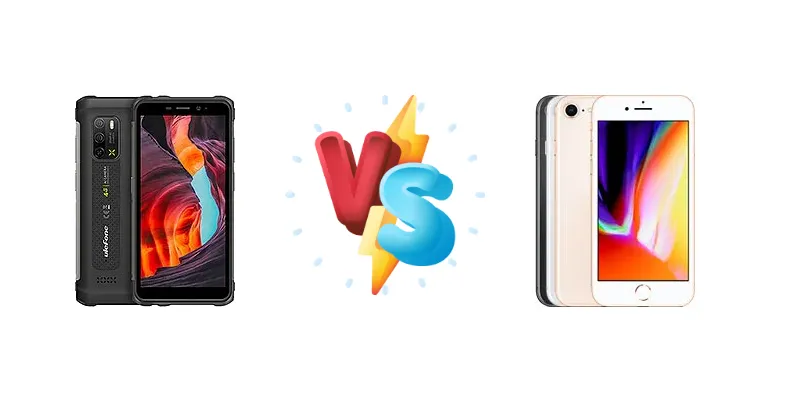
|
🏆 Quick Verdict
The iPhone 8 wins overall due to its significantly superior performance, camera, and software ecosystem. However, the Ulefone Armor X10 Pro offers incredible durability and value for those prioritizing ruggedness and a lower price point. It's a trade-off between resilience and refinement.
| PHONES | ||
|---|---|---|
| Phone Names | Ulefone Armor X10 Pro | Apple iPhone 8 |
| Network | ||
|---|---|---|
| 2G bands | GSM 850 / 900 / 1800 / 1900 | GSM 850 / 900 / 1800 / 1900 |
| 3G bands | HSDPA 850 / 900 / 1700(AWS) / 1900 / 2100 | HSDPA 850 / 900 / 1700(AWS) / 1900 / 2100 |
| 4G bands | 1, 2, 3, 4, 5, 7, 8, 12, 13, 17, 18, 19, 20, 25, 26, 28 | 1, 2, 3, 4, 5, 7, 8, 12, 13, 17, 18, 19, 20, 25, 26, 28, 29, 30, 34, 38, 39, 40, 41, 66 |
| Speed | HSPA 21/5.76 Mbps, LTE Cat6 300/150 Mbps | HSPA 42.2/5.76 Mbps, LTE (3CA) Cat12 600/150 Mbps, EV-DO Rev.A 3.1 Mbps |
| Technology | GSM / HSPA / LTE | GSM / HSPA / LTE |
| Launch | ||
|---|---|---|
| Announced | 2022, March 10 | 2017, September 12. Released 2017, September 22 |
| Status | Available. Released 2022, March 10 | Discontinued |
| Body | ||
|---|---|---|
| Build | - | Glass front (Corning-made glass), glass back (Corning-made glass), aluminum frame |
| Dimensions | 158.2 x 76.7 x 14.6 mm (6.23 x 3.02 x 0.57 in) | 138.4 x 67.3 x 7.3 mm (5.45 x 2.65 x 0.29 in) |
| SIM | Nano-SIM + Nano-SIM | Nano-SIM |
| Weight | 256 g (9.03 oz) | 148 g (5.22 oz) |
| IP68/IP69K dust/water resistant (up to 1.5m for 30 min) Drop-to-concrete resistance from up to 1.2m MIL-STD-810G compliant | IP67 dust/water resistant (up to 1m for 30 mins) Apple Pay (Visa, MasterCard, AMEX certified) | |
| Display | ||
|---|---|---|
| Protection | - | Ion-strengthened glass |
| Resolution | 720 x 1440 pixels, 18:9 ratio (~295 ppi density) | 750 x 1334 pixels, 16:9 ratio (~326 ppi density) |
| Size | 5.45 inches, 76.7 cm2 (~63.2% screen-to-body ratio) | 4.7 inches, 60.9 cm2 (~65.4% screen-to-body ratio) |
| Type | IPS LCD | Retina IPS LCD, 625 nits (typ) |
| - | 3D Touch display & home button | |
| Platform | ||
|---|---|---|
| CPU | Octa-core 2.0 GHz Cortex-A53 | Hexa-core (2x Monsoon + 4x Mistral) |
| Chipset | Mediatek MT6762 Helio P22 (12 nm) | Apple A11 Bionic (10 nm) |
| GPU | PowerVR GE8320 | Apple GPU (three-core graphics) |
| OS | Android 11 | iOS 11, up to iOS 16.7.12 |
| Memory | ||
|---|---|---|
| Card slot | microSDXC (dedicated slot) | No |
| Internal | 64GB 4GB RAM | 64GB 2GB RAM, 128GB 2GB RAM, 256GB 2GB RAM |
| eMMC 5.1 | NVMe | |
| Main Camera | ||
|---|---|---|
| Dual | 20 MP, f/1.8, 26mm (wide), 1/2.78", 1.0µm, PDAF Auxiliary lens | - |
| Features | Dual-LED flash | Quad-LED dual-tone flash, HDR |
| Single | 5 MP, f/2.2 | 12 MP, f/1.8, 28mm (wide), PDAF, OIS |
| Video | 1080p@30fps | 4K@24/30/60fps, 1080p@30/60/120/240fps |
| Selfie camera | ||
|---|---|---|
| Features | HDR | Face detection, HDR, panorama |
| Single | 5 MP, f/2.2 | 7 MP, f/2.2 |
| Video | 1080p@30fps | 1080p@30fps |
| Sound | ||
|---|---|---|
| 3.5mm jack | Yes | No |
| 35mm jack | Yes | No |
| Loudspeaker | Yes | Yes, with stereo speakers |
| Comms | ||
|---|---|---|
| Bluetooth | 5.0, A2DP, LE | 5.0, A2DP, LE |
| NFC | Yes | Yes |
| Positioning | GPS, GLONASS, GALILEO, BDS | GPS, GLONASS, GALILEO, QZSS |
| Radio | FM radio, RDS, recording | No |
| USB | USB Type-C 2.0, OTG | Lightning, USB 2.0 |
| WLAN | Wi-Fi 802.11 a/b/g/n/ac, dual-band, Wi-Fi Direct | Wi-Fi 802.11 a/b/g/n/ac, dual-band, hotspot |
| Features | ||
|---|---|---|
| Sensors | Accelerometer, proximity, compass | Fingerprint (front-mounted), accelerometer, gyro, proximity, compass, barometer |
| Battery | ||
|---|---|---|
| Charging | 10W wired | 15W wired, PD2.0, 50% in 30 min Wireless (Qi) |
| Talk time | - | Up to 14 h (3G) |
| Type | Li-Po 5180 mAh | Li-Ion 1821 mAh, non-removable (6.96 Wh) |
| Misc | ||
|---|---|---|
| Colors | Black/Gray | Silver, Space Gray, Gold, Red |
| Models | - | A1863, A1905, A1906, A1907, iPhone10,1, iPhone10,4 |
| Price | About 170 EUR | About 210 EUR |
| SAR | - | 1.32 W/kg (head) 1.36 W/kg (body) |
| SAR EU | - | 1.19 W/kg (head) 1.17 W/kg (body) |
| Tests | ||
|---|---|---|
| Audio quality | - | Noise -93.5dB / Crosstalk -80.4dB |
| Battery life | - | Endurance rating 66h |
| Camera | - | Photo / Video |
| Display | - | Contrast ratio: 1395:1 (nominal), 3.957 (sunlight) |
| Loudspeaker | - | Voice 71dB / Noise 77dB / Ring 80dB |
| Performance | - | AnTuTu: 237594 (v7) GeekBench: 10214 (v4.4) GFXBench: 20fps (ES 3.1 onscreen) |
Ulefone Armor X10 Pro
- Extremely durable and rugged
- Water and dust resistant
- Affordable price
- Long battery life (potentially)
- Weak performance
- Mediocre camera
- Lower quality display
- Slow charging
Apple iPhone 8
- Excellent performance (A11 Bionic)
- High-quality camera
- Superior display
- Fast charging (wired & wireless)
- Mature iOS ecosystem
- Older model
- Smaller battery capacity (compared to some modern phones)
- Higher price (compared to Armor X10 Pro)
Display Comparison
The iPhone 8 boasts a noticeably better display experience. While both offer a contrast ratio of 1395:1, the iPhone 8's color accuracy, brightness, and overall visual clarity are superior. The Armor X10 Pro's display is functional but lacks the vibrancy and sharpness of the iPhone 8. Sunlight readability is comparable, with both performing reasonably well.
Camera Comparison
The iPhone 8's camera is a clear winner. It captures sharper, more detailed photos and videos with better dynamic range and color accuracy. The Armor X10 Pro's camera is adequate for casual snapshots, but lacks the image processing capabilities and overall quality of the iPhone 8.
Performance
The Apple A11 Bionic chip in the iPhone 8 utterly dominates the Mediatek MT6762 Helio P22 in the Armor X10 Pro. The iPhone 8 offers significantly faster processing speeds, smoother multitasking, and a more responsive user experience. The Armor X10 Pro can handle basic tasks, but struggles with demanding apps and games.
Battery Life
While the Armor X10 Pro's specs suggest a potentially longer battery life, the iPhone 8's endurance rating of 66h is impressive. The iPhone 8 also supports faster charging (15W wired, PD2.0, and wireless Qi charging), a significant advantage over the Armor X10 Pro's 10W wired charging.
Buying Guide
The Ulefone Armor X10 Pro is ideal for outdoor enthusiasts, construction workers, or anyone needing a phone that can withstand harsh conditions. The iPhone 8 is a great choice for users seeking a reliable, user-friendly smartphone with a strong app ecosystem and excellent camera capabilities, even if it's an older model.